Neuroscientists from UPF, the UdG and the University of Oxford propose a new computational model to study more precisely unknown aspects of the human brain and the causes of various neuropsychiatric disorders. The researchers call on the scientific community to use this new computational model to search for personalized diagnoses and treatments for various disorders (including coma, epilepsy, Parkinson’s and multiple sclerosis), along the lines of so-called precision medicine.
The research is grounded in an innovative approach in neuroscience, known as the whole brain model, which is based on computational simulations of its functioning and allows creating virtual brain twins of specific patients.
Unlike traditional approaches, this model allows analysing brain dynamics as a whole, not restricted to specific regions, and understanding how they interact with each other. The creation of this model is the result of the work carried out over decades by the group’s neuroscientists, for whom computational neuroscience is already sufficiently mature as to reveal unknown aspects of the human brain in health and disease.
Recently, the research team has published an article in the prestigious medical journal Nature reviews methods primers, dedicated to the whole brain model. The article explains how this model is being applied, for example to predict how to wake a patient in coma by stimulating specific parts of their brain, or to understand how seizures spread through the brain of people with epilepsy and test ways to stop them.
The model consists of creating a computational simulation of the human brain with neuroimaging data (mainly from magnetic resonances) and mathematical formulas. The result is a virtual twin of a specific patient’s brain, which reveals a detailed map, not only of its anatomy but also of its activity. Drawing a comparison with road traffic, the map could be considered not only to show the roads but also the traffic.
The model allows performing simulations to analyse how different brain regions communicate and interact with each other or to test them in different scenarios, for example to analyse how a person’s brain would respond to certain changes or stimuli. These tests are conducted in highly controlled virtual environments and allow experiencing the brain reactions of a specific patient with personalized, safe, non-invasive techniques.
The model allows precisely analysing both the brain activity at a specific moment and its fluctuations over time in very small time scales, of milliseconds. This makes it particularly suitable for examining the process of transition between brain states, for example between sleep and wakefulness or between coma and full consciousness. In fact, some tests carried out by the research team have been based on neuroimages of people asleep. Using these data, computer simulations have been employed to ascertain how to promote the transition between the sleeping and the awakened brain. Other ongoing research is identifying the specific parts of the brain that require stimulating to cause comatose patients to awaken.
Gustavo Deco (UPF): “Computational neuroscience has reached a point of maturity where it can provide tools that finally come to understand fundamental principles of the functions of the brain in health and disease”
Gustavo Deco (UPF), the principal investigator of the research, together with Morten L. Kringelbach (Oxford) and director of the UPF Computational Neuroscience group of the Center for Brain and Cognition (CBC), states: “Computational neuroscience has reached a point of maturity where it can provide tools that finally come to understand fundamental principles of the functions of the brain in health and disease”.
Gustavo Patow (UdG and UPF): “Whole brain models offer a new way of looking at the brain, helping researchers identify what might be wrong and how to fix it”
The lead author of the article concerning the research, Gustavo Patow, from the Visualization, Virtual Reality and Graphic Interaction Research Group (ViRVIG) at the UdG and of the UPF CBC, adds: “One of the major challenges in understanding brain diseases, such as depression or epilepsy, is that we do not fully understand what happens inside the brain. Traditional methods have struggled to provide clear answers. Whole brain models offer a new way of looking at the brain, helping researchers identify what might be wrong and how to fix it”.
The researchers have already shown the promising potential of the whole brain model to treat various hitherto incurable neuropsychiatric disorders. As it is refined, the model could become a standard tool in hospitals and help medical professionals better diagnose and treat brain diseases.
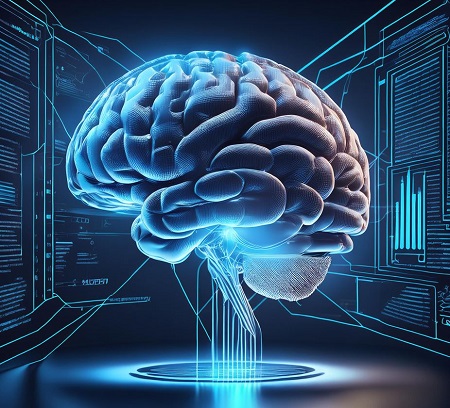
Image: Resource image about computational neuroscience generated with Adobe Firefly AI tool.

La mejor actitud que podemos adoptar es la de trat...

The research team observed changes in head circumf...

AtCDF3 gene induced greater production of sugars a...
En nuestro post hablamos sobre este interesante tipo de célula del...

Telum Therapeutics, a biotechnology company leveraging proprietary met...