Next-generation vaccines against malaria, based on the circumsporozoite protein (CSP), should prioritise long-lasting immunity. A study led by the Barcelona Institute for Global Health (ISGlobal), supported by ”la Caixa” Foundation, indicates that this goal could be achieved by enhancing antibodies targeting the C-terminal region (Cterm), which has traditionally been less studied in immunogenicity analyses. The work, conducted as part of a phase 3 clinical trial of the RTS,S vaccine in several sub-Saharan African countries, has been published in The Lancet Infectious Diseases.
RTS,S/AS01 is the first malaria vaccine recommended by the World Health Organization; R21/Matrix-M, based on the same antigen, was subsequently developed. Both target the CSP protein, which is present on the surface of the parasite. They have already been implemented in the vaccination programmes of many African countries, as they help prevent severe malaria cases and reduce mortality. Specifically, they are administered from five months of age in areas of sub-Saharan Africa with moderate to high transmission of Plasmodium falciparum, the most prevalent malaria parasite species on the continent.
By including fragments of the CSP protein, these vaccines induce the production of specific antibodies or immunoglobulin G (IgG), which “train” the immune system to recognise and neutralise the parasite upon subsequent exposure. Until now, protection conferred by the RTS,S vaccine has been mainly attributed to the IgG response against a specific region –epitope– of the CSP protein: the immunodominant NANP repeats, a repeating amino acid sequence (Asparagine-Alanine-Asparagine-Proline). They are immunodominant because they are the immune system’s “preferred” targets; being the most accessible and exposed, they are easily recognised by B lymphocytes, which are key for antibody production. In contrast, the C-terminal region of the protein has been less explored. This region is recognised by T lymphocytes, which contribute to the activation of B lymphocytes.
The RTS,S vaccine: a major advance, but with moderate efficacy
Although the RTS,S vaccine has represented a major milestone in malaria prevention, its efficacy is moderate and tends to wane over time. The administration of a booster dose has been shown to improve protection, but only partially, highlighting the need to further optimise the durability of immunity.
“As an ancillary study to the phase III trial of the RTS,S vaccine, we included 1,292 children from six African regions where malaria is endemic, although transmission intensity varies across countries and regions,” explains Maria Lara-Escandell, co-author of the study and ISGlobal researcher. “Unlike other studies focused on peak responses to NANP repeats, we assessed IgG levels against both NANP and Cterm, as well as against the full CSP protein, and analysed whether both the magnitude and persistence of this immune response were associated with protection against malaria.”
Focusing on a more overlooked region of the CSP protein
The study showed that the booster dose preferentially enhances Cterm-specific IgG and only modestly increases those targeting NANP. In addition, IgG against Cterm showed greater durability both after primary vaccination and following the booster dose. The persistence of these antibodies —rather than the maximum titre reached at peak response— was associated with greater protection against malaria. “Our results show that antibody durability is a stronger correlate of protection than peak magnitude,” explains Lina Sánchez, co-author of the study and ISGlobal researcher. “Furthermore, Cterm-specific IgG may be independently associated with NANP IgG with a lower risk of malaria after primary vaccination.”
The priority: sustained immunity
These findings highlight the importance of assessing antibodies against different epitopes and, in particular, their persistence over time.
“By demonstrating the preferential boosting and greater persistence of responses against Cterm, this study refines current correlates of protection and provides practical guidance for the design of CSP-based vaccines,” concludes Carlota Dobaño, head of the Malaria Immunology Group at ISGlobal and co-coordinator of the study. “These strategies should prioritise broader and more sustained humoral immunity, rather than high but transient peak responses,” adds Gemma Moncunill, also head of the Malaria Immunology Group at ISGlobal and co-coordinator of the study.
Reference: Lara-Escandell M, Sánchez L, Macià D, et al. Duration and association with protection of NANP-repeat-specific and C-terminus-specific anti-circumsporozoite protein IgG responses following RTS,S/AS01E vaccination: an observational ancillary immunological study of a phase 3 clinical trial. Lancet Infect Dis. 2026; published online April 21. https://doi.org/10.1016/S1473-3099(26)00081-2
Image: Schematic representation of the CSP protein, showing three main regions: an N-terminal end, a central region with NANP repeats recognised by B lymphocytes (B-cell epitope), and a C-terminal end containing regions capable of activating T lymphocyte responses (T-cell epitopes), including CD4+ and CD8+ T cells.

La mejor actitud que podemos adoptar es la de trat...

The research team observed changes in head circumf...
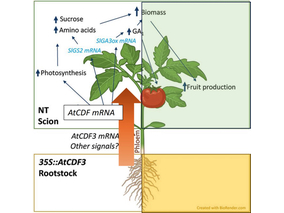
AtCDF3 gene induced greater production of sugars a...
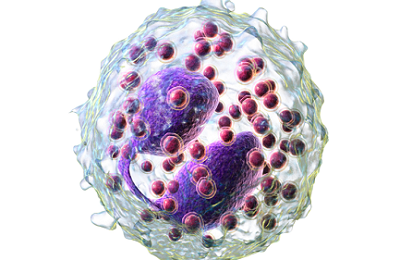
En nuestro post hablamos sobre este interesante tipo de célula del...

Telum Therapeutics, a biotechnology company leveraging proprietary met...