Researchers at the Lleida Biomedical Research Institute (IRBLleida) and the University of Lleida (UdL) have identified a new key mechanism involved in amyotrophic lateral sclerosis (ALS). The study shows that the malfunctioning of nuclear pore complexes-a type of 'gateway' that regulates the entry and exit of molecules into and out of the cell nucleus, where most of the genome is stored-contributes to the dysfunction of the TDP-43 protein, one of the main characteristics of this neurodegenerative disease.
This discovery opens up new avenues for the development of treatments aimed at restoring this cellular transport system. The research, which involved collaboration between staff from the Bellvitge Biomedical Research Institute (IDIBELL) and the University of Barcelona, has been published in the journal Redox Biology and forms part of the doctoral thesis of one of the study's lead authors, Omar Ramírez-Núñez.
'This study brings us closer to understanding the cellular mechanisms that lead to the death of motor neurons in ALS. Identifying the role of nuclear pore complexes opens the door to new strategies for slowing the progression of the disease,' explains researcher and UdL professor Manuel Portero-Otín.
ALS is characterised by the progressive degeneration of motor neurons and the abnormal accumulation of the TDP-43 protein, which leads to their dysfunction. In this research, the research team analysed human tissue samples from ALS patients, mouse models with mutations related to the disease, and human cell cultures that were modified using gene editing techniques (CRISPR) to reproduce the damage.
The results show that when a key protein in the pore complex (NUP107) is reduced, TDP-43 begins to move out of the nucleus and accumulate in the cytoplasm, as happens in the neurons of people with ALS. In addition, the researchers have found that oxidative stress-damage caused by free radicals, common in ageing-further aggravates this process, damaging cell 'gates' and contributing to the accumulation of TDP-43.
The research was funded by the Carlos III Health Institute, the Government of Catalonia, the La Caixa Foundation, the Lleida Provincial Council, the Unzue-Luzon Grant, RedELA-Plataforma Investigación and the Miquel Valls Foundation.
Article: Ramírez-Núñez O, Rico-Ríos S, Torres P, Ayala V, Fernàndez-Bernal A, Ceron-Codorniu M, Andrés-Benito P, Vinyals A, Maqsood S, Ferrer I, Pamplona R, Portero-Otin M. Nuclear pore complex dysfunction drives TDP-43 pathology in ALS. Redox Biol. 2025 Aug 14;86:103824. doi: 10.1016/j.redox.2025.103824. Epub ahead of print. PMID: 40819564; PMCID: PMC12390953.
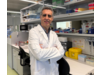
Imagen: The researchers Omar Ramírez-Núñez, Santiago Rico-Ríos and Pascual Torres

La mejor actitud que podemos adoptar es la de trat...

The research team observed changes in head circumf...
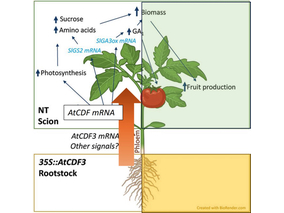
AtCDF3 gene induced greater production of sugars a...
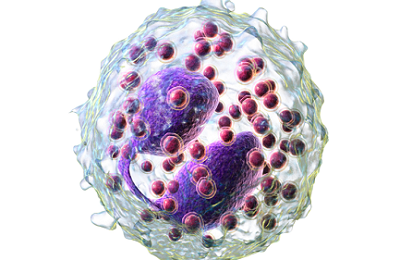
En nuestro post hablamos sobre este interesante tipo de célula del...
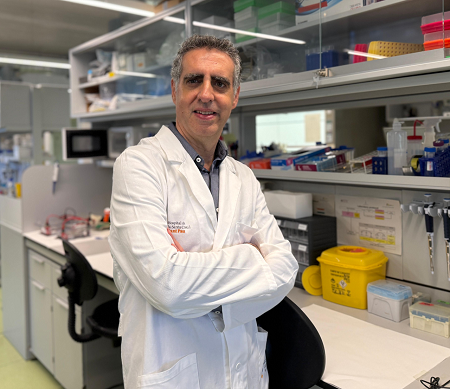
Acute myeloid leukemia (AML) does more than infiltrate the lungs: it a...