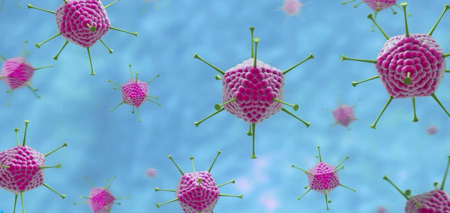
Human adenovirus (HAdV) is a common pathogen that can cause life-threatening disease in bone marrow transplant recipients, particularly among paediatric patients. There are currently no specific treatments for HAdV infections, but a new study led by the Barcelona Institute for Global Health (ISGlobal), a centre supported by “la Caixa” Foundation, and the Instituto de Biomedicina de Sevilla (IBiS) has identified four promising compounds that bring hope to the fight against these infections.
Metal-based compounds have received much attention as potential drugs against a wide range of pathogens due to the diverse structures and mechanisms of action associated with metal ions. “For example, there has been a lot of interest in studying gold-based complexes as antibacterial, anti-inflammatory or even anticancer agents, but few studies have investigated these compounds for antiviral purposes,” says Sara Soto, ISGlobal researcher and senior author of the study together with Javier Sánchez- Céspedes, from IBiS.
Broad antiviral activity with low toxicity
In this study, the research team analysed the anti-adenoviral activity of four gold(III)-based compounds that are highly stable under different conditions. Experiments with cell lines showed that all four compounds inhibited HAdV replication in a dose-dependent manner, and at very low (sub-micromolar) concentrations that were not toxic to the cells.
The research team also carried out studies to identify the mechanisms of action of these compounds. They found that these molecules act at late stages of the HAdV replication cycle, after it has replicated its DNA. This suggests that they could effectively inhibit the virus at crucial points in its lifecycle, thereby curbing its ability to spread and cause disease.
Additionally, all four compounds significantly inhibited the replication of another human virus (cytomegalovirus), indicating their potential as broad-spectrum antivirals.
“One of our compounds showed particularly high activity and low cytotoxicity,” explains Soto. “This complex can be considered a promising candidate for deriving new, improved compounds that could enter preclinical studies,” she adds.
Reference: Manzanero-Balsera M, Soengas RG, Carretero-Ledesma M et al. Heteroleptic (S^C)-cyclometallated gold(III) complexes as novel antiviral agents. Heliyon. 2024. Doi: 10.1016/j.heliyon.2024.e27601
Image: Molecular model of Adenovirus via Canva

La mejor actitud que podemos adoptar es la de trat...

The research team observed changes in head circumf...
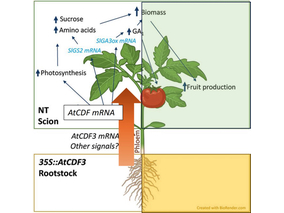
AtCDF3 gene induced greater production of sugars a...
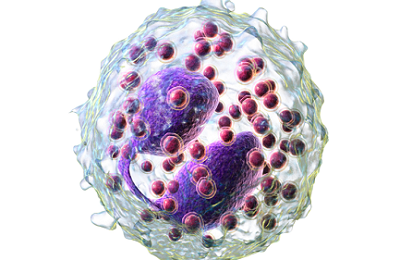
En nuestro post hablamos sobre este interesante tipo de célula del...

Telum Therapeutics, a biotechnology company leveraging proprietary met...