Researchers from the Clínic Barcelona Comprehensive Cancer Center—driven by Hospital Clínic Barcelona, IDIBAPS, and the University of Barcelona—together with the Vall d’Hebron Institute of Oncology (VHIO) and the Dana-Farber Cancer Institute, have published a comprehensive analysis on the prognostic value of the HER2DX test in patients with early-stage HER2-positive breast cancer.
The study analyzed data from more than 2,500 patients across 11 multicenter trials, including APT, ATEMPT, CALGB40601, DAPHNe, and PHERGain.
The challenge of personalizing treatment in HER2-positive breast cancer
HER2-positive breast cancer affects one in five women diagnosed with this disease. Despite advances in treatment, questions remain on how best to personalize therapies and avoid both overtreatment and undertreatment. Clinical decisions are often based on tumor size, nodal status, and response to previous treatments, without fully integrating the tumor's underlying biological information.
The study demonstrates that incorporating the HER2DX genomic test—developed by Reveal Genomics and capable of capturing both clinical and biological factors—enables better risk stratification and more precise tailoring of treatment intensity for each patient, paving the way for safer and more personalized cancer care.
Main findings: towards more personalized medicine
The research was coordinated by Dr. Aleix Prat, Director of the Clínic Barcelona Comprehensive Cancer Center, Professor of Medicine at the University of Barcelona, and co-founder and Chief Scientific Officer of Reveal Genomics, together with Dr. Sara M. Tolaney, Chief of the Division of Breast Oncology at Dana-Farber Cancer Institute. The study’s first author is Guillermo Villacampa, Head of the Statistics Unit at Vall d’Hebron Institute of Oncology (VHIO) and Data Science Manager at SOLTI.
The results show that HER2DX is a strong independent predictor of both event-free survival and overall survival, providing additional prognostic insight beyond traditional clinical factors. Data reveals that patients classified as low-risk by HER2DX have a six-year event-free survival rate of 93.6%, compared to 82.9% for those considered high-risk.
Thus, the test can help clinicians identify patients who may benefit from less intensive treatments, as well as those who might require more comprehensive therapeutic strategies, consolidating HER2DX’s role as a key tool in individualized clinical decision-making.
“This meta-analysis is the culmination of an unprecedented effort to bring together patient-level data from 11 studies in a rigorous and consistent manner,” explains Guillermo Villacampa. “By applying statistical methods to harmonized clinical and genomic data, we have demonstrated that HER2DX can provide clinicians with reliable, individualized prognostic information that can improve daily decision-making.”
“With over 2,500 patients from diverse settings, this study provides robust evidence to support the adoption of HER2DX in routine care. It brings us closer to truly individualized therapy for HER2-positive disease,” says Dr. Sara M. Tolaney.
“HER2DX represents a significant step forward in the prognostic stratification of HER2-positive breast cancer. By providing comprehensive and actionable risk estimates, HER2DX helps oncologists adapt treatment intensity to each patient. This new meta-analysis, together with the 2023 publication on the HER2DX pCR score, provides strong and complementary validation of the test’s clinical utility across the full spectrum of early HER2-positive breast cancer,” adds Dr. Aleix Prat, also Director of the Institute of Cancer and Blood Diseases and Head of the Translational Genomics and Targeted Therapies in Solid Tumours research group at IDIBAPS.
Clinical implications for daily practice
The authors underscore that the prognostic value of the HER2DX genomic test can guide key clinical decisions, such as:
Image: From Left to Right: Guillermo Villacampa, Dr. Sara M. Tolaney, and Dr. Aleix Prat.
Study reference: HER2DX and survival outcomes in early-stage HER2-positive breast cancer: an individual patient-level meta-analysis. Villacampa, Guillermo et al. The Lancet Oncology. July 14, 2025. DOI: 10.1016/S1470-2045(25)00276-1

La mejor actitud que podemos adoptar es la de trat...

The research team observed changes in head circumf...
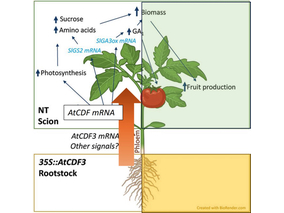
AtCDF3 gene induced greater production of sugars a...

En nuestro post hablamos sobre este interesante tipo de célula del...

Telum Therapeutics, a biotechnology company leveraging proprietary met...