Nuage Therapeutics, a biotech start-up located at Barcelona Science Park (PCB-UB), has obtained 2.7 million euros in funding from the State Research Agency (AEI) of the Spanish Ministry of Science, Innovation and Universities under the R&D&I “State Program for Transfer and Collaboration” program. The funding will support a research project focused on developing a new drug against the most common subtype of small-cell lung cancer (SCLC-A), in collaboration with the Spanish National Cancer Research Center (CNIO), the European Molecular Biology Laboratory in Barcelona (EMBL Barcelona) and the Vall d’Hebron Institute of Oncology (VHIO).
The consortium has already initiated the development of this innovative therapy, NTX-A, a pioneering drug targeting the ASCL1 protein, key in the development of the most frequent type of small cell lung cancer (SCLC-A), associated with a very marked neuroendocrine profile and with a rapid tumour progression that results in a particularly aggressive clinical behaviour.
“This support validates our approach to addressing intrinsically disordered proteins (IDPs) and accelerates our mission to drive a new generation of transformative precision therapies for aggressive cancers with limited treatment options,” said Dr Stuart Hughes, recently appointed CEO of Nuage Therapeutics.
The spin-off from the Institute for Research in Biomedicine (IRB Barcelona), is dedicated to pioneering a novel drug discovery approach, directly targeting intrinsically disordered proteins (IDPs) — therapeutic targets traditionally considered undruggable and associated with serious diseases such as cancer, which have so far remained beyond the reach of conventional treatments.
“We are excited to be a key partner in this project and bring to it the organoid development expertise we have at EMBL Barcelona. It is through interdisciplinary collaborations like this that we can effectively advance the field of cancer research,” said Talya Dayton, group leader at EMBL Barcelona. Dayton and her team will lead the development of advanced laboratory models called patient-derived tumour organoids (PDTOs), which are grown directly from patients’ tumour tissue in order to closely mimic real tumours. Once developed, the organoids will be classified according to their molecular subtypes and ASCL1 status to test protein inhibitors and their ability to stop tumour growth. The effects of the drugs will be assessed by cell survival, gene activity, ASCL1 expression and toxicity, which will help the team identify the most effective and safe candidates for further preclinical development.
“The main goal of the project is to inhibit the ASCL1 protein, a protein that not only gives its name to a subtype of small cell lung cancer, SCLC-A, but is also known to drive this disease,” said Dr Marcos Malumbres, director of the Systems Oncology programme and head of the Cancer Cell Cycle laboratory at VHIO. “However, we also know that aggressive tumours evolve, especially under certain treatments, and can lose their dependence on ASCL1. We will investigate these mechanisms of tumour evolution and resistance to ASCL1 inhibitors so that in the future we can better apply these types of therapies in the clinic” he said.
Innovation for “undruggable” proteins
A large proportion of the human proteome contains proteins that exhibit high levels of intrinsic structural disorder and are therefore unsuitable for conventional drug discovery methods. About 40% of human proteins include intrinsically disordered regions (IDRs). These regions – and, in some cases, entire proteins – do not adopt a fixed and stable three-dimensional structure, but remain flexible and dynamic, like “molecular chains” in constant motion. This flexibility allows them to interact with many other molecules and participate in a wide variety of cellular processes; however, it also makes them elusive targets for traditional drugs.
In cancer, this property is particularly relevant, since many proteins involved in tumour development and progression – such as oncogenic transcription factors – present a high degree of structural disorder. These proteins regulate the activity of numerous genes and control processes such as cell division and differentiation, but their flexible nature keeps them out of reach of traditional therapeutic approaches, which is one of the great challenges of biomedicine today.
Nuage Therapeutics has developed an innovative technology that allows intrinsically disordered proteins (IDPs) to transiently adopt more ordered structures, making them amenable to recognition and blocking by drugs. This strategy opens an unprecedented avenue for designing conventional therapies against proteins that, until now, were considered untreatable.
The company’s patented platform makes these disordered proteins, which lack a stable shape, temporarily adopt a defined structure. As a result, researchers can design drugs capable of recognising and acting on them, something that was previously impossible. This breakthrough represents a paradigm shift in drug discovery and turns protein “disorder” into a therapeutic opportunity. For years, these proteins had been considered unattainable targets due to their flexibility and the difficulty in controlling their function with traditional compounds.
A new strategy for the most aggressive lung cancer
Among the diseases that could benefit from this technology is small cell lung cancer (SCLC-A), one of the most aggressive and difficult to treat forms of the disease. Despite advances in immunotherapy and chemotherapy, treatment options remain limited and patient survival has barely improved in recent decades.
In cancer, many proteins involved in tumour development and progression – such as oncogenic transcription factors – present a high degree of structural disorder. These proteins regulate the activity of numerous genes and control processes such as cell division and differentiation, but their flexible nature keeps them out of reach of traditional therapeutic approaches, which is one of the great challenges of biomedicine today. In this type of lung tumour, the ASCL1 protein drives the growth and survival of cancer cells. It reactivates genes in nerve development that, out of control, feed the spread of the disease.
In this context, Nuage Therapeutics is breaking new ground in targeting SCLC-A-type small cell lung cancer, a subtype responsible for a significant portion of small cell lung cancer cases lacking effective treatments. Their technology could cause the ASCL1 protein to transiently adopt a stable structure, thus making it possible to identify molecules that bind to it and neutralise its oncogenic activity.
Besides this type of tumour, Nuage Therapeutics’ breakthrough could extend to other diseases driven by disordered proteins, cementing a new frontier in rational drug development.
About Nuage Therapeutics: Nuage Therapeutics (Nuage Tx) is a spin-off company from the Institute for Research in Biomedicine (IRB Barcelona) and ICREA, that stemmed from the Laboratory of Molecular Biophysics lead by Dr. Xavier Salvatella. Nuage Tx is pioneering a whole new type of drug discovery, unlocking the druggability of intrinsically disordered proteins to deliver a new wave of transformative therapies. Nuage Tx has developed a novel set of tools that enables the reconstitution of intrinsically disordered proteins in a transiently druggable form that renders them amenable to small molecule drug discovery. This ground-breaking approach is initially being deployed to target transcription factors that are key to the growth of specific cancers, which could revolutionise the way that certain tumour types are treated. Nuage Tx has the expertise of Dr Stuart Hughes as CEO; and of its three scientific founders: Dr. Xavier Salvatella; Dr. Denes Hnisz, leader of the Precision Gene Control group at the Max Planck Institute for Molecular Genetics in Berlin; and Dr. Mateusz Biesaga, Nuage’s CTO. Nuage’s team also includes Dr. Jordina Guillén as Head of Science and Dr. Olivier Corminboeuf as Head of Drug Discovery.
About the Spanish National Cancer Research Center (CNIO):
The Spanish National Cancer Research Center (CNIO) is a public research centre under the Spanish Ministry of Science, Innovation and Universities. It is the largest cancer research centre in Spain and one of the most important in Europe. It brings together 500 scientists, plus support staff, who work to improve the prevention, diagnosis and treatment of cancer.
About the European Molecular Biology Laboratory (EMBL):
The European Molecular Biology Laboratory (EMBL) is Europe's life science laboratory. It provides leadership and coordination for life sciences across the continent, and its world-class fundamental research seeks collaborative, interdisciplinary solutions to some of society's greatest challenges. It offers training for students and scientists, drives the development of new technologies and methods in the life sciences, and makes available state-of-the-art research infrastructures for a wide range of experimental and data services. The EMBL is an intergovernmental organisation with 29 Member States, an associate member and a member in the process of joining. At its six sites – Barcelona, Grenoble, Hamburg, Heidelberg, Hinxton (near Cambridge) and Rome – the EMBL seeks to better understand life in its natural context, from molecules to ecosystems. At the Barcelona centre, research focuses on how tissues form and change under conditions of health and disease. The group led by Dr Talya Dayton at EMBL Barcelona, a pioneer in advanced organoid technologies, works to understand how cancer occurs and progresses, with the ultimate goal of developing strategies to stop it.
About Vall d'Hebron Institute of Oncology (VHIO):
The Vall d'Hebron Institute of Oncology (VHIO), established in 2006 and part of the Vall d'Hebron Campus, is a leading centre in personalised medicine in oncology. Its mission is to conduct research to improve the prevention, early diagnosis and treatment of cancer through a pioneering model of translational research that transforms the latest discoveries made in the laboratory into early phase clinical trials, and ultimately into the development of more effective therapies that improve the quality of life of cancer patients. The VHIO is part of the CERCA research system and is accredited as a Severo Ochoa Centre of Excellence. None of the VHIO's activity would be possible without the support of its patrons – the Government of Catalonia, the Cellex Foundation, the FERO Foundation, the "la Caixa" Foundation, the BBVA Foundation and the CRIS Contra el Cáncer Foundation – as well as the generous contributions of various associations, organisations and individuals who help it to promote oncology research. Dr Marcos Malumbres's research focuses on the mechanisms that drive cancer cell proliferation and on the evaluation of new therapies against aggressive cancers. In addition, he is co-coordinator of the SOSCLC-AECC consortium, a network of more than 300 Spanish scientists working to improve therapies for small cell lung cancer.
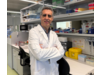
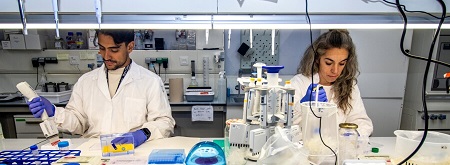
Image: Nuage Therapeutics lab at the Barcelona Science Park. Photo / PCB

La mejor actitud que podemos adoptar es la de trat...

The research team observed changes in head circumf...
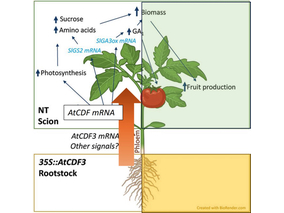
AtCDF3 gene induced greater production of sugars a...
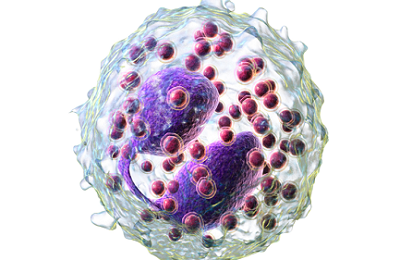
En nuestro post hablamos sobre este interesante tipo de célula del...

Telum Therapeutics, a biotechnology company leveraging proprietary met...