
Oryzon Genomics, S.A. (ISIN Code: ES0167733015, ORY), a clinical-stage biopharmaceutical company leveraging epigenetics to develop therapies in diseases with strong unmet medical need, announced today that the first patient has been dosed in an investigator-initiated Phase Ib dose-finding trial of iadademstat, Oryzon’s potent and selective LSD1 inhibitor, in combination with venetoclax and azacitidine in newly diagnosed acute myeloid leukemia (AML), sponsored by the Oregon Health & Science University (OHSU) Knight Cancer Institute.
Under the direction of Dr. Curtis Lachowiez at OHSU Knight Cancer Institute, the study (NCT06357182) aims to test the safety, tolerability, and best dose of iadademstat when administered together with the standard-of-care venetoclax and azacitidine in treating patients with newly diagnosed AML. The trial also aims to assess the preliminary efficacy of the triple combination.
Dr. Curtis Lachowiez, Principal Investigator of the study, stated: “Given the activity observed with LSD1 inhibition in combination with azacitidine in AML, testing a triplet combination including iadademstat with the highly active backbone of azacitidine+venetoclax is the logical next step to hopefully improve outcomes of patients living with AML if proven to be safe and active”.
Dr. Carlos Buesa, Oryzon’s CEO, added: “This trial builds on the positive results obtained in our ALICE trial in first-line AML, where the combination of iadademstat with azacitidine showed strong antileukemic activity with deep and durable responses and a manageable safety profile, including in patients with high-risk prognostic factors that respond poorly to venetoclax+azaciditine.”
In AML, iadademstat is also being evaluated in a company-sponsored Phase Ib trial in combination with gilteritinib in patients with relapsed/refractory AML harboring a FMS-like tyrosine kinase mutation (FLT3mut+). This FRIDA trial is being conducted in the U.S. Preliminary results from FRIDA, corresponding to the first two cohorts, were recently presented at the European Hematology Association (EHA) 2024 congress in June. Our results demonstrated that combination of iadademstat plus gilteritinib was safe and well tolerated, and showed encouraging antileukemic activity.
About Oryzon
Founded in 2000 in Barcelona, Spain, Oryzon (ISIN Code: ES0167733015) is a clinical stage biopharmaceutical company and the European leader in epigenetics, with a strong focus on personalized medicine in CNS disorders and oncology. Oryzon’s team is composed of highly qualified professionals from the pharma industry located in Barcelona, Boston, and San Diego. Oryzon has an advanced clinical portfolio with two LSD1 inhibitors, vafidemstat in CNS and iadademstat in oncology, in several Phase II clinical trials. The company has other pipeline assets directed against other epigenetic targets like HDAC-6 where a clinical candidate ORY-4001, has been nominated for its possible development in CMT and ALS. In addition, Oryzon has a strong platform for biomarker identification and target validation for a variety of malignant and neurological diseases. For more information, visit www.oryzon.com
About Iadademstat
Iadademstat (ORY-1001) is a small oral molecule, which acts as a highly selective inhibitor of the epigenetic enzyme LSD1 and has a powerful differentiating effect in hematologic cancers (see Maes et al., Cancer Cell 2018 Mar 12; 33 (3): 495-511.e12.doi: 10.1016 / j.ccell.2018.02.002.). A FiM Phase I/IIa clinical trial with iadademstat in R/R AML patients demonstrated the safety and good tolerability of the drug and preliminary signs of antileukemic activity, including a CRi (see Salamero et al, J Clin Oncol, 2020, 38(36): 4260-4273. doi: 10.1200/JCO.19.03250). Iadademstat has shown encouraging safety and efficacy data in combination with azacitidine in a Phase IIa trial in elder 1L AML patients (ALICE trial) (see Salamero et al., ASH 2022 oral presentation & The Lancet Haematology, 2024, 11(7):e487-e498). Iadademstat is currently being evaluated in combination with gilteritinib in the ongoing Phase Ib FRIDA trial in patients with relapsed/refractory AML with FLT3 mutations. Beyond hematological cancers, the inhibition of LSD1 has been proposed as a valid therapeutic approach in some solid tumors such as small cell lung cancer (SCLC), neuroendocrine tumors (NET), medulloblastoma and others. In a Phase IIa trial in combination with platinum/etoposide in second line ED-SCLC patients (CLEPSIDRA trial), preliminary activity and safety results have been reported (see Navarro et al., ESMO 2018 poster). Iadademstat is being evaluated in a collaborative Phase II basket study with the Fox Chase Cancer Center (FCCC) in combination with paclitaxel in R/R neuroendocrine carcinomas, and the company is preparing a new trial in combination with immune checkpoint inhibitors (ICI) in SCLC. Oryzon has entered into a Cooperative Research and Development Agreement (CRADA) with the U.S. National Cancer Institute (NCI) to collaborate on potential further clinical development of iadademstat in different types of solid and hematological cancers; a first trial in combination with ICI in SCLC has recently received FDA IND approval. Oryzon is further expanding the clinical development of iadademstat through investigator-initiated studies. Iadademstat has orphan drug designation for SCLC in the US and for AML in the US and EU.

La mejor actitud que podemos adoptar es la de trat...

The research team observed changes in head circumf...
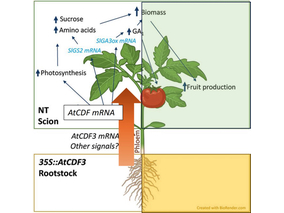
AtCDF3 gene induced greater production of sugars a...

En nuestro post hablamos sobre este interesante tipo de célula del...

Telum Therapeutics, a biotechnology company leveraging proprietary met...