Oryzon Genomics, S.A. (ISIN Code: ES0167733015, ORY), a clinical-stage biopharmaceutical company and a European leader in epigenetics, today announced that it has established the primary and key secondary endpoints for its planned Phase III clinical trial evaluating vafidemstat in Borderline Personality Disorder (BPD). This milestone was reached in collaboration with Oryzon’s newly formed Clinical Advisory Board (CAB), composed of leading experts in psychiatry research and clinical trials for psychiatric disorders.
The CAB’s insights have been instrumental in ensuring that the Phase III protocol aligns with FDA expectations and incorporates well-validated, widely recognized assessment scales to measure agitation and aggression in BPD patients. This development follows the successful completion of the Phase IIb PORTICO trial, which received positive feedback from the FDA, and positions Oryzon to submit the Phase III protocol for regulatory review in the first half of 2025.
“We are honored to collaborate with such a distinguished panel of experts as we advance vafidemstat into Phase III development,” said Dr. Carlos Buesa, Chief Executive Officer of Oryzon. “Their expertise in psychiatric disorders and clinical trial methodology strengthens our program and ensures that we are well-prepared for the next regulatory interactions. Addressing aggression and agitation in BPD remains an urgent medical need, and we are committed to delivering innovative solutions for these patients.”
Oryzon’s Clinical Advisory Board Members:
Oryzon’s CAB includes internationally recognized leaders in psychiatry and clinical trial research:
“These are the right experts to help us shape a Phase III program that is both scientifically rigorous and clinically meaningful,” added Dr. Buesa. “It is particularly reassuring that their expert medical opinion and years of practice recognize aggression as one of the most debilitating aspects of many psychiatric disorders, and particularly in borderline personality disorder. Their contributions have been instrumental in defining the primary and secondary endpoints, that will generate robust data for regulatory submissions.”
Next Steps in Vafidemstat’s Development
Oryzon remains committed to progressing vafidemstat as a potential first-in-class treatment for agitation and aggression in BPD. Following the FDA’s feedback on the PORTICO trial results, Oryzon plans to submit the Phase III protocol in the first half of 2025, with trial initiation expected soon after, pending regulatory approval and securing the necessary funding.
Beyond BPD, vafidemstat is being evaluated in a Phase IIb trial for the treatment of negative symptoms in schizophrenia (EVOLUTION trial) and is part of Oryzon’s broader CNS precision medicine approach. The company is also exploring additional applications in genetically defined subpopulations and neurodevelopmental disorders.
For more information about the experience of the CAB members, please visit the CAB section in our website, here.
About Oryzon
Founded in 2000 in Barcelona, Spain, Oryzon (ISIN Code: ES0167733015) is a clinical stage biopharmaceutical company and the European leader in epigenetics, with a strong focus on personalized medicine in CNS disorders and oncology. Oryzon’s team is composed of highly qualified professionals from the pharma industry located in Barcelona, Boston, and San Diego. Oryzon has an advanced clinical portfolio with two LSD1 inhibitors, vafidemstat in CNS (Phase III-ready) and iadademstat in oncology (Phase II). The company has other pipeline assets directed against other epigenetic targets like HDAC-6 where a clinical candidate ORY-4001, has been nominated for its possible development in CMT and ALS. In addition, Oryzon has a strong platform for biomarker identification and target validation for a variety of malignant and neurological diseases. For more information, visit www.oryzon.com
About Vafidemstat
Vafidemstat (ORY-2001) is an oral, CNS-optimized LSD1 inhibitor. The molecule acts on several levels: it reduces cognitive impairment, including memory loss and neuroinflammation, and at the same time has neuroprotective effects. In animal studies vafidemstat not only restores memory but reduces the exacerbated aggressiveness of SAMP8 mice, a model for accelerated aging and Alzheimer’s disease (AD), to normal levels and also reduces social avoidance and enhances sociability in murine models. In addition, vafidemstat exhibits fast, strong, and durable efficacy in several preclinical models of multiple sclerosis (MS). Oryzon has performed two Phase IIa clinical trials in aggressiveness in patients with different psychiatric disorders (REIMAGINE, see Ferrer et al, Psychiatry & Clin Neurosci, 2025, doi.org/10.1111/pcn.13800) and in aggressive/agitated patients with moderate or severe AD (REIMAGINE-AD), with positive clinical results reported in both. Additional finalized Phase IIa clinical trials with vafidemstat include the ETHERAL trial in patients with Mild to Moderate AD, where a significant reduction of the inflammatory biomarker YKL40 was observed after 6 and 12 months of treatment, and the pilot, small-scale SATEEN trial in Relapse-Remitting and Secondary Progressive MS, where anti-inflammatory activity was also observed. Vafidemstat has also been tested in a Phase II in severe Covid-19 patients (ESCAPE) assessing the capability of the drug to prevent ARDS, one of the most severe complications of the viral infection, where it showed significant anti-inflammatory effects in severe Covid-19 patients. Vafidemstat is currently advancing as a Phase III-ready asset in Borderline Personality disorder (BPD) following completion of the global, randomized, double blind Phase IIb PORTICO trial (final data presented at ECNP-2024). Following receipt of the minutes from the End-of-Phase II meeting with the FDA to discuss PORTICO’s results, the company announced plans to move forward with a Phase III PORTICO-2 trial in agitation/aggression in BPD (FDA submission planned in 1H2025). Vafidemstat is also being investigated in a double-blind, randomized, placebo-controlled Phase IIb trial in negative symptoms of schizophrenia (EVOLUTION trial, recruitment ongoing). The company is also deploying a CNS precision medicine approach with vafidemstat in genetically-defined patient subpopulations of certain CNS disorders and is evaluating a clinical trial in Kabuki Syndrome patients. The company is also exploring the clinical development of vafidemstat in other neurodevelopmental syndromes.

La mejor actitud que podemos adoptar es la de trat...

The research team observed changes in head circumf...
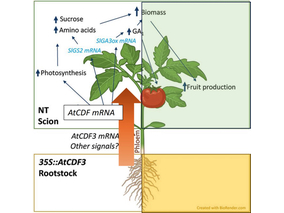
AtCDF3 gene induced greater production of sugars a...
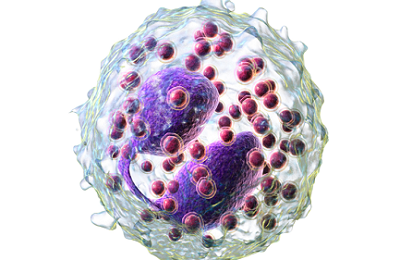
En nuestro post hablamos sobre este interesante tipo de célula del...

Telum Therapeutics, a biotechnology company leveraging proprietary met...