Oryzon Genomics, S.A. (ISIN Code: ES0167733015, Ticker: ORY), a clinical-stage biopharmaceutical company and a European leader in epigenetics, today announced that the European Medicines Agency (EMA) has approved its Clinical Trial Application (CTA), the European equivalent to an IND, to initiate a Phase Ib trial of iadademstat in sickle cell disease (SCD). This will be the first clinical trial investigating iadademstat in a non-malignant hematological indication.
The Phase Ib study, named RESTORE (REgulation of Sickling ThrOugh Reprogramming Epigenetics), will be conducted at multiple sites in Spain and aims to enroll 40 adult patients with SCD. The trial’s primary objectives will be to evaluate the safety and tolerability of iadademstat and to establish its Recommended Phase 2 dose (RP2D). Secondary objectives include assessing iadademstat’s activity to induce fetal hemoglobin (HbF), among others.
SCD is a chronic, inherited blood disorder caused by a mutation in the β-globin gene, leading to the production of hemoglobin S (HbS) instead of the normal hemoglobin A. Under low oxygen conditions, HbS tends to polymerize, causing red blood cells to assume a sickle shape, becoming rigid and fragile. This results in microvascular occlusion, hemolysis, and chronic inflammation.
The clinical manifestations of SCD include vaso-occlusion and hemolytic anemia, which lead to vaso-occlusive crises (VOCs), acute and progressive organ damage, reduced quality of life, and premature mortality. SCD is the most common inherited blood disorder in the United States and represents a significant unmet medical need, with limited therapeutic options currently available.
Dr. Ana Limón, Senior Vice-president of Clinical Development and Medical Affairs at Oryzon said, “We are thrilled to be the only LSD1 inhibitor currently into clinical development for SCD. Targeting LSD1 presents a highly promising therapeutic approach for this disease, which affects approximately 7.7 million people worldwide as per 2025 estimates. Iadademstat has produced a significant increase in HbF levels in baboons, the only animal model with strong translational relevance to humans, after just a single dose. Increased HbF levels mitigate — and potentially reverse — the pathological phenotype of the disease, and increases in HbF have already been recognized by the FDA as a clinically meaningful endpoint for the treatment of SCD. The trial has been carefully designed to deliver a rapid and clear signal of biological activity.”
According to multiple market research reports, the SCD treatment market is expected to grow substantially — from approximately USD 3 billion in 2025 to around USD 8 billion by 2032. While gene therapies that reinduce HbF have received FDA approval, their widespread use is constrained by technical complexity and very high costs, limiting access for much of the global patient population. Oxbryta, a once-approved oral therapy for SCD, reached annual sales of USD 328 million in a relatively short period of time, before being withdrawn from the market. This underscores both the strong commercial potential and the urgent unmet need for effective, scalable, and accessible treatments for SCD.
Iadademstat is also under active investigation in multiple oncology clinical trials. These include the company-sponsored FRIDA trial in combination with gilteritinib in relapsed/refractory FLT3-mutated acute myeloid leukemia (AML), as well as several trials conducted under a Cooperative Research and Development Agreement (CRADA) in place with the U.S. National Cancer Institute or as investigator-initiated trials conducted by U.S. institutions, including two trials in combination with venetoclax and azacitidine in first-line AML, and a trial in combination with immune checkpoint inhibitors in small cell lung cancer.
About Oryzon
Founded in 2000 in Barcelona, Spain, Oryzon (ISIN Code: ES0167733015) is a clinical stage biopharmaceutical company and the European leader in epigenetics, with a strong focus on personalized medicine in CNS disorders and oncology. Oryzon’s team is composed of highly qualified professionals from the pharma industry located in Barcelona, Boston, and San Diego. Oryzon has an advanced clinical portfolio with two LSD1 inhibitors, vafidemstat in CNS (Phase III-ready) and iadademstat in oncology (Phase II). The company has other pipeline assets directed against other epigenetic targets like HDAC-6 where a clinical candidate, ORY-4001, has been nominated for its possible development in CMT and ALS. In addition, Oryzon has a strong platform for biomarker identification and target validation for a variety of malignant and neurological diseases. For more information, visit www.oryzon.com
About Iadademstat
Iadademstat (ORY-1001) is a small oral molecule, which acts as a highly selective inhibitor of the epigenetic enzyme LSD1 and has a powerful differentiating effect in hematologic cancers (see Maes et al., Cancer Cell 2018 Mar 12; 33 (3): 495-511.e12.doi: 10.1016 / j.ccell.2018.02.002.). A FiM Phase I/IIa clinical trial with iadademstat in R/R AML patients demonstrated the safety and good tolerability of the drug and preliminary signs of antileukemic activity, including a CRi (see Salamero et al, J Clin Oncol, 2020, 38(36): 4260-4273. doi: 10.1200/JCO.19.03250). Iadademstat has shown encouraging safety and strong clinical activity in combination with azacitidine in a Phase IIa trial in elder 1L AML patients (ALICE trial) (see Salamero et al., ASH 2022 oral presentation & The Lancet Haematology, 2024, 11(7):e487-e498). Iadademstat is currently being evaluated in combination with gilteritinib in the ongoing Phase Ib FRIDA trial in patients with relapsed/refractory AML with FLT3 mutations, and in combination with azacitidine and venetoclax in 1L AML in an investigator-initiated study led by OHSU and in a trial sponsored by the U.S. National Cancer Institute (NCI) under the Cooperative Research and Development Agreement (CRADA) signed between Oryzon and the NCI to collaborate on further clinical development of iadademstat in different types of hematologic and solid cancers. Beyond hematological cancers, the inhibition of LSD1 has been proposed as a valid therapeutic approach in some solid tumors such as small cell lung cancer (SCLC), neuroendocrine tumors (NET), medulloblastoma and others. In a Phase IIa trial in combination with platinum/etoposide in second line ED-SCLC patients (CLEPSIDRA trial), preliminary activity and safety results have been reported (see Navarro et al., ESMO 2018 poster). Iadademstat is in a Phase I/II randomized trial in 1L ED-SCLC in combination with ICI sponsored by NCI and led by the Memorial Sloan Kettering Cancer Center. Oryzon is further expanding the clinical development of iadademstat in oncology through additional CRADA and investigator-initiated studies. In addition, Oryzon is expanding iadademstat’s clinical development into non-oncological hematology indications, with trials in sickle cell disease (CTA approved) and essential thrombocythemia (trial in preparation). Iadademstat has orphan drug designation for SCLC in the US and for AML in the US and EU.

La mejor actitud que podemos adoptar es la de trat...

The research team observed changes in head circumf...
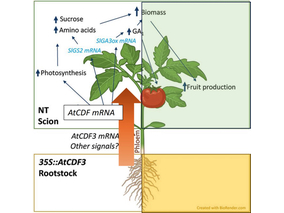
AtCDF3 gene induced greater production of sugars a...
En nuestro post hablamos sobre este interesante tipo de célula del...

Telum Therapeutics, a biotechnology company leveraging proprietary met...