Oryzon Genomics, S.A. (ISIN Code: ES0167733015, ORY), a clinical-stage biopharmaceutical company and European leader in epigenetics, today announced that the European Patent Office (EPO) has issued a Decision to Grant for its patent application EP20712594.9, entitled “Combinations of iadademstat for cancer therapy”.
The allowed claims protect the use of iadademstat in combination with PD1 or PD-L1 inhibitors for the treatment of cancer, including small cell lung cancer (SCLC). Once formally granted, the patent will remain in force until at least 2040, excluding potential patent term extensions. Corresponding patents have already been allowed or granted in Australia and Russia, with additional applications pending in the United States, Japan, China, and other territories.
“We are delighted to have secured this grant, which strengthens protection for iadademstat in combination with immune checkpoint inhibitors such as atezolizumab and durvalumab, a therapeutic approach we are actively pursuing in clinical trials”, said Neus Virgili, Oryzon’s Chief IP Officer.
Iadademstat is currently being investigated in combination with PD-L1 inhibitors (atezolizumab or durvalumab) in first line, extensive-disease SCLC patients in a Phase I/II trial conducted and sponsored by the U.S. National Cancer Institute (NCI) under a Cooperative Research and Development Agreement (CRADA) with Oryzon. More than 30 sites accross the U.S. participate in the trial, including leading institutions such as Memorial Sloan Kettering Cancer Center, Johns Hopkins, City of Hope, Yale University and the University of Chicago, among others.
About Oryzon
Founded in 2000 in Barcelona, Spain, Oryzon (ISIN Code: ES0167733015) is a clinical stage biopharmaceutical company and the European leader in epigenetics, with a strong focus on personalized medicine in CNS disorders and oncology. Oryzon’s team is composed of highly qualified professionals from the pharma industry located in Barcelona, Boston, and San Diego. Oryzon has an advanced clinical portfolio with two LSD1 inhibitors, vafidemstat in CNS (Phase III-ready) and iadademstat in oncology (Phase II). The company has other pipeline assets directed against other epigenetic targets like HDAC-6 where a clinical candidate, ORY-4001, has been nominated for its possible development in CMT and ALS. In addition, Oryzon has a strong platform for biomarker identification and target validation for a variety of malignant and neurological diseases. For more information, visit www.oryzon.com
About Iadademstat
Iadademstat (ORY-1001) is a small oral molecule, which acts as a highly selective inhibitor of the epigenetic enzyme LSD1 and has a powerful differentiating effect in hematologic cancers (see Maes et al., Cancer Cell 2018 Mar 12; 33 (3): 495-511.e12.doi: 10.1016 / j.ccell.2018.02.002.). A FiM Phase I/IIa clinical trial with iadademstat in R/R AML patients demonstrated the safety and good tolerability of the drug and preliminary signs of antileukemic activity, including a CRi (see Salamero et al, J Clin Oncol, 2020, 38(36): 4260-4273. doi: 10.1200/JCO.19.03250). Iadademstat has shown encouraging safety and strong clinical activity in combination with azacitidine in a Phase IIa trial in elder 1L AML patients (ALICE trial) (see Salamero et al., ASH 2022 oral presentation & The Lancet Haematology, 2024, 11(7):e487-e498). Iadademstat is currently being evaluated in combination with gilteritinib in the ongoing Phase Ib FRIDA trial in patients with relapsed/refractory AML with FLT3 mutations, and in combination with azacitidine and venetoclax in 1L AML in an investigator-initiated study led by OHSU and in a trial sponsored by the U.S. National Cancer Institute (NCI) under the Cooperative Research and Development Agreement (CRADA) signed between Oryzon and the NCI to collaborate on further clinical development of iadademstat in different types of hematologic and solid cancers. Beyond hematological cancers, the inhibition of LSD1 has been proposed as a valid therapeutic approach in some solid tumors such as small cell lung cancer (SCLC), neuroendocrine tumors (NET), medulloblastoma and others. In a Phase IIa trial in combination with platinum/etoposide in second line ED-SCLC patients (CLEPSIDRA trial), preliminary activity and safety results have been reported (see Navarro et al., ESMO 2018 poster). Iadademstat is in a Phase I/II randomized trial in 1L ED-SCLC in combination with ICI sponsored by NCI and led by the Memorial Sloan Kettering Cancer Center. Oryzon is further expanding the clinical development of iadademstat in oncology through additional CRADA and investigator-initiated studies. In addition, Oryzon is expanding iadademstat’s clinical development into non-oncological hematology indications, with trials in sickle cell disease (CTA approved) and essential thrombocythemia (trial in preparation). Iadademstat has orphan drug designation for SCLC in the US and for AML in the US and EU.

La mejor actitud que podemos adoptar es la de trat...

The research team observed changes in head circumf...
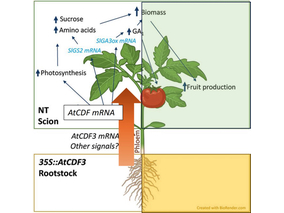
AtCDF3 gene induced greater production of sugars a...

En nuestro post hablamos sobre este interesante tipo de célula del...

Telum Therapeutics, a biotechnology company leveraging proprietary met...