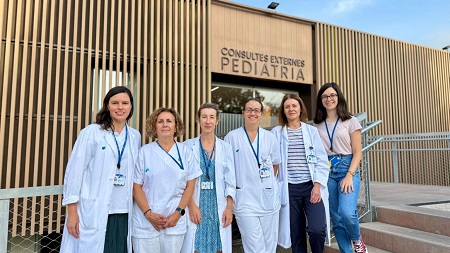
Parc Taulí is participating in phase III of an international clinical trial evaluating a new therapy for the treatment of Angelman syndrome. The study, sponsored by the biopharmaceutical company Ultragenyx, will analyze the efficacy and safety of a drug designed to improve patients' quality of life, focusing on key aspects such as cognition, sleep disorders, communication and motor skills.
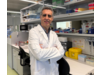
Unlike current treatments, which focus mainly on controlling symptoms such as epilepsy or sleeping difficulties, This new therapy aims to go further by focusing on the underlying genetic cause of Angelman syndrome."We want to see if by intervening on the genetic origin of the disorder we can obtain real improvements in the development of children, beyond what has been observed so far in the natural evolution of the disease," says Ana Roche, neuropediatrician and co-head of the research group on genetically based neurodevelopmental disorders of the Parc Taulí Research and Innovation Institute (I3PT).
Parc Taulí has enrolled patients in both the initial phase I/II study and the phase III Aspire study. In Spain, the Hospital Sant Joan de Déu, the Hospital Puerta de Hierro and the Hospital Universitario Virgen del Rocío are also participating. Internationally, Aspire has recruited 129 children with Angelman syndrome due to deletion, aged 4 to 17 years. The study combines a year of double-blinding —with drug or sham procedure— followed by a subsequent period of open access to treatment for all participants.
"If the results are positive, progress will need to be made towards making the drug accessible to patients who meet the criteria. The ultimate goal is for it to be incorporated into routine clinical practice and contribute to improving the quality of life of these children," adds Roche.
Reactivating a silenced gene
Angelman syndrome is a rare genetic disorder that affects neurological development and is characterized by global delay, severe speech difficulties, coordination and balance problems, intellectual disability and, in many cases, seizures. The cause is the malfunction of the gene UBE3A, responsible for producing a protein essential for learning, sleep and movement control.
In healthy people, only the maternal copy of this gene is active in the brain, while the paternal copy remains naturally silent. In the case of children with Angelman syndrome, the maternal copy is altered or absent, so the brain cannot generate the necessary protein.
The clinical trial promoted by Ultragenyx seeks activate the naturally silenced paternal copy using an antisense oligonucleotide (ASO) administered intrathecally —similar to an epidural puncture— with the aim of restoring protein production.
References in Angelman syndrome care
The Parc Taulí is the first healthcare center in the State internationally recognized as a benchmark in Angelman syndrome, thanks to its comprehensive care model that combines neuropediatrics, genetics, psychology and other specialties. Its trajectory, endorsed by theAngelman Syndrome Foundation (ASF) and the LADDER network, dates back to decades of work initiated with the CONGE unit and consolidated since 2017 with the incorporation into the Network of Clinical Expertise Units (XUEC) in genetically based cognitive-behavioral disorders.
“It is the result of many years of collaboration with families and the effort of many professionals”, highlights Roche. “Communication and support are fundamental. For researchers, it is an opportunity to be at the forefront of the study of rare diseases, but also a great responsibility, because we want to correspond to the trust that families place in Parc Taulí”.

La mejor actitud que podemos adoptar es la de trat...

The research team observed changes in head circumf...
AtCDF3 gene induced greater production of sugars a...
En nuestro post hablamos sobre este interesante tipo de célula del...

Telum Therapeutics, a biotechnology company leveraging proprietary met...