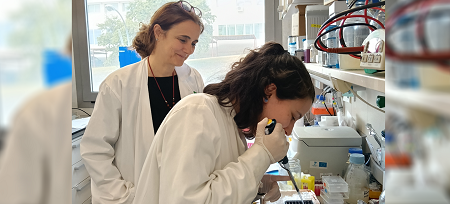
A new study shows that TPR-containing co-chaperones of HSP70 and HSP90 help plants fine-tune hormone signaling, protein quality control, and defense, with evidence for both conserved and plant-specific mechanisms.
A joint study published in the Journal of Experimental Botany by researchers from the CBGP and IBMCP spotlights different plant Tetratricopeptide repeat (TPR)-containing co-chaperones as major regulators of proteostasis, the system that keeps proteins functional and balanced inside cells. The authors show that these co-chaperones help the central chaperones HSP70 and HSP90 select, fold, stabilize, and traffic important client proteins. The review highlights three major examples: RPAP3, which is linked to assembly of large cellular complexes; HOP, which helps coordinate hormone responses, heat adaptation, and stress protection; and SGT1, a central regulator of disease resistance and signaling. Together, the evidence suggests these proteins form a regulatory node that helps plants adapt growth, stress resistance and defense to changing environmental conditions.
Original Paper: Palacios-Abella, A., Tello-Rodríguez, S., Castellano, M.M., Alabadí, D. 2026. TPR domain-containing co-chaperones of HSP70 and HSP90 in plants. Journal of Experimental Botany erag118. DOI: 10.1093/jxb/erag118

La mejor actitud que podemos adoptar es la de trat...

The research team observed changes in head circumf...
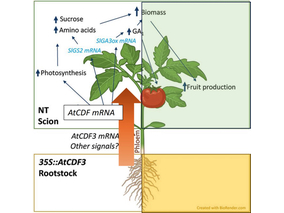
AtCDF3 gene induced greater production of sugars a...
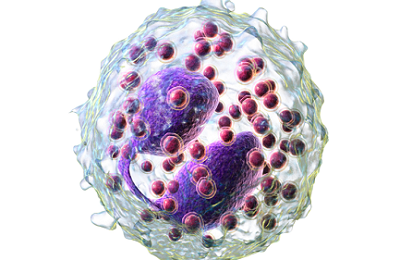
En nuestro post hablamos sobre este interesante tipo de célula del...

Telum Therapeutics, a biotechnology company leveraging proprietary met...