
Understanding how everyday chemicals may affect pregnancy
Endocrine disrupting chemicals (EDCs) are widely present in daily life, found in food, water, personal care products, and household environments. These substances—including phthalates, phenols, parabens, pesticides, and emerging compounds such as bisphenol S (BPS)—can enter the body through ingestion, inhalation, or skin contact.
Pregnancy represents a particularly sensitive window, as hormonal balance is essential for placental development and fetal growth. The placenta, a key endocrine organ, depends on tightly regulated angiogenic processes (that is, the formation of new blood vessels) controlled by factors such as placental growth factor (PlGF) and soluble fms-like tyrosine kinase-1 (sFlt-1).
“Pregnant women are exposed to complex mixtures of chemicals rather than single compounds,” explains Bethany Knox, ISGlobal researcher and first author of the study. “Our goal was to better reflect real-world exposures and understand how these mixtures might influence both the placenta and fetal development.”
Different chemical mixtures show distinct effects on fetal growth
The study included 734 participants from the BiSC cohort in Barcelona, recruited between 2018 and 2021. “We analyzed exposure to more than 40 chemicals by measuring metabolites in pooled week-long urine samples collected at two stages of pregnancy: 18 and 34 weeks of gestation. This approach improves exposure assessment for non-persistent chemicals, which have short half-lives and can vary significantly over time”, explains Knox.
The research team identified distinct patterns in the associations of multiple chemical mixtures with fetal development. Exposure to mixtures of low molecular weight phthalates was consistently linked to lower birthweight in the study population, suggesting a potential adverse effect on fetal growth. In contrast, mixtures with organophosphate compounds, including pesticides and flame retardants, were associated with higher estimated fetal weight and birthweight, particularly in late pregnancy. This association may reflect dietary patterns rather than a direct effect of organophosphate exposure, as higher fruit and vegetable intake can increase exposure to these compounds while also supporting rapid fetal weight gain.
Beyond these differences in growth, the study also points to the placenta as a key intermediary. Phthalate mixtures were associated with changes in fetoplacental blood flow and with an imbalance in angiogenic biomarkers (sFlt-1/PlGF ratio), suggesting a biological pathway through which environmental exposures may influence fetal development.
Implications for public health and future research
“Our findings contribute to environmental health research by incorporating a broad panel of chemicals aligned with European regulatory priorities, including substances whose safety profiles are still under evaluation,” says Martine Vrijheid, Head of the Environment and Health over the Lifecourse Programme and coordinator of the study.
While this study did observe deviations from normal fetal growth, they cannot be translated to an individual and this study’s population is not necessarily representative of all populations. However, the study highlights the importance of considering environmental chemical mixtures in public health research, suggesting that widespread exposures may influence fetal development through their effects on placental function at the population level.
Reference: Knox, B., Güil-Oumrait, N., Midya, V., Vespalcová, H., Dolores Gómez-Roig, M., Llurba, E., Márquez, S., García Ruiz, Z., Galmes, T., Philippat, C., Sakhi, A. K., Thomsen, C., Urquiza, J., Zanini, M. J., Dadvand, P., Gascon, M., Rivas, I., Foraster, M., Basagaña, X., Sunyer, J., Bustamante, M., Vrijheid, M. (2026). Prenatal exposure to mixtures of nonpersistent endocrine-disrupting chemicals and angiogenic biomarkers, placental function, and fetal growth. Environmental Science & Technology, 60(11), 8339–8352. https://doi.org/10.1021/acs.est.5c13234

La mejor actitud que podemos adoptar es la de trat...

The research team observed changes in head circumf...
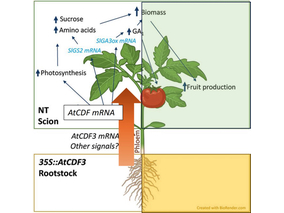
AtCDF3 gene induced greater production of sugars a...
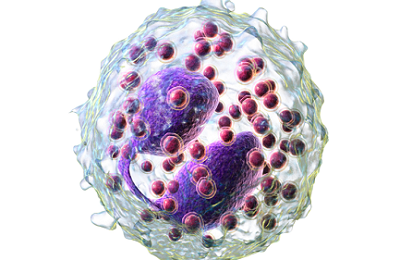
En nuestro post hablamos sobre este interesante tipo de célula del...

Telum Therapeutics, a biotechnology company leveraging proprietary met...