Researchers from the group of Medical Physics Researchers from the Institute of Biosanitary Research of Granada (ibs.GRANADA) and the University of Granada have conducted a study to verify the reliability of two computer simulation tools widely used in medical physics, PENHAN and FLUKA, for the study of treatments with alpha emitters.
These tools allow for highly detailed simulations of how radiation deposits energy in the body at a very small scale, even at the cellular level. This type of calculation is fundamental in targeted therapies with alpha-emitting radionuclides, an emerging strategy for treating some types of cancer.
The study demonstrates that both simulation codes are generally suitable for studying relevant situations in these types of treatments. Furthermore, the study validates the PENHAN code for the first time as a reliable tool in this field. It also detects some anomalies in specific cases with the FLUKA code, an important finding that will allow for improvements in its use and increase the safety and accuracy of future studies.
Targeted radionuclide therapy involves administering a radiopharmaceutical—a drug containing a radioactive isotope—to the patient. This compound accumulates in the tumor and releases radiation in a localized manner to damage cancer cells.
In current clinical practice, most approved radiopharmaceuticals use electron-emitting isotopes. This is the case, for example, with iodine-131 in the treatment of thyroid cancer or lutetium-177 in neuroendocrine tumors. In contrast, among approved treatments, only one uses alpha emitters: radium-223, used in bone metastases of prostate cancer.
Alpha emitters are generating increasing interest because they can concentrate radiation doses in very small areas, protecting healthy cells and causing greater biological damage to tumor cells. For this reason, radionuclides such as astatine-211 and actinium-225 are being investigated as potential tools for new cancer therapies.
For these treatments to be safe and effective, it is essential to know very precisely how the radiation dose is distributed at the cellular level. Therefore, Monte Carlo techniques are a fundamental tool, as they allow us to simulate how radiation interacts with tissues.
However, to ensure the reliability of their results, these codes must be rigorously validated. In cell dosimetry, where experiments have technical limitations, this validation is typically achieved by comparing different simulation codes with each other and contrasting them with reference analytical models.
In this study, the authors compared the results obtained with PENHAN and FLUKA for different alpha-emitting radionuclides and a simplified cell model. The data show that both codes provide statistically compatible results in most of the cases analyzed.
Even so, minor discrepancies were detected in specific situations, allowing for the identification of anomalous behavior in FLUKA. These observations were communicated to the program developers, contributing to its improvement and underscoring the importance of thoroughly validating the simulation tools used in medical physics. Furthermore, the results were also compared with MIRDcell, a leading analytical tool in this field, reinforcing the robustness of the work.
According to Lidia Palenciano Castro, researcher of the A11-Medical Physics group at ibs.GRANADA and lead author of the study, “having validated Monte Carlo tools is essential to understand how alpha emitters act at the cellular level and to move towards increasingly safe and personalized cancer treatments.”
Overall, this study provides greater assurance regarding the reliability of Monte Carlo codes used in research on targeted therapies with alpha emitters. This is a significant advance for the development of safer, more effective, and personalized cancer treatments.
The work is part of the project PID2022-137543NB-I00 and is funded by MICIU/AEI/10.13039/501100011033/ and by FEDER, EU.
Bibliographic reference: Palenciano-Castro, L. and Anguiano, M. (2025). Evaluation and comparison of PENHAN and FLUKA Monte Carlo codes for small-scale dosimetry in targeted radionuclide therapy with alpha emitters. Physics in Medicine & Biology, 70, 245027. https://doi.org/10.1088/1361-6560/ae2aa6
About the group
The research group A11-Medical Physics of the ibs.GRANADA Its activities focus on the application of physics to medicine, with a special emphasis on oncology. Its work encompasses dosimetry in radiotherapy and nuclear medicine, the development of new radiation simulation and measurement tools, and research into advanced techniques that contribute to improving the precision, safety, and personalization of clinical treatments.
More information: https://www.ibsgranada.es/grupos-de-investigacion/a11-fisica-medica/

La mejor actitud que podemos adoptar es la de trat...

The research team observed changes in head circumf...
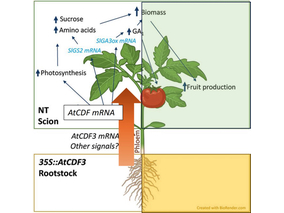
AtCDF3 gene induced greater production of sugars a...
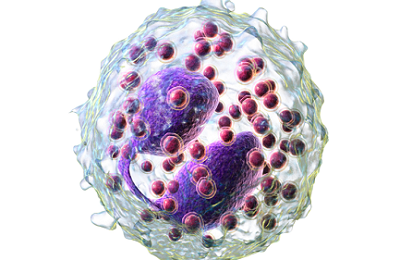
En nuestro post hablamos sobre este interesante tipo de célula del...

Telum Therapeutics, a biotechnology company leveraging proprietary met...