
An international team led by Friedrich-Alexander University (FAU) and involving Juan D. Cañete of IDIBAPS-Hospital Clínic Barcelona has identified for the first time the cellular and molecular mechanism that explains how the skin inflammation characteristic of psoriasis progresses to affect the joints, causing psoriatic arthritis. The results have been published in the scientific journal Nature Immunology Nature Immunology.
Psoriasis is a chronic inflammatory disease that primarily affects the skin. However, about 30% of people with psoriasis will eventually develop psoriatic arthritis, a disease that can cause joint pain, inflammation and functional limitation. Although skin inflammation usually precedes joint manifestation, the exact mechanism behind this progression from one tissue to the other was unknown until now.
The study clears up this mystery by describing a two-step process. The research team has demonstrated that a specific population of immune cells called pro-inflammatory myeloid precursors originates in the inflamed skin and travels to the joints, where they can establish themselves and propagate inflammation. A second key factor is the role of the local joint microenvironment: under normal conditions, resident fibroblasts in the joint act as a barrier against the action of these pro-inflammatory myeloid precursors. However, when this barrier fails, myeloid cells from the skin can activate the inflammatory response in the joint.
According to Juan D. Cañete, a researcher in the IDIBAPS group Inflammatory joint diseases (IJDs) who works in Hospital Clínic’s Rheumatology Department, ‘the way the inflammation moves from the skin to the joint is surprisingly similar to what we observe in tumour metastasis, where migrating cells and a permissive microenvironment are essential for the disease to progress.
‘Understanding the mechanism that drives the spread of inflammation will enable us to develop new diagnostic strategies to identify psoriasis patients at a higher risk of developing arthritis, as well as new therapeutic targets aimed at blocking the migration or activation of these myeloid precursors’, Cañete adds.
An important detail is that the study integrates data from animal models and patient samples, including healthy controls and people with psoriasis or psoriatic arthritis. This combination strengthens its conclusions and reveals that the mechanism plays out across species, which is indispensable for advancing towards future clinical applications.
Image: Juan D. Cañete, researcher at Clínic-IDIBAPS who took part in the study published in Nature Immunology.

La mejor actitud que podemos adoptar es la de trat...

The research team observed changes in head circumf...
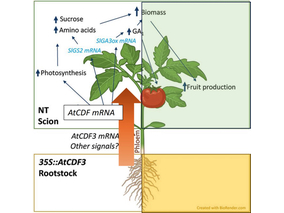
AtCDF3 gene induced greater production of sugars a...
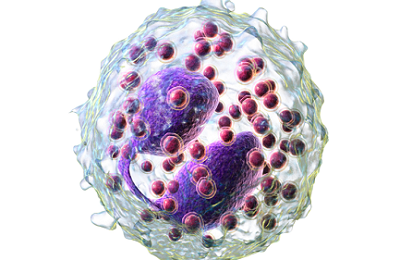
En nuestro post hablamos sobre este interesante tipo de célula del...

Telum Therapeutics, a biotechnology company leveraging proprietary met...