Prostate cancer (PCa) is the second most common cancer diagnosed in men worldwide, and early detection is essential for improving clinical outcomes through timely and effective treatment.
The research, published in the scientific journal Talanta, describes the design of an immunosensor that allows the identification of epithelial extracellular vesicles (EpEVs) in human biological samples with high sensitivity and specificity. This advance represents an improvement over traditional methods, such as prostate-specific antigen (PSA) testing, which often present limitations in terms of false positives and inaccurate diagnoses.
The developed electrochemical platform allows EpEVs to be detected using an "immunological sandwich" technique, using specific antibodies to capture and quantify these tumor vesicles. In clinical trials, combining the EpEV signal with PSA levels significantly improved diagnostic sensitivity and specificity.
In addition to its diagnostic value, this system has proven useful as a therapeutic monitoring tool, with a decrease in EpEVs levels observed after six weeks of treatment in patients with prostate cancer. This opens the door to more personalized and less invasive medicine.
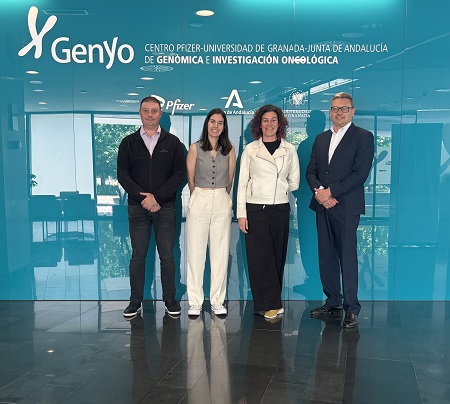
"This tool has great potential as it increases diagnostic accuracy while reducing the need for invasive procedures such as biopsies., explain Dr. Valero and Dr. Ortega, GENyO researchers and lead authors of the study. They were joined by researcher Coral González, also from the GENyO center.
This work was carried out in collaboration with the CONICET team, led by Dr. Fernández Baldo. Dr. Martín Fernández Baldo, who has been working with Dr. Ortega since his beginnings in the field of biomedical research, has found a unique workspace in GENyO. To date, this collaboration has been added to more than 15 articles in prestigious journals such as Talanta, Analytical Chemistry, TRENS, etc., the result of this international synergy.

La mejor actitud que podemos adoptar es la de trat...

The research team observed changes in head circumf...
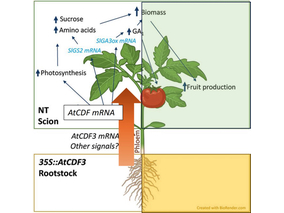
AtCDF3 gene induced greater production of sugars a...
En nuestro post hablamos sobre este interesante tipo de célula del...

Telum Therapeutics, a biotechnology company leveraging proprietary met...