A study led by researchers from the Granada Biosanitary Research Institute (ibs.GRANADA) and the University of Granada (UGR) has shown that the changes in hand skin temperature observed in women with fibromyalgia are not related to menopause, as previously suggested, but rather to the disease itself. This finding points to possible excessive vasodilation in the peripheral microvasculature, opening new avenues for understanding the pathophysiological mechanisms involved in fibromyalgia.
Fibromyalgia is a chronic syndrome characterized by widespread musculoskeletal pain, fatigue, sleep disorders, and psychological symptoms such as anxiety and depression. It affects more than one million people in Spain, mostly women, especially around menopause. Its cause remains unknown, and there is currently no specific diagnostic test or curative treatment, which negatively impacts patients' quality of life and represents a significant burden on healthcare systems.
Although the prevalence of fibromyalgia is higher in postmenopausal women, the potential influence of hormonal changes on symptoms or disease mechanisms has barely been explored. To advance this understanding, the study analyzed one biological parameter and two key physiological parameters in healthy women and women with fibromyalgia, both premenopausal and postmenopausal: blood nitric oxide levels, core body temperature (axillary and tympanic), and hand skin temperature, as an indirect marker of peripheral blood flow.
The case-control study included 154 women divided into four groups: 17 premenopausal women with fibromyalgia, 53 postmenopausal women with fibromyalgia, 32 healthy premenopausal women, and 52 healthy postmenopausal women. The women with fibromyalgia were recruited through the associations AGRAFIM (Granada Fibromyalgia Association) and AFIXA (Jaén Fibromyalgia Association), while the healthy participants were volunteers from the University of Granada.
Various instruments were used to collect data: an infrared skin thermometer to measure axillary and tympanic temperatures, a thermographic camera to record temperatures in different areas of the back and palms of both hands, and a specific analyzer to determine serum nitric oxide levels.
The results showed no significant differences in the parameters analyzed between healthy pre- and postmenopausal women, nor between the two groups of women with fibromyalgia. However, women with fibromyalgia—both pre- and postmenopausal—had significantly higher hand temperatures than the healthy groups, and in the case of postmenopausal women,
These findings suggest that Fibromyalgia can induce an increase in peripheral blood flow, reflected in higher skin temperature in the hands, independently of the hormonal status associated with menopause.This alteration could be due to excessive vasodilation of the smaller blood vessels.
“The interaction between hormonal changes during menopause and the mechanisms inherent to fibromyalgia should continue to be studied, but our data indicate that some of the alterations observed in peripheral blood circulation are due to the disease itself, not to hormonal factors,” say Drs. María Encarnación Aguilar Ferrándiz and María del Alma Rus Martínez, co-principal investigators of the E03-Physiotherapy, Nursing Care and Translational Biomedicine group at ibs.GRANADA, professors at the UGR and principal investigators of the study.
This research is part of Bárbara Coca Guzmán's doctoral thesis, supervised by professors María Encarnación Aguilar Ferrándiz and María del Alma Rus Martínez, from the Departments of Physiotherapy and Cell Biology at the University of Granada, respectively.
This work reinforces the need to address fibromyalgia from a gender perspective and with a personalized approach, and contributes to our understanding of the pathophysiological mechanisms of a disease that continues to represent a significant clinical and scientific challenge.
About the group
El grupo E03‑Physiotherapy, Nursing Care and Translational Biomedicine The IBS.GRANADA, coordinated by Drs. María Encarnación Aguilar Ferrándiz and María del Alma Rus Martínez, carries out research in the field of chronic pain and musculoskeletal disorders, with a special interest in fibromyalgia. Its integrative approach combines physiotherapy, nursing care, and biomedicine to improve our understanding of these disorders and propose effective therapeutic interventions. Its lines of research include the analysis of biomarkers related to pain perception, inflammation, and oxidative stress, and the evaluation of the effectiveness of different physiotherapy treatments in improving pain, quality of life, and the functional impact of populations with chronic pathologies.
Further information: https://www.ibsgranada.es/grupos-de-investigacion/e03-fisioterapia-cuidados-en-enfermeria-y-biomedicina-traslacional/
Bibliographic reference: Rus A, Coca-Guzmán B, Casas-Barragán A, Molina F, Correa-Rodríguez M, Aguilar-Ferrándiz ME. Skin temperature and nitric oxide in premenopausal and postmenopausal women with fibromyalgia. Climacteric. 2025 Apr;28(2):133-142. doi: 10.1080/13697137.2025.2465294. Epub 2025 Feb 26. PMID: 40009069.

La mejor actitud que podemos adoptar es la de trat...
The research team observed changes in head circumf...
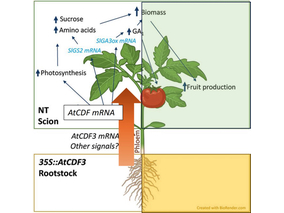
AtCDF3 gene induced greater production of sugars a...
En nuestro post hablamos sobre este interesante tipo de célula del...

Telum Therapeutics, a biotechnology company leveraging proprietary met...