The research group of tissue engineering of the Biosanitary Research Institute of Granada (ibs.GRANADA) and the University of Granada, in collaboration with the Ophthalmology Service of the San Cecilio Clinical University Hospital, has demonstrated in a recent study the great potential of artificial corneas, developed using tissue engineering techniques, as a treatment for serious corneal diseases, especially those caused by damage to the stem cells responsible for regenerating the cornea.
Diseases affecting the surface of the eye, especially those that damage the cornea, pose a significant clinical challenge. Sometimes, they require a corneal transplant to restore the patient's vision. However, this procedure carries risks and limitations. Hence the importance of seeking innovative and effective alternatives like NANOULCOR.
Published in the magazine BMC Medicine, the research concludes that NANOULCOR It precisely mimics both the structure and shape of a human cornea and also produces essential components such as crystallins, keratins, and intercellular junction proteins. One of the most significant findings is that this artificial cornea hosts functional limbal stem cells, which may explain the promising results previously obtained in a pioneering clinical trial involving patients with treatment-resistant corneal ulcers.
Furthermore, this discovery could expand the therapeutic indications for artificial cornea. Currently, one of the main problems in the treatment of serious corneal diseases is patients who have lost or damaged the stem cells necessary for corneal regeneration.
In a healthy cornea, vision is maintained by a group of limbal stem cells, responsible for its continuous regeneration. They are located in an area close to the cornea, known as the sclerocorneal limbus, and from there they multiply and move toward the surface of the cornea to renew it and maintain its protective function and transparency, essential for light to properly reach the retina.
However, there are various diseases that cause a loss of these stem cells and, consequently, a loss of corneal function that ultimately leads to blindness, such as ocular caustic damage caused by chemicals or various autoimmune diseases. Unfortunately, these cases, in which limbal deficiency is present, cannot be treated with corneal transplantation, and there are currently very few therapeutic options available. The presence of limbal stem cells in the NANOULCOR artificial cornea suggests that this artificial cornea could be used in patients with limbal deficiency, opening up new treatment possibilities for patients who, to date, have no truly curative treatment.
The researchers emphasize that, although the results are very promising, further clinical studies specifically in patients with severe limbal deficit will be necessary to confirm the therapeutic efficacy of NANOULCOR in this context.
The study has been funded by various research projects from the Carlos III Health Institute and the Ministry of Science, Innovation, and Universities, highlighting the institutional support for translational research aimed at solving real clinical challenges.
About the group
El Tissue Engineering Group of the Granada Biosanitary Research Institute (ibs.GRANADA) and the University of Granada is a multidisciplinary team focused on the development of advanced therapies through the creation of artificial human tissues. Comprised of specialists in medicine, dentistry, pharmacy, biotechnology, and other related fields, the group works to find innovative solutions for diseases that currently have no effective treatment, such as dermal burns, severe corneal pathologies, and craniofacial congenital malformations. Its achievements include the development of the first artificial skin model authorized by the Spanish Agency for Medicines and Medical Devices for consolidated use in the Spanish Healthcare System, called UGRSKIN; the NANOULCOR artificial cornea; and the BIOCLEFT palatal mucosa, which was implanted, for the first time in Europe, in a 16-month-old baby last year.
Thanks to the use of biocompatible biomaterials and cell engineering techniques, their research has enabled the creation of personalized tissues from patients' own cells. The group coordinates national and international projects and has been recognized with the Medal of Andalusia for its contribution to the advancement of regenerative medicine and tissue engineering.
Further information: https://www.ibsgranada.es/grupos-de-investigacion/tec03-ingenieria-tisular/
Bibliographic reference: Ortiz-Arrabal, O., Blanco-Elices, C., González-Gallardo, C., Sánchez-Porras, D., Etayo-Escanilla, M., Fernández, P. Á., et al. (2024). Histological, histochemical, and immunohistochemical characterization of NANOULCOR nanostructured fibrin-agarose human cornea substitutes generated by tissue engineering. Med BMC 22, 531. doi: 10.1186/s12916-024-03759-4

La mejor actitud que podemos adoptar es la de trat...
The research team observed changes in head circumf...
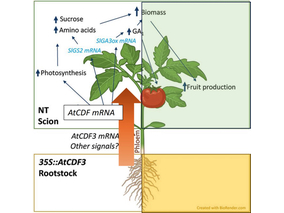
AtCDF3 gene induced greater production of sugars a...
En nuestro post hablamos sobre este interesante tipo de célula del...

Telum Therapeutics, a biotechnology company leveraging proprietary met...