An international study, led by researchers from the Granada Biosanitary Research Institute (ibs.GRANADA), has found a key relationship between genetics and the manifestation of arrhythmias in patients with hereditary cardiomyopathies.
The study analysed data from 71 patients from 18 centres in Europe and the United States, showing that certain genetic mutations influence the onset and recurrence of sustained monomorphic ventricular tachycardia, a potentially serious arrhythmia. The researchers concluded that patients with arrhythmogenic cardiomyopathy, a disease in which the heart muscle weakens and is replaced by fatty or fibrous tissue, are more likely to suffer relapses after undergoing an ablation procedure, especially when the disease is caused by mutations in genes responsible for proteins key to heart function.
These findings confirm that the genetic basis of the disease is associated with specific patterns of electrical malfunction of the heart and with specific anatomical locations of the tachycardia circuits in the heart, which could contribute to a more precise and personalized therapeutic approach.
“This study represents an important advance in the personalization of the treatment of ventricular arrhythmias, allowing us to predict with greater precision the behavior of the disease according to the patient's genotype,” says Dr. Juan Jiménez-Jáimez, researcher in charge of the MPE05-Translational Research in Cardiovascular Diseases group at the ibs.GRANADA, professor at the University of Granada, head of the cardiology section at the Virgen de las Nieves University Hospital and coordinator of the project.
The results of this research could have a significant impact on clinical decision-making, improving the identification of patients at higher risk of arrhythmia recurrence and improving the efficacy of catheter ablation treatment. In addition, they reinforce the importance of incorporating genetic classification in the diagnosis and management of these diseases, moving towards precision medicine.
The study highlights the need for a multidisciplinary approach in the treatment of hereditary cardiomyopathies, integrating genetic data with electrophysiological and imaging studies. This strategy will allow the development of more specific and effective treatments, as well as new tools that facilitate the early detection of patients at risk, with the aim of improving their quality of life and reducing the complications associated with these pathologies.
This research has been funded by the Carlos III Health Institute and the European Regional Development Fund (ERDF), as part of its commitment to cardiovascular health research.
About the group:
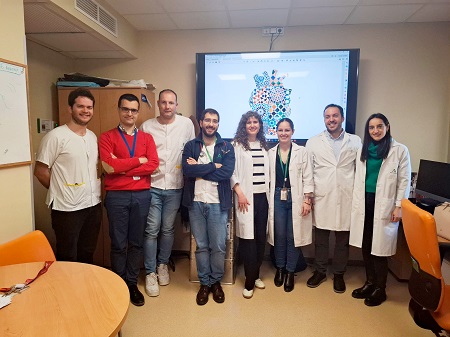
El grupo MPE05-Translational Research in Cardiovascular Diseases The ibs.GRANADA group is made up of a multidisciplinary team of specialists in cardiovascular diseases, focused on the study of the mechanisms of these pathologies for the development of new therapeutic strategies. Its lines of research cover such relevant areas as the influence of the Mediterranean diet on atrial fibrillation, physiological stimulation, the genetics of sudden death and hereditary heart diseases, as well as the impact of physical exercise on arrhythmogenic cardiomyopathies. In addition, the group researches cardiovascular pharmacogenetics, the multidisciplinary management of heart failure, aortopathies and congenital heart diseases in adults, and arteriosclerosis and coronary disease. With a comprehensive approach and a solid network of national and international collaborations, the MPE05 group works to improve the understanding and treatment of cardiovascular diseases, contributing to the advancement of precision medicine in this field.
Further information: https://www.ibsgranada.es/grupos-de-investigacion/mpe05-cardiologia/
Bibliographic reference:
Cabrera-Borrego, E., Bermúdez-Jiménez, FJ, Gasperetti, A., Tandri, H., Sánchez-Millán, PJ, Molina-Lerma, M., Roca-Luque, I., Vázquez-Calvo, S., Compagnucci, P., Casella, M., Tondo, C., Peichl, P., Peretto, G., Paiotti, E., Saguner, AM, Castro-Urda, V., Mora-Ayestarán, N., Larrañaga-Moreira, JM, Fernández de-Aspe, P., … Jiménez-Jáimez, J. (2024). Electrophysiological Phenotype-Genotype Study of Sustained Monomorphic Ventricular Tachycardia in Inherited, High Arrhythmic Risk, Left Ventricular Cardiomyopathy. In Circulation: Arrhythmia and Electrophysiology (Vol. 17, Issue 12). Ovid Technologies (Wolters Kluwer Health). https://doi.org/10.1161/cicep.124.013145

La mejor actitud que podemos adoptar es la de trat...

The research team observed changes in head circumf...
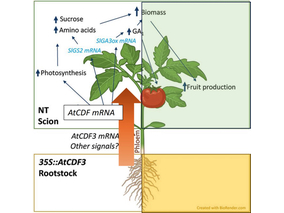
AtCDF3 gene induced greater production of sugars a...
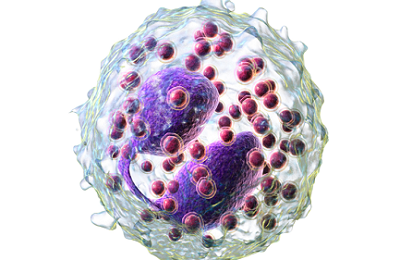
En nuestro post hablamos sobre este interesante tipo de célula del...

Telum Therapeutics, a biotechnology company leveraging proprietary met...