SafeStart, a new project funded by the ”la Caixa” Foundation, has been launched in Sierra Leone to strengthen child survival. Over the next 18 months, it will evaluate the implementation and impact of routine immunisation services, with a special focus on the RTS,S malaria vaccine introduced in 2024.
Malaria remains a leading cause of illness and death among young children in Sierra Leone, despite the availability of effective and affordable control tools. The recent inclusion of the RTS,S malaria vaccine into the country’s Expanded Programme on Immunisation (EPI) marked a major step forward. Still, questions remain about how best to integrate the vaccine into routine services and ensure it reaches all children who need it.
SafeStart project will generate evidence on the real-world performance of the malaria vaccine and its integration with other essential child health interventions. It is led by Clara Menéndez, Director of the Maternal, Child and Reproductive Initiative and Program at ISGlobal, and coordinated in-country by Mohamed Samai, from the COMAHS, the College of Medecine & Allied Sciences & the Ministry of Health.
Using a mixed-methods approach, including community surveys, health system data analysis, and qualitative research, SafeStart will:
Sierra Leone is uniquely positioned for this type of assessment, as it is the only country where perennial malaria chemoprevention (PMC) was rolled out nationally prior to the malaria vaccine. This allows for a rare opportunity to study the combined impact of both interventions on child health outcomes.
“SafeStart will generate evidence on how best to deliver life-saving malaria and immunisation interventions in real-world settings,” says Menéndez. “Our goal is to support national health programs in improving child survival across Sierra Leone.”
The project will directly benefit national programs, such as the Expanded Programme on Immunisation, the National Malaria Control Programme, and the National Child Health Programme, while also generating insights for global health partners and future malaria vaccine efforts worldwide.
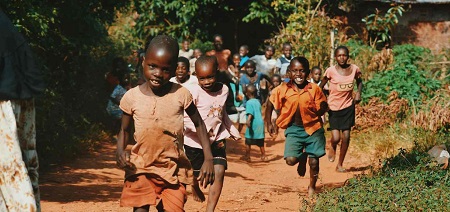
Image: Seth Doyle via Unsplash

La mejor actitud que podemos adoptar es la de trat...

The research team observed changes in head circumf...
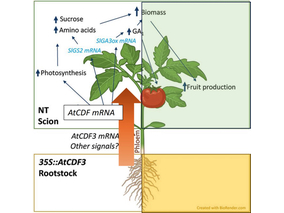
AtCDF3 gene induced greater production of sugars a...
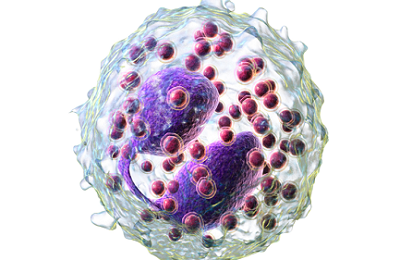
En nuestro post hablamos sobre este interesante tipo de célula del...

Telum Therapeutics, a biotechnology company leveraging proprietary met...