The results of this study show the success of the collaboration between the University of Extremadura and the Extremadura Health Service (SES) , thanks to the university's ability to conduct basic research with access to patients and clinical data from the hospital.
Specifically, research conducted by the Hematology Department of the San Pedro de Alcántara Hospital and the Physiology Department of the Veterinary Faculty at the University of Extremadura (UEx) has discovered that the STC2 protein plays an essential role in regulating platelet activity and, therefore, in the formation of arterial thrombi. The finding, recently published in the International Journal of Molecular Sciences , opens the door to new strategies for preventing stroke, one of the leading causes of death and disability worldwide.
STC2 is a protein involved in regulating calcium ion influx into various cell types, including human and mouse platelets, preventing excess calcium from entering the cell. When STC2 levels decrease, calcium influx into platelets increases, promoting their aggregation and subsequent thrombus formation, especially in arteries. This is what occurs in patients diagnosed with stroke, a type of arterial thrombosis that affects cerebral circulation.
Research into the role of STC2 offers a different approach to studying the mechanisms that contribute to thrombosis, focusing on platelet hyperaggregability related to calcium influx into platelets. “Thrombosis is a multifactorial disease; in each patient, one type of contributing factor may be more prominent than another. Therefore, the broader the range of factors we characterize and identify, the greater our chances of preventing and treating this disease,” emphasizes Dr. Nuria Bermejo , hematologist at San Pedro de Alcántara Hospital and first author of the study.
Follow-up for 10 years
The research was carried out in two phases. First, the research team conducted a prospective, non-randomized study of a cohort of patients from the San Pedro de Alcántara Hospital to perform the corresponding thrombophilia study, which is an abnormal tendency to develop blood clots, after an episode of venous or arterial thrombosis.
Meanwhile, Pedro Cosme 's team in the Department of Physiology at the University of Extremadura (UEx) analyzed the patients' blood samples, and the initial results confirmed the causal link between altered STC2 protein expression and increased calcium influx, as previously described in mouse platelets. The researchers thus found a relationship between STC2 levels and the risk of developing arterial thrombosis.
In a subsequent second phase, the team followed up with the patients participating in the study for more than 10 years. “We reviewed the medical records of patients diagnosed with stroke and arterial thrombosis, and biochemical parameters were measured at the University of Extremadura (UEx). The results indicated that STC2 values were mostly normalized compared to healthy patients thanks to aspirin treatment, which regulates STC2 levels,” explains Dr. Bermejo.
Following this first relevant finding on the role of STC2 in thrombosis, multicenter randomized studies with a larger number of patients are planned, also including other thrombotic pathologies such as acute coronary syndromes (myocardial infarction) or chronic ones that support the STC2 protein as a stroke biomarker.
The researchers emphasize that regular monitoring of the STC2 protein is a promising stroke biomarker candidate in at-risk groups and in the general population, which, due to age, has a higher risk of thrombosis, thus supporting preventive treatment with aspirin. Furthermore, periodic STC2 detection could help assess which patients benefit from effective aspirin treatment in preventing future strokes.
Bibliographic reference: Bermejo N, López JJ, Berna-Erro A, Fernández E, Corbacho AJ, Vázquez MT, Granados MP, Redondo PC. Stanniocalcin2, A Promising New Target for Identifying Patients with Stroke/Ictus. International Journal of Molecular Sciences. 2025; 26(20):9999. https://doi.org/10.3390/ijms26209999

La mejor actitud que podemos adoptar es la de trat...

The research team observed changes in head circumf...
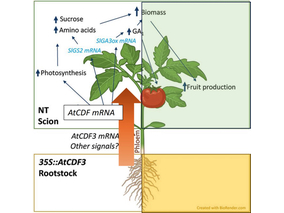
AtCDF3 gene induced greater production of sugars a...
En nuestro post hablamos sobre este interesante tipo de célula del...

Telum Therapeutics, a biotechnology company leveraging proprietary met...