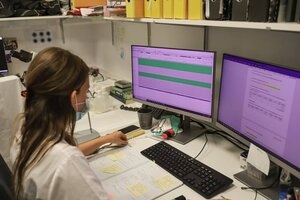
Drs. Susana Rives, Montserrat Torrebadell and Nerea Vega (IRSJD) participate in a study led by Dr. Pablo Menéndez, group leader at the Josep Carreras Leukaemia Research Institut, who has identified a previously noticed population of pre-leukemic cells might be responsible for some relapses in B-cell acute lymphoblastic leukemia (B-ALL).
CD19 is a characteristic protein found in the surface of B-lymphocytes, the antibody producing immune cells, since the very early progenitors to the most mature ones. Its presence is maintained even after malignant transformation in B-ALL and, therefore, it is considered a good biomarker for the identification of B-cell leukemias and a heavily used therapeutic target in immunotherapy strategies.
Indeed, the treatment of B-ALL with CD19-directed immunotherapies such as Bi-specific monoclonal antibodies, such as BiTEs, or CAR-T constructs, have been highly successful in achieving complete remissions in the last few years. However, relapses are commonly found in those patients, meaning that there are still cells resisting the therapy, able to reinitiate the disease.
In the work, published at the highly cited Blood journal, researchers found that a population of cells lacking CD19 (CD19-/CD22+) is present in physiological conditions and in B-ALL patients. In these patients, some of the cells are bearing the same pattern of mutations as the former leukemia and, not displaying CD19, they are part of the leukemic burden but are not going to be targeted by anti-CD19 immunotherapies. This difference could be responsible for some of the relapses.
The reported results are of highly clinical value, since a not too complex cytometric or molecular analysis could determine the presence of the CD19-/CD22+ subpopulation in B-ALL patients from the very beginning, anticipating the risk of relapse after a successful CD19-targeting treatment.
Also, the researchers propose that dual therapies against CD19 and CD22 expressing cells could be a strategy to reduce relapses and keep patients in remission for longer. Such dual therapies are already being developed and may soon be showing its potential in real-life clinical trials.
The research has been carried out under the background of the Advanced Therapies National Network (TERAV-RICORS) funded by the ISCII, by a multicenter team including researchers from the Josep Carreras Leukaemia Research Institute, University of Salamanca, Hospital Clínic de Barcelona, Oxford University, ICO-Hospital Germans Trias i Pujol, Hospital Sant Joan de Déu and Oxford Biomedical Research Centre.
Drs. Susana Rives, Montserrat Torrebadell and Nerea Vega are researchers in "Leukaemia and Paediatric Haematology Disorders", research group of the Institut de Recerca Sant Joan de Déu, led by Dr. Mireia Camós, pediatric hematologist at the SJD Barcelona Children’s Hospital.
The hidden cells behind B-cell acute lymphoblastic leukemia relapse spotlighted for the first time. Josep Carreras Leukaemia Research Institute.

La mejor actitud que podemos adoptar es la de trat...

The research team observed changes in head circumf...
AtCDF3 gene induced greater production of sugars a...
En nuestro post hablamos sobre este interesante tipo de célula del...

Telum Therapeutics, a biotechnology company leveraging proprietary met...