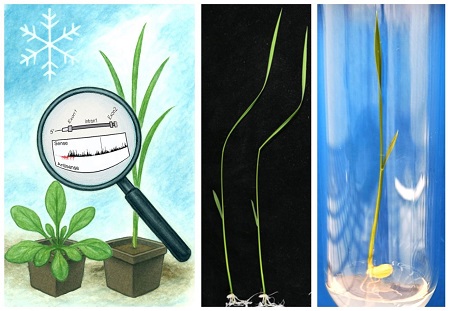
Researchers from the Centre for Research in Agricultural Genomics (CRAG) and the Umeå Plant Science Centre (UPSC) have achieved a fundamental discovery to understand and enhance plant resilience under adverse climatic conditions.
This scientific research, published in the journal Molecular Plant and involving CRAG researcher Martí Quevedo and CSIC researcher at CRAG Elena Monte, has identified an unexplored genetic mechanism that allows plants to keep acclimation genes to environmental stress, such as cold, “ready” for a rapid response.
CASt and a special genetic architecture: the hidden stand-by mechanism
Transcription is the process that produces RNA from DNA inside the cell and subsequently gives rise to proteins through translation into amino acids. Although this is a general rule of molecular biology, it is not always the case. For example, Convergent Antisense Transcription (CASt) is a form of non-coding transcription, meaning a type of RNA that is not translated into proteins, which starts at the beginning of genes and in the opposite or antisense direction.
In this study, the researchers have shown that a group of stress-response genes retain a specific genetic architecture consisting of a first intron, or non-codifying DNA region, designed to host this CASt regulation. This combination of CASt and the intron allow genes to remain in a stand-by state at mild temperatures (22 °C), increasing their responsiveness when cold arrives (4 °C).
This rapid transcriptional response mechanism has been found mainly in genes encoding amino acid transporters, such as those of the AAP (Amino Acid Permease) family, which are crucial for moving cellular components quickly during stress response.
Implications and future of the research
The research has also confirmed that this regulatory strategy is evolutionarily conserved in plants such as the model organism Arabidopsis thaliana, rice, and maize. Surprisingly, the researchers were able to predict in silico which genes will be stress-sensitive in rice based on their genetic structure and the presence of CASt and further, demonstrated it in in vitro cultures at CRAG.“
“This study exemplifies the importance of consortia such as INUPRAG where CRAG cooperates with UPSC in Sweden and INRAE in France. The possibility of combining in silico bioinformatic analysis with in vitro rice cultures at CRAG has been essential to prove our theory”, says Martí Quevedo, co-author of the study.
This discovery reveals an evolutionary selected genomic feature linked to non-coding transcription that plants use to adapt to environmental fluctuations. Understanding how CASt primes genes open a field of study scarcely explored until now and offer enormous potential for the agri-food sector, with the possibility of designing plants with greater frost resistance and developing more robust crops to face future climate challenges.

La mejor actitud que podemos adoptar es la de trat...

The research team observed changes in head circumf...
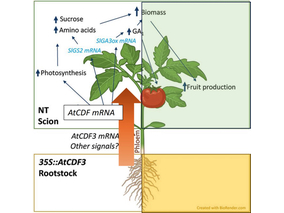
AtCDF3 gene induced greater production of sugars a...
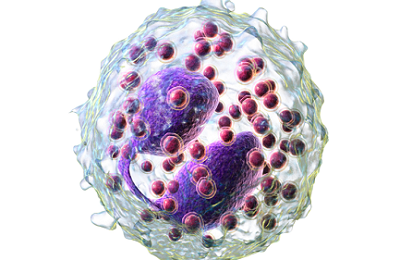
En nuestro post hablamos sobre este interesante tipo de célula del...

Telum Therapeutics, a biotechnology company leveraging proprietary met...