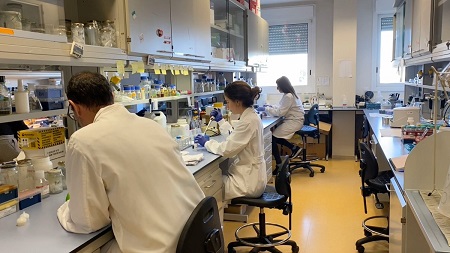
Currently, Spanish hospitals and health centers do not have the obligation to have a system for the elimination of antibiotics and resistance genes in their waste water treatment stations. LIFE GENESYS wants to get ahead of future legislation and propose systems that have the capacity to eliminate this pollution from the environment, and thus prevent aquatic ecosystems from being affected and, therefore, people's health.
In fact, the scientific community and the World Health Organization (WHO) have warned that the pharmaceutical products, in particular antibiotics, are one of the most alarming pollutants, since its presence in the environment promotes the proliferation of resistance to antibiotics and multi-resistant bacteria that are difficult to treat.
An innovative solution in Spain
With the aim of eliminating resistant bacteria from hospital wastewater and avoiding its environmental impact, the European project LIFE GENESYS will promote an innovative solution in consistent Spain in a treatment at the origin, that is to say at the same Parc Taulí University Hospital (Sabadell).
Specifically, this solution will be based on the implementation of a new generation treatment train to treat wastewater in a decentralized manner and remove drugs, resistance genes and antibiotic-resistant bacteria, thus making it easier for wastewater leaving hospitals to be free of substances that can alter aquatic systems.
Besides, LIFE GENESYS will develop a digital resistance risk preventive warning platform with the data collected from the city's sanitation network. This tool will determine antibiotic levels in hospital effluents, which it will enable healthcare professionals to make informed decisions when prescribing antibiotics.
Commitment to European guidelines
This project has obtained funding from the call LIFE 2023 for the Environment and Climate Action, within the "Circular Economy and Quality of Life" subprogramme of the European Union, and will be carried out by the consortium formed by Cetaqua, as coordinating entity in collaboration with Aigües Sabadell CASSA, Apria Systems, LABAQUA, the Parc Taulí University Hospital i the Parc Taulí Research and Innovation Institute (I3PT).
"The collaborative work of these institutions will make it possible to integrate different areas of knowledge that include the management of biological waste, the management of infections by resistant bacteria, the drainage network of the city, the treatment of waste water and the treatments water innovators, with the aim of launching a pilot solution", highlighted Òscar Quijada, researcher at Parc Taulí, at the project start meeting that was held recently.
Thanks to this innovative and reproducible solution, as explained by the I3PT team of researchers, it will contribute to promoting the objectives proposed by the EU in the framework of the development of innovative strategies to fight against antibiotic resistance, offering solutions decentralized and more efficient.

La mejor actitud que podemos adoptar es la de trat...
The research team observed changes in head circumf...
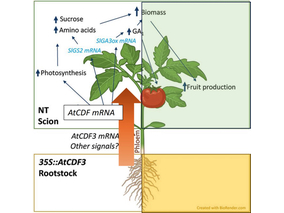
AtCDF3 gene induced greater production of sugars a...
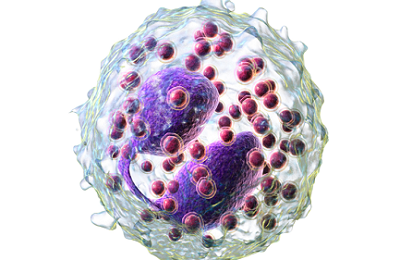
En nuestro post hablamos sobre este interesante tipo de célula del...

Telum Therapeutics, a biotechnology company leveraging proprietary met...