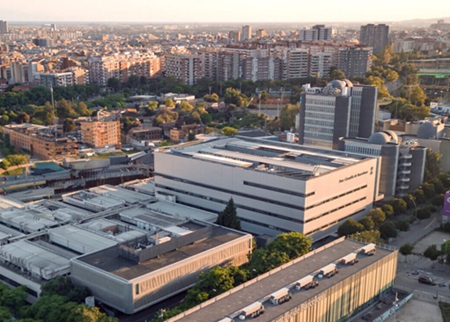
This 2023 has been a great year in terms of funding received by the public research institutes, centres and groups at the Barcelona Science Park, which mobilised 69.9 million euros, of which 57.1 million came from public funds. This figure is 39.8% higher than in 2022. The resources raised enabled the centres to make a quantitative and qualitative leap in the generation of knowledge and technology. They also served to advance in a management approach based on the valorisation and transfer of results that is committed to a model of open innovation to take on the health challenges of the 21st century from a global perspective.
The public R&D&I ecosystem at the Science Park of the University of Barcelona achieved indicators of excellence in 2023, both in terms of input – funding, scientific talent and infrastructure – and output – scientific production, transfer, innovation and internationalisation – that consolidate its international positioning as a model of leading, cutting-edge research.
The institutes, centres and research groups present at the Park have significantly increased their capacity to attract resources, both nationally and internationally. This has allowed them to make a quantitative and qualitative leap in the progress of their activity. All together, in 2023 they mobilised 69.9 million euros, between public capital (57.1 million) and private capital (12.8 million). This figure represents an increase of 39.8% over 2022, when it reached 50 million euros.
The Institute for Research in Biomedicine (IRB Barcelona) -occupying 5.576 m2 in the Park in 2023, with 30 research groups, 8 scientific platforms and over 451 people dedicated to research- raised 34.2 million euros (6.8 million in private capital).
The Institute for Bioengineering of Catalonia (IBEC) -occupying 4.022 m2 with 23 research groups and 339 researchers- achieved a total of 17.5 million euros (2.5 million in private capital).
The National Centre for Genomic Analysis (CNAG) -occupying 1,474 m2 with 17 groups, and a scientific team of 111 professionals- obtained 9.9 million euros (2.8 million in private capital).
The Molecular Biology Institute of Barcelona (IBMB-CSIC) -occupying 1,961 m2 with 36 research groups and 100 researchers- raised a total of 4.9 million euros (0,1 million in private capital).
As for the University of Barcelona centres and groups located at the Barcelona Science Park, it is worth highlighting Creatio, the UB’s centre for the production and validation of advanced therapies, which raised 1.7 million euros (0.6 million euros in private capital); the Technology Unit of the Institute of Cosmos Sciences (ICCUB-Tech),with 807,000 euros (€21,000 in private capital); the Biomolecule NMR Group (BioNMR Group), part of the UB Department of Inorganic and Organic Chemistry, which received €422,146 in public funds; and, finally, the Laboratory of Metabolic Dynamics in Cancer, which obtained €341,250 (€60,000 in private capital), and the Molecular Structure of Nuclear Receptors Group, which raised €15,000 in private capital, both of whom belong to the Institute of Biomedicine of the University of Barcelona (IBUB).
“We are extremely satisfied with the results achieved in 2023. They reflect the collective effort and dedication of all the institutes and research groups present at the Barcelona Science Park. The 70 million in funding, 40% more than the previous year, is a clear indicator of our public research’s ability to attract both public and private resources, so we are talking about solid lines of research with a great future outlook. The Barcelona Science Park is already a benchmark in the field of health in Europe and we will continue to work on a model of open innovation that allows us to face the challenges of the 21st century, generating knowledge and technology that benefits society”, said Maria Terrades, director of the Park.
During 2023, the public centres and groups in the Barcelona Science Park community maintained their firm commitment to the valorisation of knowledge and technology, and their transfer to the productive fabric.
In terms of intellectual property, a total of 24 priority patent applications and extensions were filed: IBEC,12; IRB Barcelona, 6; and the IBMB-CSIC, 6. In addition, in 2023, IRB Barcelona signed four licensing contracts for its patented technologies and the IBEC, three.
In transfer, IRB Barcelona achieved an unprecedented milestone in 2023, as one of their breakthroughs led to a diagnostic device reaching the market for the first time, through the work of one of its spin-offs. The device is Inbiomotion’s MAF-TEST for breast cancer prognosis, which is now available to oncologists and pathologists and is estimated to benefit around 24,000 patients each year in Spain. Another of IRB Barcelona’s spin-offs, Nuage Therapeutics, raised €12 million in seed funding headed by Sofinnova Partners and Asabys to drive forward its main programme for castration-resistant prostate cancer (targeting intrinsically disordered proteins (IDPs)) and validate its drug discovery platform. The IBEC’s market-potential discoveries led to the founding of Nanobots Therapeutics in 2023, a spin-off of the IBEC and the Catalan Institution for Research and Advanced Studies (ICREA). The company will work on developing and marking the MotionTx technology platform, based on nanobots with unique tumour-penetrating capabilities to deliver drugs directly to cancer cells. The company closed a pre-seed fundraising round of €478,000, headed by BStartup Health. Nanobots will initially focus on non-muscle-invasive bladder cancer, one of the most recurrent and difficult-to-treat cancers.
In 2023, the public RDI and PCB ecosystem strengthened its commitment to its open innovation model by combining scientific talent, cutting-edge technology and cooperation with public institutions and national and international private companies. The aim is to boost interdisciplinary projects that generate market value and have the potential to solve health challenges from a global perspective.
During 2023 they launched a total of 1,702 national and international collaborative projects with various public and private organisations around the world, 248 % more than in 2022. The organisations involved were National Centre for Genomic Analysis (CNAG) 1,115 projects; IRB Barcelona, 271; IBEC, 166; Creatio, 54; IBMB-CSIC, 72; the Technology Unit of the Institute of Cosmos Sciences of the UB (ICCUB), 10; the UB Biomolecular NMR (BioNMR) Group, 8; the UB Laboratory of Metabolic Dynamics in Cancer, 4; and the Institute of Biomedicine of the University of Barcelona (IBUB) Molecular Structure of the Nuclear Receptors Group, 2.
In 2023, the new 1.0 GHz nuclear magnetic resonance spectrometer was inaugurated at the Biomolecular NMR Laboratory (ICTS R-LRB), the only such NMR infrastructure in Europe, and the second in the world (after Japan) to use high-temperature superconductors to generate magnetic fields in a 1 GHz NMR instrument. The facility was optimised with the acquisition of a triple resonance TXI probe.
In 2023, the CNAG continued to renew its sequencing infrastructures and complementary equipment, with ERDF co-funding through the CTS agreements with the Ministry of Science, Innovation and Universities and the Government of Catalonia. Of particular note are the CosMx™ Spatial Molecular Imager, a high-multiplex in situ analysis platform that provides spatial multi-omics with formalin-fixed paraffin-embedded (FFPE) and fresh (FF) tissue samples at both cellular and subcellular resolution; the Bruker Vutara VXL Super-Resolution Microscope, an industry-leading microscopy technology specifically designed for single-molecule localisation; and the expansion of the CNAG computing cluster in both computing nodes and storage disks.
The IBEC set up a biomodule in the BioImaging Facility, a unique scientific technological infrastructure that provides imaging tools for the in vivo, ex vivo and in vitro study of different experimental models. It also created the Common Core Basics, which provides routine laboratory and other types of equipment necessary for the IBEC groups to carry out their research.
The IBUB has added a new super-high-resolution confocal microscopy device, the Stellaris 8 FALCON, to the Molecular Imaging Platform. This allows the study of biological systems by applying a wide variety of fluorescence techniques to investigate cellular physiology and explore the dynamics of living and complex biological samples.
Creatio added a new biochemical analysis machine to its research infrastructure, and a 3D bioprinter with GMP compliance, the only one certified in Spain for the manufacture of bioprinted products for clinical use. With this disruptive technology, the center will be able to manufacture artificial human tissues that will help cure diseases that currently have no treatment. In June 2023, Creatio acquired UTOX, the experimental toxicology platform of the Barcelona Science Park. This acquisition will allow the center to offer support and services throughout the entire drug development chain, from basic research to the production of advanced therapy drugs.
Throughout 2023, the institutes, centres and public research groups in the PCB continued to focus on attracting and retaining scientific and innovative talent, and setting up new research groups to develop disruptive projects with a high potential and impact on health.
During the year, the CNAG added two new teams to the organisation: Functional Genomics, led by Anna Esteve, and Spatial Genomics, led by Anna Pascual-Reguant. The IRB Barcelona opened the new Innate Immune Biology laboratory, led by Stefanie Wculek.
The IBMB-CSIC also set up three new research groups: Structural Glycoprotein, led by Marcelo Guerin; Chromatin Folding and Nanoscopy, led by Victoria Neguembor; and Epigenetics and Single-Cell Dynamics, led by Irene Hernando.
In terms of scientific production, the indicators used by the PCB public institutes, centres and groups showed the high global impact of their pioneering research, with a total of 586 articles indexed in high-impact international journals: IBEC, 214; IRB Barcelona, 177; CNAG, 107; IBMB-CSIC, 50; ICCUB-Tech, 21; Creatio, 8; the UB BioNMR Group, 5; the IBUB Molecular Structure of Nuclear Receptors Group, 3; and the UB Metabolic Dynamics in Cancer Group, 1.
This scientific output was reflected in research projects at the cutting edge of innovation and technological development, with a significant impact on science, the economy and society.
• The IBMB-CSIC made highly significant progress in the study of the molecular and genetic mechanisms involved in biological processes, a field relevant to the development and physiology of living organisms. A team at the institute identified an unconventional mechanism of action for an intracellular vesicle-localised receptor, TNFR-Wergen, and its role in the development of terminal cells in the Drosophila tracheal system. This research could provide the basis for the study of numerous respiratory diseases (Nature Communications; doi: 10.1038/s41467-023-41549-3). Another group described a new mechanism for the regulation of dynein, a kind of molecular motor for cell division and neuronal development, opening up an innovative avenue for research in diseases such as cancer, central nervous system disorders and organ malformations (Nature Communications; doi: 10.1038/s41467-023-38116-1). A collaboration between the IBMB-CSIC and CIB-MS characterised the three-dimensional structure of the RepB protein, which is essential to initiating replication of bacterial plasmid pMV158 containing a tetracycline resistance gene. This discovery could lead to new strategies for combating antibiotic resistance (Nucleic Acids Research; doi: 10.1093/nar/gkac1271). Researchers at the IBUB and the BMLS in Germany deciphered the structure and function of the P116 protein, which enables the bacterium Mycoplasma pneumoniae (the cause of 30% of out-of-hospital pneumonias) to obtain cholesterol and other lipids it needs for its survival. This research could provide new therapeutic possibilities to block the infectious capacity of this pathogen (Nature Structural & Molecular Biology; doi: 10.1038/s41594-023-00922-y). Another breakthrough by the IBMB-CSIC in 2023 was designing a disruptive technology (applying techniques from structural biology, computational physics and artificial intelligence) to improve the development of the antibody regions that provide the specificity needed to neutralise an external molecule. This contribution opens the door to designing tailored antibodies (Nature Communications; doi: 10.1038/ s41467-023-41717-5. For more information, visit the IBMB-CSIC website [+]
In 2023 the CNAG made a major contribution to planetary biodiversity, by helping to generate reference chromosomes for 39 species, providing valuable data for their analysis and conservation. It was also involved in studies that significantly advanced understanding of our evolution, becoming the genomic sequencing and analysis centre for the largest primate catalogue in history. One of the few special issues of the journal Science edited in Spain (doi: 10.1126/science.abn8197) published the genomes of 86% of primate genera and all the families, totalling over 809 individuals from 233 species, the most complete catalogue of primate genomic information ever produced. Eight out of ten of the species were sequenced at the CNAG. Another team at the centre created innovative software to identify genetic modifications in DNA, a key tool for understanding how certain diseases are regulated and develop (Bioinformatics Advances; doi: 10.1093/bioadv/vbac101). The centre also published the first DNA library of antibiotic-resistant bacteria, with the genomic profile of nearly 500 bacteria, revealing the mechanisms that cause them to acquire, develop and transmit drug resistance. This online database, called InCREDBle, is complemented by other scientific studies and clinical, geographical and microbiological data, making it the most comprehensive resource for studying this class of bacteria (Microbial Genomics; doi: 10.1099/mgen.0.001132). Use of next-generation sequencing technology for applications in rare diseases is one of the CNAG’s priority areas, where it continued to work closely with national and international institutions, clinicians and patient associations to end patients’ diagnostic odyssey and develop new therapies. In 2023, it analysed the genomes of over 1,000 patients with rare diseases and hereditary cancer, 17% up on the previous year, in initiatives such as Solve-RD, iGenCO and Senegene. The RD–Connect Genome–Phenome Analysis Platform (GPAP), developed and coordinated by the CNAG, which enables secur

La mejor actitud que podemos adoptar es la de trat...

The research team observed changes in head circumf...
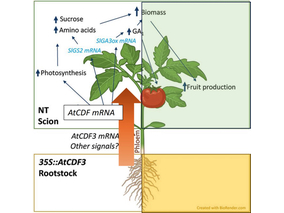
AtCDF3 gene induced greater production of sugars a...
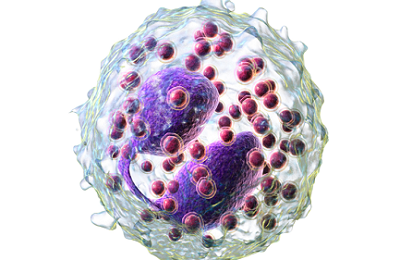
En nuestro post hablamos sobre este interesante tipo de célula del...

Telum Therapeutics, a biotechnology company leveraging proprietary met...