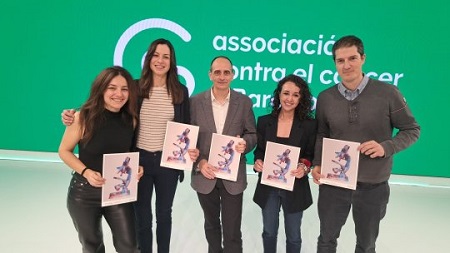
IRB Barcelona gains new momentum for its research projects thanks to AECC 2024 Grants from the Associació Contra el Càncer a Barcelona (the Barcelona branch of the Spanish Association Against Cancer). A total of five researchers from IRB Barcelona have secured funding to advance studies aimed at deepening our understanding of cancer and developing more effective therapeutic strategies.
During the presentation ceremony for the 49 AECC 2024 Grants awarded in the province of Barcelona, the Associació Contra el Càncer a Barcelona announced a total investment of over €12 M to support research at various institutions.
The ceremony, which was held at the MGS Auditorium in Barcelona, was attended by the Hon. Núria Montserrat, Minister of Research and Universities of the Government of Catalonia, Dr. Laureano Molins, President of the Associació Contra el Càncer a Barcelona, and Dr. Marta Puyol, Scientific Director of the Scientific Foundation of the Spanish Association Against Cancer, among other distinguished guests.
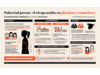
During the event, Dr. Roger Gomis, from IRB Barcelona, participated in the panel discussion “Patient-Centred Research”, where, alongside other researchers, he discussed the importance of aligning cancer science with the real needs of patients.
Coordinated Projects AECC 2024 (€1,200,000): headed by Dr. Roger Gomis, the “MetEND project” focuses on unravelling the dependence between metastasis and the tumour microenvironment.
General Projects AECC 2024 (€300,000): awarded to Dr. Francesc Posas to study an alternative control mechanism of cell proliferation and its impact on breast cancer progression.
Cancer Grand Challenge (€595,980): awarded to Dr. Cristina Mayor-Ruiz for the “PROTECT” initiative, which focuses on the design of protein degrader drugs for highly resistant tumours.
Investigator AECC 2024 (€200,000): awarded to Dr. María Teresa Blasco to study the role of the MAF gene and its influence over tumour cell proliferation.
Postdoctoral AECC 2024 (€160,000): awarded to Dr. Ana Domostegui and focused on the development of a new type of molecule that facilitates the discovery of therapeutic agents to treat cancer.
“Thanks to this new funding, IRB Barcelona will be able to strengthen its leadership in oncology, dedicating its efforts to high-impact projects aimed at swiftly translating scientific advances into clinical practice to improve patients' lives”, stated Dr. Francesc Posas, IRB Barcelona director.
In Spain, a new case of cancer is diagnosed every two minutes, and it is estimated that 1 in 2 men and 1 in 3 women will develop the disease during their lifetime. Given these figures, driving research forward emerges as a priority for society.
More information:
https://www.contraelcancer.es/es/actualidad/noticias/associacio-contra-cancer-barcelona-presenta-49-ayudas-investigacion-que-se-desarrollaran-provincia
About IRB Barcelona
The Institute for Research in Biomedicine (IRB Barcelona) pursues a society free of disease. To this end, it conducts multidisciplinary research of excellence to cure cancer and other diseases linked to ageing. It establishes technology transfer agreements with the pharmaceutical industry and major hospitals to bring research results closer to society, and organises a range of science outreach activities to engage the public in an open dialogue. IRB Barcelona is an international centre that hosts 400 researchers and more than 30 nationalities. Recognised as a Severo Ochoa Centre of Excellence since 2011, IRB Barcelona is a CERCA centre and member of the Barcelona Institute of Science and Technology (BIST).

La mejor actitud que podemos adoptar es la de trat...

The research team observed changes in head circumf...
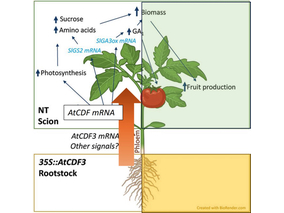
AtCDF3 gene induced greater production of sugars a...
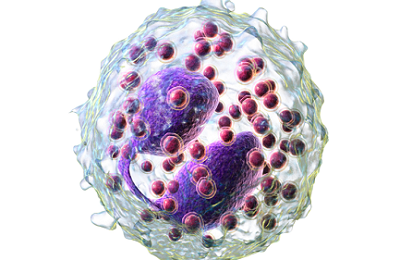
En nuestro post hablamos sobre este interesante tipo de célula del...

Telum Therapeutics, a biotechnology company leveraging proprietary met...