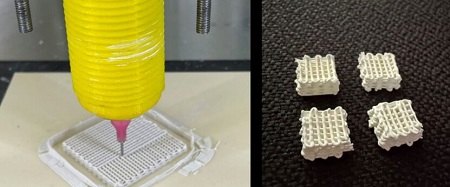
Within the framework of the circular economy, it is necessary to develop efficient technologies for the treatment of wastewater generated by the pharmaceutical, textile, and other industries, in order to use the reclaimed water in agriculture. Copper oxide (CuO) and zinc oxide (ZnO) nanomaterials, in various shapes and sizes, are effective in removing harmful substances from industrial wastewater through photocatalytic activities. However, after water treatment, nanoparticles must be removed through separation processes, such as precipitation, filtration, or centrifugation. These processes significantly increase the cost of water treatment. Hence, there is great interest in developing new technologies to obtain efficient photocatalysts in large quantities that are easily disposed of at low cost.
Therefore, the WaterGreenTreat project , which will end in 2027, aims to manufacture macroporous photocatalysts using 3D printing from metal oxide compounds (copper oxide and zinc oxide) and to evaluate the synergistic effect induced by the simultaneous presence of photocatalysts and microalgae in the removal of specific pollutants from wastewater.
[img src="https://comunicacion.unex.es/wp-content/uploads/sites/70/2025/04/Antonia-Pajares-Vicente-471x591.png" alt="Antonia Pajares Vicente" width="471" height="591">Within the framework of the project, the University of Extremadura's Specialized Materials Group (GEMA-UEx) will be responsible for manufacturing the photocatalysts. Specifically, using an additive manufacturing technique (3D printing) called robotic molding, three-dimensional porous structures with controlled pore architecture will be manufactured from commercially available copper oxide and zinc oxide nanoparticles and others obtained through biosynthesis by another group participating in the project.
The results of these materials designed at UEx are promising. "Our photocatalysts allow us to remove pollutants from water, offering several advantages over other types of photocatalysts. They are easily removed because they are macroscopic, can be reused, and do not release metallic particles that could contaminate the water," highlights Antonia Pajares Vicente , professor and principal investigator of the project at UEx.
The manufacturing process of the photocatalysts is designed to reduce the environmental impact, both in reducing the waste generated and energy consumption, according to the UEx researchers involved in the project, Antonia Pajares Vicente, Pedro Miranda González , Óscar Borrero López and Ana Martínez Udaondo . Once printed, the structures will be consolidated through a high-speed thermal sintering process, promoting the growth of the ceramic nanoparticles and thus preserving their photocatalytic activity. In this way, the environmental impact caused by the manufacture of the new photocatalysts will be minimized, since, on the one hand, using additive manufacturing techniques will reduce the amount of waste material generated and, on the other hand, energy consumption will be reduced since rapid sintering techniques require only 20-30% of the energy consumed in conventional sintering processes.
Furthermore, the use of these 3D photocatalysts, in addition to making them easier to dispose of after wastewater treatment, will prevent water contamination with metal ions generated from metal oxides when used in nanoparticle form.
The 3D photocatalysts manufactured by GEMA-UEx will be used by the other groups participating in the project to conduct toxicological studies, treat wastewater containing medications or organic dyes at the laboratory level, irrigate plants grown in greenhouses, and determine the synergistic effect induced by the simultaneous presence of photocatalysts and microalgae in wastewater treatment.
The WaterGreenTreat project , entitled “A green approach within the framework of the circular economy: 3D-printed photocatalysts for wastewater treatment and the use of reclaimed water in agriculture,” is funded by Water4All – Spanish National Research Agency (AEI) (PCI2024-153414). The following research centers are participating: National Institute of Materials Physics (Romania); University of Bucharest (Romania); University of Agriculture and Life Sciences (Hungary); University of Extremadura (Spain); Centre National de la Recherche Scientifique CNRS GEPEA UMR6144 (France).
Source: UEx Scientific Culture Dissemination Service.

La mejor actitud que podemos adoptar es la de trat...

The research team observed changes in head circumf...
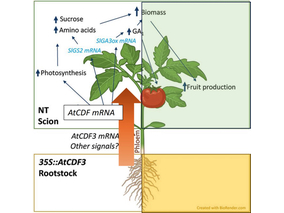
AtCDF3 gene induced greater production of sugars a...
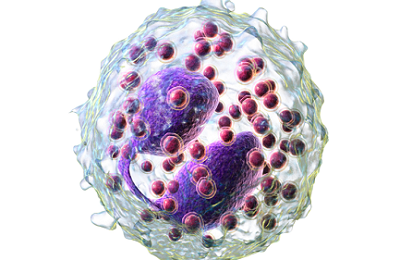
En nuestro post hablamos sobre este interesante tipo de célula del...

Telum Therapeutics, a biotechnology company leveraging proprietary met...