One of the most established lines of research within the Cell Physiology research group at the University of Extremadura (UEx) focuses on understanding the molecular mechanisms that allow cells of different types of breast cancer to survive, proliferate, and resist chemotherapy treatments. In this context, UEx researchers are studying calcium signaling , one of the most important physiological pathways in a cell, and specifically, Orai channels , proteins in the cell membrane that allow calcium to enter the cell.
“Calcium acts as a universal messenger within the cell; that is, the movement of calcium, its entry into or release from the cell, activates many essential cellular functions, allowing cells to make decisions,” explains Juan Antonio Rosado Dionisio, professor at the University of Extremadura's Faculty of Veterinary Medicine . When a hormone or external signal reaches the cell and binds to its receptor, it triggers an internal response: an increase in calcium in a specific area within the cell, the cytosol. This small change is enough to allow, for example, muscle cells to contract, secretory cells to release substances, and other types of cells to grow, move, or divide.
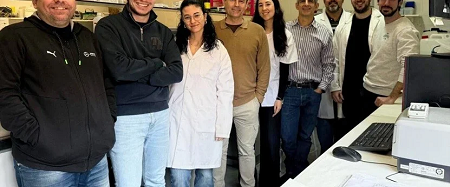
[img src="https://comunicacion.unex.es/wp-content/uploads/sites/70/2026/03/Grupo-de-investigacion-del-estudio-del-cancer-de-mama-591x430.webp" alt="Breast Cancer Study Research Group" width="591" height="430">Cancer cells can manipulate this calcium signaling to proliferate, invade tissues, or avoid cell death by behaving like a multipotent progenitor cell. Therefore, “our goal is to understand how cancer cells are able to remodel Orai family calcium channels to gain a biological advantage over a normal, healthy cell,” explains the professor from the University of Extremadura.
Researchers have focused on the Notch1 cell signaling pathway , which plays a fundamental role in cell communication and whose dysregulation has been associated with the development and progression of breast cancer. The UEx team has found that the Notch1 pathway regulates two calcium channels—Orai1 and Orai3—differently depending on the breast cancer subtype . In less metastatic tumors, Notch increases calcium influx and promotes tumor growth, but in highly metastatic tumors, its activation reduces calcium influx and triggers apoptosis, or cell death. This regulation, therefore, modifies calcium influx into cells and can activate or inhibit tumor processes, opening the door to targeted therapies for aggressive breast tumors such as triple-negative breast cancer, since its activation induces the death of the most metastatic cells.
The research employed advanced techniques applied during the stay of UEx researcher Joel Felipe Nieto , the study's first author, at the University of Graz in Austria. Specifically, thanks to an experimental model using chicken embryos, scientists were able to evaluate the impact of certain drugs on the development or controlled growth of tumors under more realistic conditions than traditional cell cultures. One of the drugs the team worked with is an inhibitor of Notch1 function. "In this way, we were able to verify in the UEx laboratory the effect of activating and inhibiting the Notch1 cellular pathway on tumor development," explains Nieto.
Triple-negative breast cancer is one of the most aggressive types, with fewer treatment options and a worse prognosis. The finding that Notch activation induces the death of the most metastatic cells makes this pathway a potentially promising therapeutic target. The next step in the research aims to confirm in additional animal models whether Notch activation can inhibit aggressive tumors without affecting healthy cells, and to expand the study to other types of cancer.
Bibliographic reference: Nieto-Felipe, J., Macias-Diaz, A., Alvarado, S. et al. Notch1 regulates Orai1 and Orai3 expression in breast cancer cells. Sci Rep 16, 3229 (2026). https://doi.org/10.1038/s41598-025-33071-x
Source: Scientific Culture Dissemination Service of the UEx

La mejor actitud que podemos adoptar es la de trat...

The research team observed changes in head circumf...
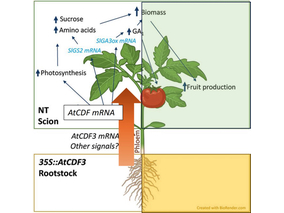
AtCDF3 gene induced greater production of sugars a...
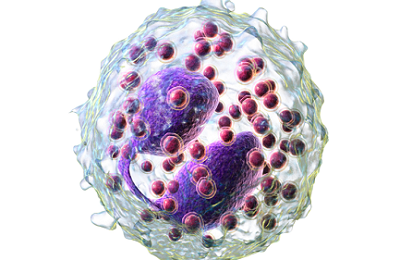
En nuestro post hablamos sobre este interesante tipo de célula del...

Telum Therapeutics, a biotechnology company leveraging proprietary met...