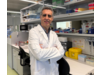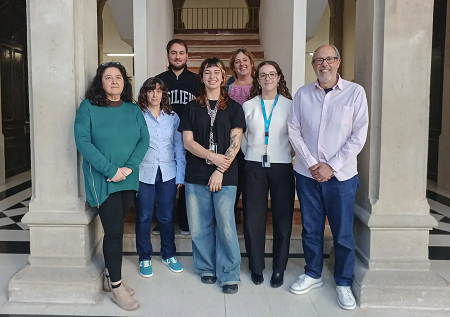
IDIBAPS-Hospital Clínic Barcelona’s Vascular Cell Biology research group, led by Gustavo Egea, has been selected to receive grants in two competitive calls promoted by patient associations focused on Marfan syndrome. Provided by the US-based National Marfan Foundation and the French association Marfans35, these grants will allow researchers to further investigate the mechanisms that cause aortic aneurysm, one of the most serious complications of this rare disease.
Marfan syndrome is a genetic disorder that affects connective tissue and primarily impacts the cardiovascular system, bones and eyes. One of its most concerning manifestations is the gradual dilation of the aorta, which can lead to an aneurysm and pose a high risk to life.
An international consortium to establish a preclinical benchmark model
The National Marfan Foundation (NMF) has awarded $800,000 to a consortium made up of four research groups from Belgium, Spain, the Netherlands and the United States. The project is coordinated by Bart Loeys (Belgium) and includes the participation of the group led by Gustavo Egea, as well as the teams of Vivian de Waard and Elena McFarlane.
The consortium aims to establish a benchmark model for preclinical research on aortic aneurysm in Marfan syndrome. The project will harmonise experimental protocols and parameters across laboratories to improve the comparability and reproducibility of results. The drug losartan, commonly used in patients with Marfan syndrome, will serve as the treatment of reference for validating future medicines of interest to the scientific community.
New antioxidants to halt aneurysm progression
In the meantime, the French association Marfans35 has funded a project led by Gustavo Egea focusing on the use of new antioxidants. Supported by €400,000 in funding over four years, this initiative will study different antioxidants comparatively and complementarily. The aim is to determine which treatments, administered individually or in combination, may slow the progression of aortic aneurysm.
Both projects have a strong translational focus and come after the European Medicines Agency’s (EMA) recent designation of allopurinol as an orphan drug for the treatment of Marfan syndrome.

La mejor actitud que podemos adoptar es la de trat...

The research team observed changes in head circumf...

AtCDF3 gene induced greater production of sugars a...

En nuestro post hablamos sobre este interesante tipo de célula del...

Telum Therapeutics, a biotechnology company leveraging proprietary met...