An international research team, co-led by Dr. Ramón Hurtado-Guerrero (ARAID researcher at the Institute of Biocomputation and Physics of Complex Systems (BIFI) at the University of Zaragoza) and Dr. Yoshiki Narimatsu (University of Copenhagen), has solved the structure and mechanism of a key piece that certain bacteria use to interact with our body . This is X409, a module of a protein from the dangerous bacterium Escherichia coli EHEC. The study, published in the prestigious journal Nature Communications , reveals how this bacterial protein selectively binds to very specific areas of human mucins .
Mucins are the proteins that make up mucus, the slippery, protective layer that coats surfaces in our bodies like the gut or airways . These proteins are heavily decorated with sugars (glycans) and act as a first line of defense: they trap microbes, feed them if they're beneficial, or expel them if they're harmful. Understanding how bacteria interact with mucins is critical to understanding health and disease.
What exactly is X409?
X409 is a small "docking module" that is part of a larger enzyme (StcE mucinase) that the E. coli bacterium EHEC secretes to attack our immune systems. This enzyme's function is to break down mucins to break through during an intestinal infection.
The team has shown that X409 has a surprising affinity for these sugar-dense regions , regardless of whether the sugars are intact (as in a healthy person) or shorter (as occurs in certain diseases such as cancer or during attacks by other bacteria). This versatility makes it a very powerful biotechnological tool.
What has been the great discovery?
Using advanced techniques that allow obtaining 3D "photographs" of molecules (such as X-ray crystallography and nuclear magnetic resonance), the team has discovered the secrets of this anchoring.
First, it recognizes a pattern, not just any sugar: X409 doesn’t bind to just any sugar. It looks for a very specific “code,” or pattern, in mucin: a sequence of four amino acids ( Serine-Threonine-Threonine-Threonine/Serine , or STTT/S ) that must be together and decorated with their respective sugars. This combination creates what scientists call a “ clustering saccharide patch ,” which functions like a landing strip for the protein.
Second, flexibility: The study reveals that the presence of a serine at the beginning of the sequence is crucial. This amino acid provides the flexibility necessary for the sugar "patch" to adopt the exact three-dimensional shape that X409 can recognize.
And third, a smart and persistent anchor: The protein binds more strongly if the mucin sugars are intact and complete. However, if other bacteria start "eating" the outer parts of those sugars, X409 remains attached because its main anchor depends on the patch's internal structure. This gives the bacteria a huge advantage in staying in the mucosa.
Why is this progress so important?
This work is a fundamental step in understanding the interaction between microbes and hosts. On the one hand, it opens the door to the design of new drugs: By understanding this anchoring mechanism in detail, molecules could be designed to block it, preventing pathogenic bacteria from attaching to our mucous membranes. On the other hand, it provides a new diagnostic tool: The X409 protein can be used as a molecular probe to detect and visualize these sugar-dense areas, which often change in diseases such as cancer or intestinal inflammation. Finally, it allows for the development of biosensors and targeted therapies: X409 could be used to specifically target drugs to mucin-rich areas, such as the intestinal or lung epithelium.
International collaboration
This work is the result of extensive international collaboration. In addition to Dr. Hurtado-Guerrero's group, where Billy Veloz (first author of the work along with Dr. Thapakorn Jaroentomeechai) performed the crystallography studies, key contributions have been made by:
This study lays the groundwork for the development of new biotechnological tools focused on mucins, a key component of our protective barrier against pathogens.
Study reference:
https://www.nature.com/articles/s41467-025-63756-w
Thapakorn Jaroentomeechai, Billy Veloz, Cátia O. Soares, Felix Goerdeler, Ana Sofia Grosso, Christian Büll, Rebecca L. Miller, Sanae Furukawa, Irene Ginés-Alcober, Víctor Taleb, Pedro Merino, Mattia Ghirardello, Ismael Compañón, Helena Coelho, Jorge S. Dias, Renaud Vincentelli, Bernard Henrissat, Hiren Joshi, Henrik Clausen, Francisco Corzana, Filipa Marcelo, Ramon Hurtado-Guerrero* & Yoshiki Narimatsu* (2025). Microbial binding module employs sophisticated clustered saccharide patches to selectively adhere to mucins. Nature Communications. *joint corresponding authorship.
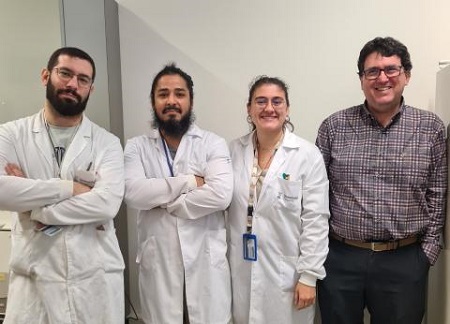
Image The participating researchers together with Ramón Hurtado-Guerrero (right).

La mejor actitud que podemos adoptar es la de trat...

The research team observed changes in head circumf...
AtCDF3 gene induced greater production of sugars a...
En nuestro post hablamos sobre este interesante tipo de célula del...

Telum Therapeutics, a biotechnology company leveraging proprietary met...