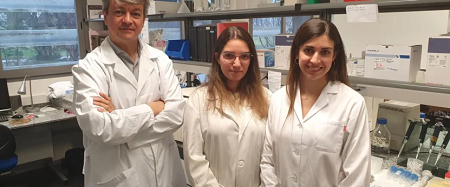
The research has been published in the prestigious journal The EMBO Journal , coordinated by the European Molecular Biology Organization, and has been carried out by researchers from the Cell Signaling in Clinical Pathologies group of the University of Extremadura, in collaboration with the Center for Biological Research, Margarita Salas of the CSIC and the Paris Brain Institute (France).
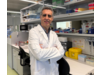
“The research results confirm the STIM1 gene as a candidate for evaluation in neurodegenerative and neuromuscular pathologies, including myopathies,” states UEx researcher Javier Martín Romero . The research team, led by biologist Javier Martín, observed a correlation—not a causal relationship—between idiopathic Alzheimer's disease, whose origin is unknown, and a decrease in STIM1 levels in the brain back in 2018. “We observed in post-mortem brain tissue that as the disease progressed, there was less of the STIM1 protein. At that time, we hadn't established a cause-and-effect relationship, but we decided to investigate what happens in cells when the expression of this gene decreases,” explains the researcher.
STIM1 interacts with mitochondrial proteins
In cell models, researchers found that one of the intracellular targets most affected by the decrease in STIM1 was the mitochondria, resulting in mitochondrial dysfunction. “Mitochondria are important because they generate energy for cells; if we don't have healthy mitochondria, we have cells that we can describe as senescent. And calcium is a key factor in stimulating mitochondrial respiration,” emphasizes Javier Martín.
To demonstrate the role of STIM1 and determine its causal relationship with mitochondrial respiration, researchers studied STIM1 interactors—that is, which molecules interact with STIM1 in all cells. This analysis of interactions, called the Interactome, was conducted in collaboration with Cancer Research UK in Glasgow, UK. The analysis confirmed that STIM1 interacts with mitochondrial proteins.
The contacts between the endoplasmic reticulum, which acts as an intracellular calcium reservoir, and the mitochondria are key, because these contacts regulate calcium transfer between the reticulum and the mitochondria. In general, the concentration of calcium in the endoplasmic reticulum is high to distribute calcium as needed by the cell.
However, in many neurodegenerative diseases, these contacts are altered. Therefore, to investigate the effect of STIM1 in these pathologies, the next step was to analyze whether STIM1 is part of these contacts and regulates calcium translocation. This analysis was made possible thanks to the collaboration of Estela Área Gómez and Jorge Montesinos , at that time researchers at Columbia University in New York, and now at the Margarita Salas Center for Biological Research in Madrid.
Following this analysis, the researchers have confirmed that STIM1 is part of the contacts between the endoplasmic reticulum and the mitochondria. “It acts as a sensor to allow the passage of calcium from the reticulum to the mitochondria; in other words, it controls mitochondrial health,” the UEx researcher points out. Although indirectly, STIM1 plays an essential role in mitochondrial respiration because it regulates the entry of calcium into the mitochondria. To perform this function, STIM1 interacts with other molecules, and the interacting part of this protein does not have a defined structure; it is known as an intrinsically disordered region (IDR), which can adopt different structures depending on what it interacts with.
Given this undefined structure, to identify which part of the STIM1 protein allows it to bind to another key protein in calcium transfer, the researchers performed a series of targeted mutations. Since proteins are chains made up of amino acids, the team selectively removed different fragments of STIM1 and checked, in each case, whether the protein was still able to interact with the other molecules.
When a deleted fragment resulted in the loss of this interaction, it was determined that the region in question was essential for the process. This systematic analysis allowed for the precise delimitation of the protein segment necessary for binding to the mitochondrial protein involved in calcium transfer, advancing the understanding of the mechanism that coordinates communication between the endoplasmic reticulum and mitochondria.
Bibliographic Reference: Orantos-Aguilera, Y., Sanchez-Lopez, I., Pascual-Caro, C. et al. STIM1-containing contact sites promote direct calcium flux from the endoplasmic reticulum to mitochondria. EMBO J (2026). https://doi.org/10.1038/s44318-026-00700-8
Source: Scientific Culture Dissemination Service of the UEx

La mejor actitud que podemos adoptar es la de trat...

The research team observed changes in head circumf...
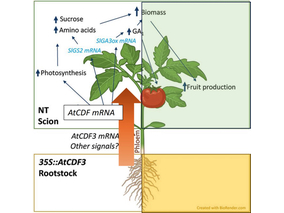
AtCDF3 gene induced greater production of sugars a...
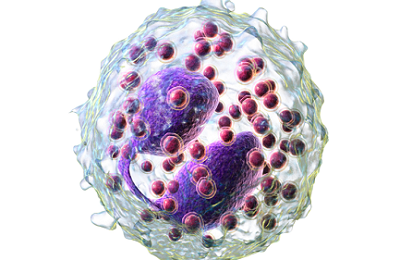
En nuestro post hablamos sobre este interesante tipo de célula del...

Telum Therapeutics, a biotechnology company leveraging proprietary met...