What if we could understand in detail how drugs affect cells and turn that knowledge into new therapeutic options for rare diseases? This is the central question addressed by two recent studies involving international collaborators from Germany, Italy, Luxembourg and Spain, and published in the journals Nature Communications and Cell.
Both studies highlight the strategic value of the synergy between computational biology and experimentation in advancing knowledge of the molecular mechanisms of drug action and in uncovering new therapeutic opportunities in the context of Leigh syndrome, a rare neurological disease associated with mitochondrial dysfunction.
Leigh syndrome is a severe neurodegenerative disorder, typically with childhood onset, for which therapeutic options are extremely limited. Understanding its molecular basis and identifying effective pharmacological strategies represent a major scientific and clinical challenge. In this context, the studies involving the Computational Biology group headed by Prof. Antonio Del Sol, Ikerbasque Research Professor at CIC bioGUNE, member of BRTA, and the LCSB demonstrate how systems biology approaches, including machine learning and cellular network models can accelerate translational research.
Computational approaches accelerate therapeutic advances for Leigh syndrome
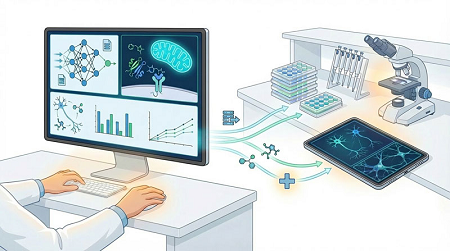
The research team developed advanced computational approaches to analyze gene regulatory networks and cellular pathways altered in Leigh syndrome, with the aim of getting deeper mechanistic insights into a drug’s mode of action and accelerating the development of new therapeutic strategies.
In the study published in Cell, computational methods enabled researchers to elucidate the mechanism of action of sildenafil, which is proposed in this work for the first time as a potential therapeutic option for Leigh syndrome. The analysis revealed how this drug modulates key processes related to neurodevelopment and neuronal function, providing a mechanistic framework that may guide the future design of more effective therapies.
Complementarily, a study published in Nature Communications focused on the discovery of new therapeutic candidates using a deep learning–based algorithm. By leveraging this approach to accelerate the process, researchers conducted an additional drug repurposing screen in a second study, leading to the identification of Talarozole, originally developed for acne and psoriasis, as a promising candidate for Leigh syndrome. Its therapeutic potential was subsequently validated experimentally by collaborating research groups in relevant cellular models, and a patent application was filed for its use in mitochondrial diseases.
Experimental validation and translational potential
Computational predictions were evaluated using patient-derived cellular models generated from induced pluripotent stem cells (iPSCs), which were differentiated into neurons and brain endothelial cells. The results confirmed functional and molecular changes consistent with an improvement of the pathological cellular state.
In addition, compassionate use of sildenafil in six patients showed preliminary improvements in clinical condition and motor function, although larger clinical trials will be required to confirm safety and efficacy.
Taken together, these studies demonstrate that the integration of computational biology, including artificial intelligence, and experimental validation enables both the understanding of drug mechanisms of action and the discovery of new therapeutic opportunities, accelerating the development of treatments for rare neurological diseases such as Leigh syndrome.
References:
About CIC bioGUNE
The Centre for Cooperative Research in Biosciences (CIC bioGUNE), member of the Basque Research & Technology Alliance (BRTA), located in the Bizkaia Technology Park, is a biomedical research organisation conducting cutting-edge research at the interface between structural, molecular and cell biology, with a particular focus on generating knowledge on the molecular bases of disease, for use in the development of new diagnostic methods and advanced therapies.
About Ikerbasque
Ikerbasque -Basque Foundation for Science- is the result of an initiative of the Department of Education of the Basque Government that aims to reinforce the commitment to scientific research by attracting, recovering and consolidating excellent researchers from all over the world. Currently, it is a consolidated organization that has 290 researchers/s, who develop their work in all fields of knowledge.
About BRTA
BRTA is an alliance of 4 collaborative research centres (CIC bioGUNE, CIC nanoGUNE, CIC biomaGUNE y CIC energiGUNE) and 13 technology centres (Azterlan, Azti, Ceit, Cidetec, Gaiker, Ideko, Ikerlan, Leartiker, Lortek, Neiker, Tecnalia, Tekniker y Vicomtech) with the main objective of developing advanced technological solutions for the Basque corporate fabric.
With the support of the Basque Government, the SPRI Group and the Provincial Councils of the three territories, the alliance seeks to promote collaboration between the research centres, strengthen the conditions to generate and transfer knowledge to companies, contributing to their competitiveness and outspreading the Basque scientific-technological capacity abroad.
BRTA has a workforce of 3,500 professionals, executes 22 % of the Basque Country's R&D investment, registers an annual turnover of more than 300 million euros and generates 100 European and international patents per year.

La mejor actitud que podemos adoptar es la de trat...

The research team observed changes in head circumf...

AtCDF3 gene induced greater production of sugars a...

En nuestro post hablamos sobre este interesante tipo de célula del...

Telum Therapeutics, a biotechnology company leveraging proprietary met...