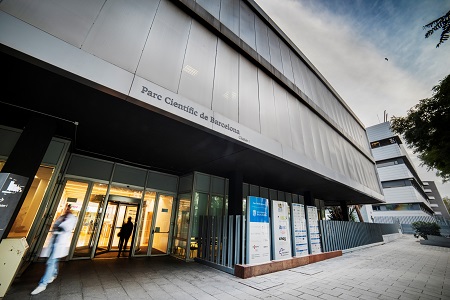
Investment levels among companies based at the University of Barcelona Science Park (PCB-UB) are holding steady. The 86 spin-offs, start-ups and scale-ups operating in the PCB collectively secured €124.7 million in funding in 2024, which is a substantial rise on the €85.4 million raised in 2023. This is also the second-highest total in the PCB’s history, just behind the record total of €142 million achieved in 2022. With all available space now occupied, this University of Barcelona (UB) ecosystem is consolidating its role as a driver of biomedical innovation and a strategic focal point for the sector.
Following an overall slump in investment in 2023 due to global geopolitical and economic uncertainty, companies showed signs of financial recovery and stabilising growth in 2024. This was particularly evident in private funding, which reached €97.5 million and remained the primary source of investment for companies in the health sector. Public funding from competitive national and European grants also rose to €27.2 million (up 53.6% from the previous year), playing an increasingly important role in driving innovation.
Investment by subsector maintained previous trends, with medtech once again attracting the largest share (€85.5 million), followed by biotech (€37 million). This consolidates their status as the primary focal points for R&D among companies based at the PCB. Meanwhile, emerging fields such as deeptech and femtech gained traction, with several standout success stories arising in the entrepreneurial ecosystem. The central nervous system, oncology and immunology remained the main therapeutic areas attracting investment.
The PCB continued to serve as a powerful driver of investment within Catalonia’s BioRegion. According to the latest Biocat report, more than a third (36%) of all capital raised in this domain in 2024 (€347 million) was concentrated within the PCB ecosystem. The report notes that investment in the sector has stabilised, with growth figures returning to pre-pandemic trends and firmly establishing the health sector as the third-largest source of wealth in Catalonia.
PCB Director Maria Terrades said: “2024 was a year of consolidation and stability for our ecosystem. The full occupancy of the PCB’s facilities and the steady increase in investment reflect the trust placed in the science, talent and innovation nurtured at the PCB”. She added: “These figures not only position us as a driving force in biomedical innovation in Catalonia, but also highlight the success of a public-private collaboration model that we champion – one that continues, year after year, to demonstrate its ability to generate impact and shared value.”
The rector of the University of Barcelona, Joan Guàrdia, emphasised that “projects like the University of Barcelona Science Park embody the institution’s transformative spirit”. He added: “The trio of research, business and knowledge transfer makes the PCB a unique point of reference within the University of Barcelona. This area will be further strengthened in the coming years with the development of the new Clínic Campus project, which will drive and consolidate the Diagonal Health Axis as one of southern Europe’s premier hubs for health, research and education.”
In 2024, the PCB successfully completed the BCN Health Booster acceleration programme, which enabled 11 spin-offs and start-ups to set up in University of Barcelona facilities and benefit from subsidised access to laboratory space. Together, these 11 companies attracted €17.6 million in public and private capital in 2024. Over the three-year course of the programme, they raised a total of €107.5 million in funding and drove the development of 69 patents.
INBRAIN Neuroelectronics, a major player
INBRAIN Neuroelectronics continued its remarkable trajectory, topping the list for private investment within the PCB entrepreneurial community for the second consecutive year. The company secured a record-breaking €78.2 million in 2024, thanks to a €46.2 million Series B round, complemented by a further €32 million from strategic private partners. INBRAIN’s Series B round was the second-largest deal recorded in Catalonia’s BioRegion in 2024. These funds will enable the pioneering neuroelectronics company to accelerate clinical trials and expand its team as it advances the development of its innovative graphene-based therapeutic platform for treating neurological conditions such as Parkinson’s disease and epilepsy.
Nuage Therapeutics, a spinoff of IRB Barcelona and ICREA, closed the second-largest funding round within the PCB ecosystem, raising €5 million to support the development of cancer drugs targeting intrinsically disordered proteins (IDPs). The company is currently in an advanced preclinical phase and aims to bring its discoveries closer to therapeutic application in the near future.
Blue biotech start-up B’ZEOS, which specialises in sustainable packaging solutions derived from seaweed, completed a €5 million seed funding round. Led by Portuguese firm Faber, and with participation from ICIG Ventures and International Chemical Investors Group (ICIG), this was the third most significant funding operation in 2024.
Zymvol Biomodeling, a biotech company specialising in the discovery and computational design of enzymes – primarily for the pharmaceutical and chemical industries – closed 2024 with €2.9 million in private investment.
Also surpassing the €1 million mark in funding rounds in 2024 were Fecundis (€2.4 million), Nanobots Therapeutics (€2.1 million) and DAN*NA (€1.1 million).
Additional PCB-based companies that secured private capital in 2024 were Aptadel Therapeutics (€450,000), ZIP Solutions (€277,000) and SITEC pharmabio (€150,000).
Public funding, a key part of the health innovation ecosystem
Public funding secured by companies based at the University of Barcelona Science Park increased notably in 2024, reaching €27.2 million. This increase highlights the significantly stronger support available through competitive national grants, including those from the Ministry of Science and Innovation, the CDTI, the State Research Agency (AEI), ACCIÓ and AGAUR. It also points to enhanced backing from European programmes such as the EIC Fund, NextGenerationEU, Horizon Europe, EIT Health, Eurostars and InnoBuyer. These schemes are seen as strategic allies in fostering innovation and represented a 53.6% increase on the total of €17.7 million awarded in 2023.
The top public funding recipients in 2024 were start-up Connecta Therapeutics (€2.7 million), INBRAIN Neuroelectronics and Hemostatics (€2.5 million each), IDP Pharma (€2.4 million), Zymvol Biomodeling (€2.3 million), ENDOR Technologies (€1.8 million), Xenopat (€1.4 million) and Fecundis (€1.3 million).
Several other companies received public funding totalling less than €1 million, including Telara Pharma (€840,000), GAT Biosciences (€800,000), Nanobots Therapeutics (€800,000), OneChain Immunotherapeutics (€800,000), Gate2Brain (€728,000), Pharmacelera (€642,000), Nuage Therapeutics (€640,000), Accure Therapeutics (€572,000), Bioliquid Innovative Genetics (€469,000), MiMark (€460,000), Meteosim (€240,000), SpliceBio (€200,000), Aptadel Therapeutics (€136,000), Chemotargets (€99,300) and SITEC pharmabio (€56,000). These companies all contributed to the upward trend in public capital raised in 2024.
A fully operational PCB looks to the future with plans for new spaces
This sustained growth comes as the PCB reaches full capacity in its available laboratory spaces, which totalled 22,109 m² at the end of 2024. To meet the high demand for space, work is under way on the future Cub building, scheduled for completion in 2028. The four-storey facility will be dedicated to dry labs and research offices.
Administrative progress is also being made on the new health research building as part of the University of Barcelona’s MIES (Mathematics, Computer Science, Economics and Health) project. In May 2024, the MIES agreement was signed between UB and INCASÒL, and an amendment to the Urban Improvement Plan was approved to adapt the urban planning framework for the South Campus. At the same time, the Functional Plan for the new building has been completed. The facility will add 10,000 m² to host the Institute for Bioengineering of Catalonia (IBEC), the Fraunhofer Institute, and several research groups linked to the UB’s health sciences division. A design competition for the new building was launched on 5 May, with submissions open until 3 June 2025. The first occupants are expected to move in at the beginning of 2029.
About the Barcelona Science Park
The Barcelona Science Park (PCB) is one of Europe’s leading ecosystems for scientific, technological and business innovation in life sciences and health. Established by the University of Barcelona in 1997, it was the first science park in Spain. Spanning 100,000 m2, it is home to over 115 companies and public entities (including nine major public research institutes) and more than 3,400 professionals (57% of whom are women).
One of the PCB’s key strengths is its wide range of scientific and technological services for RDI, which it offers to national and international companies and research groups based on and off site. These services are complemented by a PCB community development programme that seeks to encourage interaction between its members.
Another of the PCB’s strategic priorities is to cultivate scientific curiosity, instil Catalan values and develop critical thinking in young learners. This is achieved through the RESSÒ (Recerca en Societat) programme, which has been running for 21 years and organises 100 activities annually, reaching 5,000 pupils aged 10 to 18 across Catalonia.

La mejor actitud que podemos adoptar es la de trat...

The research team observed changes in head circumf...
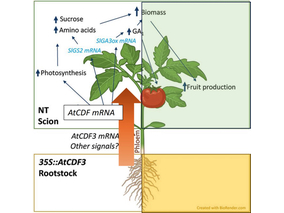
AtCDF3 gene induced greater production of sugars a...
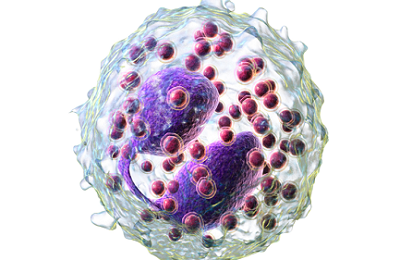
En nuestro post hablamos sobre este interesante tipo de célula del...

Telum Therapeutics, a biotechnology company leveraging proprietary met...