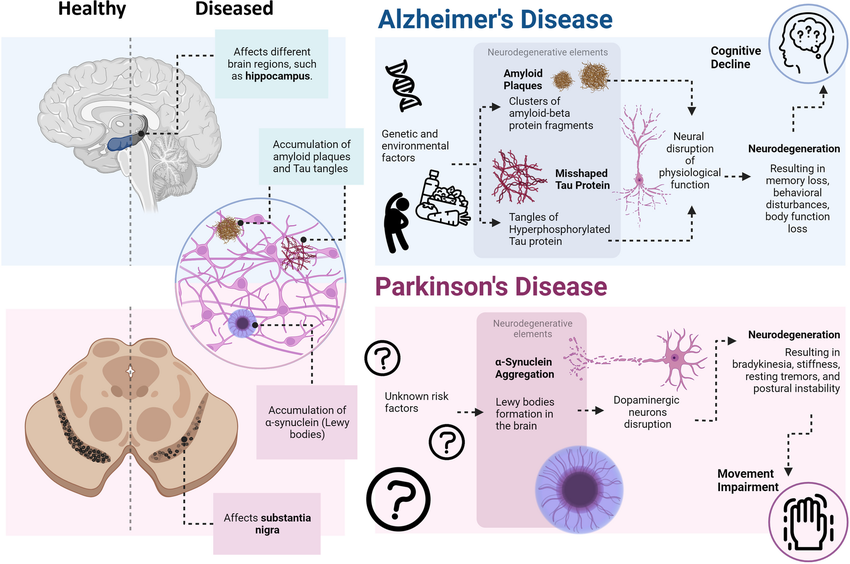
A study by the Parc Taulí Research and Innovation Institute (I3PT) and the UAB Institute of Biotechnology and Biomedicine (IBB-UAB) explores the use of vaccines to combat neurodegenerative diseases such as Alzheimer's and Parkinson's. These chronic disorders, which affect millions of people around the world, are characterized by the progressive degeneration and death of neurons, altering functions such as memory, movement, thinking or the ability to speak.
Currently, the available treatments only relieve the symptoms and improve the quality of life of the people who suffer from them, but do not stop the course of the disease. However, the approval of the first passive immunotherapies by the European Medicines Agency (EMA) and the Food and Drug Administration (FDA) agency has opened a door to hope in the treatment of these neurodegenerative disorders. In this context, the review led by Salvador Ventura, biologist and director of the I3PT, explores the possibility of applying active immunotherapy, that is to say the development of vaccines for Parkinson's and Alzheimer's. it is abouta form of treatment that uses the body's own immune system to fight these diseases.
"Instead of receiving external antibodies temporarily as in other treatments, these vaccines teach the body to produce its own antibodies to attack proteins that accumulate abnormally in the brain and that are related to neuronal degeneration", he explains ventura
These proteins are different according to the disease: in Alzheimer's it is beta amyloid, and in Parkinson's it is alpha-synuclein. When these proteins accumulate in the brain, they prevent neurons from working properly and eventually cause them to die, and this causes the symptoms of diseases to appear.
One of the novelties of these vaccines is that they are not limited to treating the symptoms, or reversing severe cases of advanced neurodegeneration, but could offer one way to prevent these diseases in very early stages, being particularly relevant in those people who have a high risk of developing them, such as the elderly population. Thus, the disease could be stopped before it irreversibly damages the brain. In this sense, some clinical studies have already shown that these vaccines can reduce the accumulation of toxic proteins and, in some cases, improve the cognitive and motor abilities of patients.
At the same time, vaccines could be one more affordable and accessible solution for many patients. Unlike conventional passive immunotherapies, which often require regular administrations of external antibodies, vaccines could stimulate the body's own natural antibody production for longer periods, making treatment more sustainable in the long term.
Although there are still significant hurdles to overcome, such as the need to improve methods for early detection of the disease in its early stages, the study's researchers are optimistic.
"The vaccines are already being tested in clinical trials and the first results are promising. In the coming years, these studies could represent a major advance in the research of neurodegenerative diseases, offering new hope for patients and their families", predicts Ventura.
Source image: Journal Of Neuroinflammation

La mejor actitud que podemos adoptar es la de trat...

The research team observed changes in head circumf...
AtCDF3 gene induced greater production of sugars a...
En nuestro post hablamos sobre este interesante tipo de célula del...

Telum Therapeutics, a biotechnology company leveraging proprietary met...