The Liver Diseases Group of the Vall d’Hebron Research Institute (VHIR) and the CIBER Area of Liver and Digestive Diseases (CIBEREHD, group CB06/04/0007) has developed a model for risk stratification of clinical complications in patients with compensated advanced chronic liver disease (cACLD) caused by metabolic dysfunction–associated steatotic liver disease (MASLD). The results of the study have been recently published in Gastroenterology.
MASLD is currently one of the leading causes of chronic liver disease worldwide. It is characterised by fat accumulation in the liver of people with metabolic disorders such as obesity, diabetes, or dyslipidaemia. In its more advanced stages, it can progress to fibrosis and cirrhosis, leading to severe complications such as hepatic decompensation (accumulation of fluid in the abdomen, gastrointestinal bleeding, or neurological disturbances), liver cancer, the need for liver transplantation, or even liver-related death.
In this study, more than 2,000 patients with MASLD were analysed to demonstrate the usefulness of the ANTICIPATE-NASH prognostic model, developed by Vall d’Hebron and the University of Alberta (Canada). It is a simple tool that uses liver stiffness values measured by transient elastography (Fibroscan®), combined with platelet count and body mass index (BMI). “This allows us to more accurately predict the risk or likelihood of developing clinical complications of chronic liver disease”, explains Dr Joan Genescà, Clinical Director of Digestive Diseases at Vall d’Hebron University Hospital and Head of the Liver Diseases Group at VHIR and CIBEREHD.
The results show that this tool is significantly more accurate than liver biopsy-based fibrosis staging, the commonly used method. Using the predictive model, a subgroup of patients with stage 3 fibrosis (advanced fibrosis) can be identified who behave similarly to stage 4 (liver cirrhosis) patients in terms of risk of complications. Conversely, some patients classified as stage 4 by biopsy actually have a risk similar to stage 3 patients. These findings were obtained from a derivation cohort and validated in a Gilead clinical trial cohort.
“The use and implementation of this model to classify MASLD patients according to their risk of clinical complications will improve patient care and follow-up”, adds Dr. Genescà. ANTICIPATE-NASH will help better select patients for clinical trials of new treatments focused on clinical outcomes. Moreover, it will allow hepatologists to quickly and easily estimate the risk of complications for each patient from the very first visit, avoiding the discomfort and risks associated with invasive procedures such as liver biopsy.
The ANTICIPATE-NASH prognostic model has been validated in several studies and is already included in the clinical guidelines of the EASL (European Association for the Study of the Liver) and the Baveno Cooperation on Portal Hypertension.
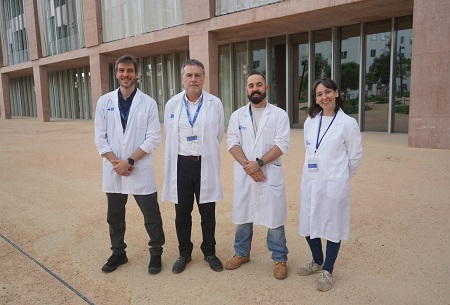
This is a collaborative study led by Vall d’Hebron, in cooperation with researchers from Italy, Canada, and the pharmaceutical company Gilead. The study was coordinated by Dr Joan Genescà, together with Dr Mònica Pons, Dr Juan Manuel Pericàs, Dr Laia Aceituno, and Dr Juan Bañares, all members of the Vall d’Hebron Hepatology Service, the Liver Diseases Group at VHIR, and CIBEREHD.

La mejor actitud que podemos adoptar es la de trat...

The research team observed changes in head circumf...
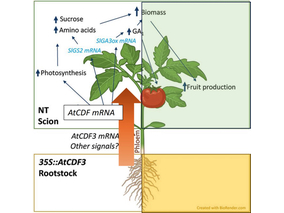
AtCDF3 gene induced greater production of sugars a...
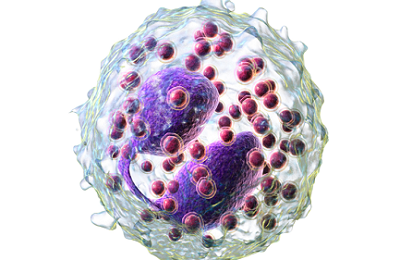
En nuestro post hablamos sobre este interesante tipo de célula del...

Telum Therapeutics, a biotechnology company leveraging proprietary met...