Postera has launched an initiative that allows researchers across the globe to suggest compounds that they think might be active against the main protease of SARS-CoV-2 . Given that most of the submitted compounds are based on co-crystallized fragments, we decided to use our scaffold-docking algorithm (SkeleDock) to predict their binding mode, and KDeep, to get an estimate of the binding affinity. This same protocol was proven successful in a blind competition (D3R GC4), so we decided to try it against this target, hoping that it can help researchers prioritizing compounds into further validation steps.
We downloaded all non-covalent submitted compounds from this site, and we checked for large maximum common substructures (MCS) with the co-crystallized fragments. Those compounds which had a large MCS with a fragment were selected. For each selected compound, the fragment with largest MCS was used as template to guide its pose prediction, using SkeleDock. Finally, the predicted poses were passed to KDeep, which computed a binding affinity for each complex.
Some compounds might generate poses with high predicted affinity, however, they might not be synthetically feasible, hence, we visually inspect the best compounds (according to predicted ligand efficiency) to evaluate their medchem profile, which resulted in a list of 79 compounds. Predicted poses and affinities for each compound are available here.
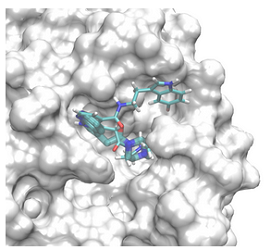
Predicted pose for compound MAK-UNK-105-15, shown together with the fragment used to guide the docking (Mpro-x1093, glass texture).
If you want to contact us for more information on this project, feel free to email us at covid19@acellera.com!
References

La mejor actitud que podemos adoptar es la de trat...
The research team observed changes in head circumf...
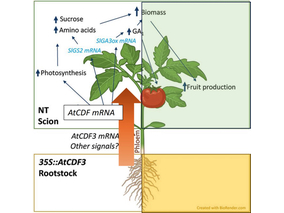
AtCDF3 gene induced greater production of sugars a...
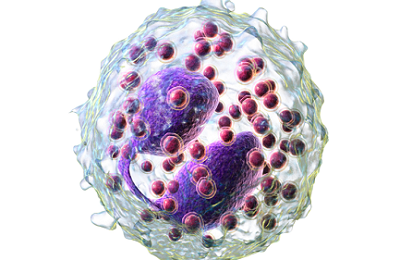
En nuestro post hablamos sobre este interesante tipo de célula del...

Telum Therapeutics, a biotechnology company leveraging proprietary met...