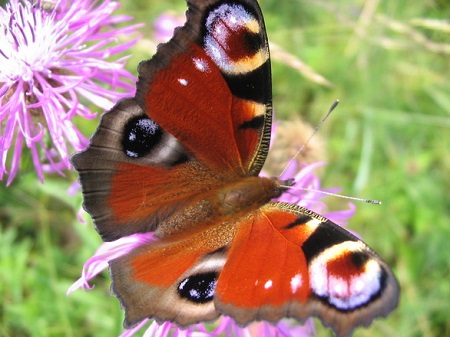
Scientists have found genes of these wasps in the genome of numerous lepidopteran –both in butterflies and moths–, that have been acquired by the intermediation of viruses associated to wasps and that are employed by these in the parasitism process. In fact, these genes, once they have been incorporated to their genome, serve as antidote for the butterflies to protect themselves against other viruses.
The professor in Genetics of the Faculty of Biological Sciences and researcher of the Interdisciplinary Research Structure for Biotechnology and Biomedicine (BIOTECMED) of the Universitat de València, Salvador Herrero, responsible of this work, emphasises that the results reveal that the generation of genetically modified insects “also occurs in a natural way in the course of the evolution and without having to go through the molecular biology laboratoires”. These studies should also be considered in the future when transgenic wasps for their use in the pest control are used”, argues the researcher.
The wasps of the family of the Braconidae, to reproduce, put their eggs in the inside of the caterpillars of the butterflies, together with the viral particles. These viruses are able of blocking the defence system of the caterpillar and, in consequence, they allow for the development of the offsprings.
BIOLOGICAL CONTROL OF PESTS
Herrero indicates that these results are relevant taking into account that some parasitoid wasps species “are efficiently used in the agriculture for the control of pests of harmful insects”. In fact, the research carried out in his research group at the Universitat de València focuses on the molecular study of the interaction between pest insects and their bacterial and viral pathogens with the objective of improving the use of these micro-organisms for the biological control of agricultural pests.
In one of the researches of the group Organic Pest Control of Agricultural Pests of the Universitat de València it was analysed what genes of a moth were activated when the larvas were infected with a virus known as baculovirus. This is used in the biological control of this insect. The scientists saw that a few of these genes that were activated with the infection looked more like genes of the parasitoid wasp than genes of other moths or butterflies. The researcher Leila Gasmi, first author of this publication, exposes that in the characterisation process of the origin and function of these genes found out that these “were recently transferred from the genome of the wasp to the genome of the moth and, after that, they were used by this lepidoptera to be more resistent to the infection with baculovirus”.
After that, the Valencian scientists –together with the French team– found out that this gene transfer phenomenon was spread to other genes and to other lepidopteran species, including the monarch butterfly. The hypothesis that the authors are shuffling is that the transfer process is produced “at certain intervals and those genes that provide an advantage for the insect, with the aim of being able to fight before determine pathogens, are domesticated by the insects that receive them”.
AN IMMUNE SYSTEM IN CONSTANT EVOLUTION
These conclusions, apart from showing that the transgenesis process in insects occurs naturally, reveals that its immune system, although it is simpler than the human system, “is in constant evolution and can get new functions with the new genes that come from other insects”, argues Salvador Herrero. Besides, these studies of the Universitat de València and the IRBI-CNRS provide new targets to make the natural pathogens “more effective in the control of pests and can reduce the use of chemical insecticides in the agriculture”, he adds.
Salvador Herrero is professor of the Department of Genetics of the Universitat de València and researcher in the group of Biotechnological Control of Agricultural Pests of the ERI Biotecmed of the Universitat de València. The research in his team is focused on the study of the molecular mechanisms that regulate the interaction between insects and their viral pathogens to favour a rational control of the agricultural pests. As a research, Herrero has developed his career in laboratories of Netherlands, Australia, and Israel, and has participated in numerous projects, both national and international, related to the use of pathogens in the control of pest insects.
Recurrent Domestication by Lepidoptera of Genes from their Parasites Mediated by Bracoviruses. Leila Gasmi, Hélène Boulain, Jérémy Gauthier, Aurélie Hua-Van, Karine Musset, Agata Jakubowska, Jean-Marc Aury, Anne-Nathalie Volkoff, Elisabeth Huguet, Salvador Herrero, Jean-Michel Drezen. PLOS Genetics 17th September 2015

La mejor actitud que podemos adoptar es la de trat...

The research team observed changes in head circumf...
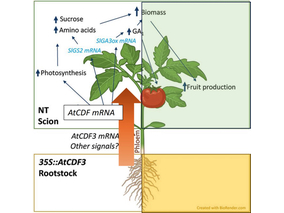
AtCDF3 gene induced greater production of sugars a...
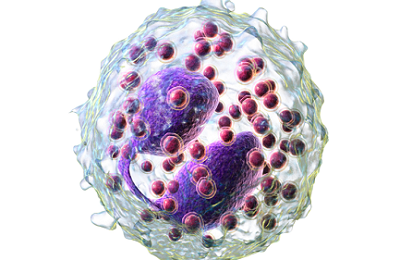
En nuestro post hablamos sobre este interesante tipo de célula del...

Telum Therapeutics, a biotechnology company leveraging proprietary met...