A team of Andalusian researchers from Granada Biomedical Research Institute (ibs.GRANADA) and the Biomedical Research Center (CIBM) of the University of Granada (UGR), has worked with different cucurbitaceous plants (zucchini, squash, chayote, etc.), Discovering natural compounds in two specific strains that could help fight colon cancer. These substances, extracted from seeds and leaves, have shown promising effects in slowing tumor cell growth in laboratory studies.
Colon cancer is one of the most common tumors in the world and represents a significant public health challenge due to its high incidence, mortality, and the high cost of treatment. Although great progress has been made in therapies and early detection, it remains essential to find new alternatives that improve the prognosis and quality of life for patients. One very promising avenue is the search for new active ingredients of natural origin that are active against tumor cells, whether derived from the colon or other tumor types.
The research group A01-Technology Applied to Oncology and Gene Therapy A research project from the ibs.GRANADA and the UGR led by Jose Carlos Prados and Consolación Melguizo, together with researchers from the Institute of Nutrition and Food Technology (INyTA), the Joint University Institute of Sport and Health (iMUDS), and the company Cellbitec SL of Almería, has managed to identify, using advanced analytical techniques, natural substances present in the seeds and leaves of two specific varieties of cucurbitaceae with potential for health. These substances belong to a family of plant compounds known for their biological activity, triterpenoids and cucurbitacins. Furthermore, they observed that the extracts obtained with ethanol were those that showed the greatest positive effects.
Laboratory tests have shown that these compounds are effective in damaging colon cancer cells. Although the exact nature of their action is still unknown, all indications are that they activate mechanisms such as programmed cell death, autophagy (the process by which cells recycle), and the restoration of the colon's antioxidant systems. Other complementary studies point to the ability of these molecules to affect gene expression in cancer stem cells, one of the key targets in the fight against cancer due to its involvement in drug resistance and the development of tumor recurrences.
Furthermore, studies conducted in animal models have focused on demonstrating whether the activity of these extracts also affects blood vessels. The generation of blood vessels by a tumor, a process known as angiogenesis, is a fundamental factor in its growth and expansion. Studies conducted in the CAM experimental system, which analyzes vessel formation in a chicken embryo membrane, have shown that its effect is accompanied by a significant reduction in vessel-forming capacity, which could be highly relevant from a therapeutic perspective. Furthermore, when these extracts are combined with drugs already used in patients with colon cancer, such as oxaliplatin, the combined effect is even greater. These results open the door to future research to study whether they could be used as a booster in current cancer treatments.
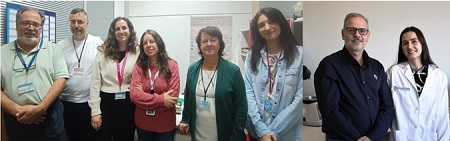
This work was carried out by researchers José Carlos Prados and Consolación Melguizo (ibs. GRANADA and CIBM), Jesús María Porres and Rosario Martínez (INyTA, CIBM and iMUDS), and Francisco J. Bermúdez (Cellbitec SL), along with Mercedes Peña, Ana Guzmán, Cristina Mesas, and Laura Cabeza. The results have been published in the scientific journal Nutrients.
The research was made possible thanks to funding from various competitive national and regional research projects. It is part of the strategic collaboration agreement between the University of Granada and Cellbitec, as well as the work of the Cellbitec Foundation, which promotes research, knowledge transfer, and social development.
Bibliographic reference
Mercedes Peña, Ana Guzmán, Cristina Mesas, Jesús M Porres, Rosario Martínez, Francisco Bermúdez, Consolación Melguizo, Laura Cabeza, Jose Prados Evaluation of the Leaves and Seeds of Cucurbitaceae Plants as a New Source of Bioactive Compounds for Colorectal Cancer Prevention and Treatment. Nutrients. 2024 Dec 7;16(23):4233. doi: 10.3390 / nu16234233
About the research group
The Technology Applied to Oncology and Gene Therapy research group at ibs.GRANADA, led by José Carlos Prados, has been consolidated over recent years thanks to the continuous expansion of its research staff and training staff. Its objective in recent years has focused on the development of new strategies for the treatment of cancer at an experimental level but with a purpose of clinical application, including the application of nanotechnological systems, the study of cancer stem cells, their resistance mechanisms. and its relevance as a target for new therapies, the determination of new molecules/extracts of plant origin with therapeutic or preventive capacity against cancer and the development of anti-tumor gene therapy systems. In addition, this group develops cancer diagnostic systems based on new technologies, including the determination of gene, protein and metabolomics-based markers, and works on aspects related to regenerative biomedicine, especially in the nervous and musculoskeletal systems.

La mejor actitud que podemos adoptar es la de trat...

The research team observed changes in head circumf...
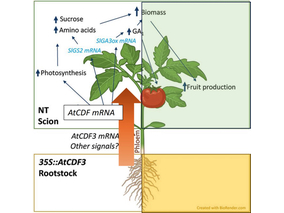
AtCDF3 gene induced greater production of sugars a...
En nuestro post hablamos sobre este interesante tipo de célula del...

Telum Therapeutics, a biotechnology company leveraging proprietary met...