Juanma Fernández, a senior researcher at the Biosensors for bioengineering group from the Institute for Bioengineering of Catalonia (IBEC), will lead the Project “Fibrosens: Monitoring of fibrotic processes in 3D skeletal muscle co-cultures for Muscular Dystrophies using plasmonic biosensors”, in collaboration with Valérie Allamand frCenter of Research in Myology, Sorbonne University, Inserm, Institute of Myology in Paris. The project will receive funding from the French organization AFM-Telethon over a two-year period. AFM-Telethon, from the initials in French for “French Association against Myopathies – Television Marathon”, is a French annual televised fundraising event, that, since 1987, lasts for about 30 hours with the purpose to raise money to scientific research as well as to give support to patients and their families.
Fibrosis is not a disease per se, but rather the result of dysregulation of the tissue repair response following many types of tissue injury, especially during chronic inflammatory processes. It is a common hallmark in the skeletal muscles of patients with neuromuscular diseases such as Duchenne and Becker muscular dystrophies, Ullrich congenital muscular dystrophy and myotonic dystrophy syndromes. The limited recapitulated fibrosis process in mouse models, currently used in research, motivated the proposal of Fibrosens project, that aims to bridge the translational gap in understanding fibrotic processes in muscular dystrophies to achieve effective therapies for patients.
The project is structured in three main interconnected approaches: (1) use of bioengineered 3D co-cultures that mimic the fibrosis process occurring in the muscles of patients, (2) identification of fibrosis biomarkers in the supernatant of these cultures, and (3) development of nanoplasmonic sensors (optical sensor devices that explore light-matter interactions on metal structures) to detect these biomarkers in a direct and rapid manner. The convergence of all these approaches will let the fabrication of an effetive sensing platform to real-time monitor fibrosis biomarkers.
Nanoplasmonic sensing technology of Fibrosens will allow a full screening of several fibrosis biomarkers in a single step and in a few minutes for diagnosis/monitoring of the disease with a scalable microfluidic design with high sensitivity and selectivity that minimise false-positive results. Juanma Fernández, senior research scientist at IBEC
In summary, Fibrosens will develop an innovative drug testing platform that will enable faster and cheaper testing of anti-fibrotic drug candidates, thus reducing preclinical phases. In addition, integrating patient derived cells with specific mutations or clinical conditions into the devices will allow to perform personalised drug screenings, allowing to test which available treatment will be the best option specifically for a patient or a group of patients with a particular mutation.
In the future, this new technology will allow sensors to be used in the clinic as a diagnostic or monitoring tool for fibrosis in patients. It is worth highlighting that since fibrosis is a common feature in many muscle diseases, this platform could be used for a wide range of patients.
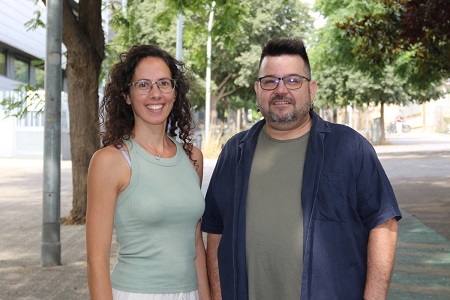
Image: IBEC researchers Chiara Ninfali (left) and Juanma Fernández (right).

La mejor actitud que podemos adoptar es la de trat...

The research team observed changes in head circumf...
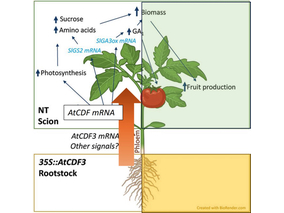
AtCDF3 gene induced greater production of sugars a...
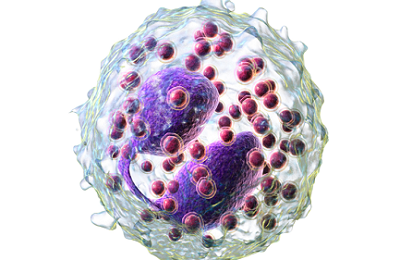
En nuestro post hablamos sobre este interesante tipo de célula del...

Telum Therapeutics, a biotechnology company leveraging proprietary met...