A team of Andalusian scientists, led by the Granada Biosanitary Research Institute (ibs.GRANADA) and the University of Granada (UGR), has designed a new nanoscale drug that is more effective at attacking cancer cells. This nanodrug transports common anticancer treatments more effectively, targeting tumor cells more precisely, thanks to a specific antibody. In addition, as it contains magnetic material, it opens up the possibility of using heat (hyperthermia) in the future as a complementary system for cancer treatment.
Colon cancer is very common in our population, representing a major public health problem and a high cost for healthcare. Despite the advances achieved in recent years in its diagnosis and treatment, colon cancer in advanced stages (with metastasis) still needs new therapies to improve the prognosis and quality of life of patients. The search for more effective and specific treatments opens a new avenue of research to increase therapeutic tools against this type of cancer.
The studies, carried out by a multidisciplinary team in collaboration with the A01-Technology Applied to Oncology and Gene Therapy group of the ibs.GRANADA and the Biomedical Research Centre (CIBM) led by doctors José Carlos Prados and Consolación Melguizo and the group of Dr. Concepción Jiménez López of the Department of Microbiology of the UGR, attempt to respond to the lack of specificity of conventional chemotherapy in cancer in general, and in colon cancer in particular. This lack of specificity is one of the main limitations in the treatment of patients. The nanodrug obtained behaves as a system that releases the drug in a controlled manner and allows the treatment to be focused since it is directed by specific molecules towards the tumor cells. Specifically, the membrane receptor Leucine-rich repeat-containing G-protein coupled receptor 5 (LGR5) has been used, a biomarker of colorectal cancer that has been linked to treatment resistance and the development of metastasis.
The results of this research, carried out over the last few years with the support of projects funded by the Carlos III Health Institute, show that the nanodrug is more effective than traditional treatments in various colorectal cancer cell lines. The nanodrug not only has greater anti-tumour activity, but also penetrates cancer cells more effectively. Furthermore, studies carried out on experimental animals demonstrated a high level of biocompatibility, suggesting its possible use in humans.
It should be noted that the composition of the new nanodrugs has the ability to generate heat under certain conditions. This increase in temperature could be a very effective therapeutic tool that could help destroy tumor cells. The tests carried out to date have been very satisfactory, although new studies will be necessary to assess their possible application in humans.
The results of this work have been published in the prestigious journal in the field of Pharmacology and Nanomedicine “Int J Nanomedicine” and whose authors are Ana Cepero, Monica Jimenez-Carretero, Ylenia Jabalera, Lidia Gago, Cristina Luque, Laura Cabeza, Consolation Melguizo, Conception Jimenez-Lopez, Jose Prados.
About the research group
The Technology Applied to Oncology and Gene Therapy research group at ibs.GRANADA, led by José Carlos Prados, has been consolidated over recent years thanks to the continuous expansion of its research staff and training staff. Its objective in recent years has focused on the development of new strategies for the treatment of cancer at an experimental level but with a purpose of clinical application, including the application of nanotechnological systems, the study of cancer stem cells, their resistance mechanisms. and its relevance as a target for new therapies, the determination of new molecules/extracts of plant origin with therapeutic or preventive capacity against cancer and the development of anti-tumor gene therapy systems. In addition, this group develops cancer diagnostic systems based on new technologies, including the determination of gene, protein and metabolomics-based markers, and works on aspects related to regenerative biomedicine, especially in the nervous and musculoskeletal systems.
More information about the group at https://www.ibsgranada.es/grupos-de-investigacion/a01-tecnologia-aplicada-a-oncologia-y-terapia-genica/
Bibliographic reference: LGR5 as a Therapeutic Target of Antibody-Functionalized Biomimetic Magnetoliposomes for Colon Cancer Therapy. Int J Nanomedicine, 2024:19:1843-1865. doi: 10.2147/IJN.S440881. eCollection 2024.

La mejor actitud que podemos adoptar es la de trat...

The research team observed changes in head circumf...
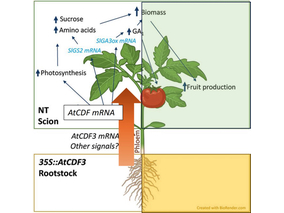
AtCDF3 gene induced greater production of sugars a...
En nuestro post hablamos sobre este interesante tipo de célula del...

Telum Therapeutics, a biotechnology company leveraging proprietary met...