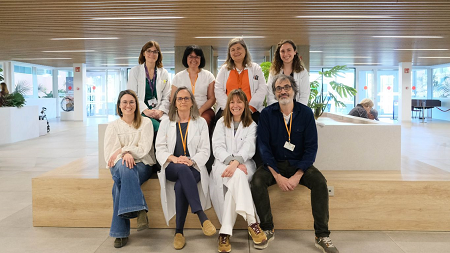
The multidisciplinary study, led by Dr. Roser Velasco, neurologist at the Neuro-Oncology Unit of ICO Hospitalet and Bellvitge Hospital and principal investigator of the Neuro-Oncology research group at IDIBELL, concludes that patients with sarcopenia are 2.5 times more likely to develop moderate to severe peripheral neuropathy induced by chemotherapy. The results have been published in the journal Neurology, one of the most prestigious in the field of neurosciences.
The results show that patients with lower muscle mass have a higher incidence and severity of chemotherapy-induced peripheral neuropathy, one of the most frequent and limiting toxicities in cancer patients. This finding suggests that sarcopenia could contribute to increasing vulnerability to the neurotoxic effects of certain chemotherapy drugs and opens the door to incorporating body composition assessment as a risk assessment tool before initiating treatment.
The researchers highlight that these results may have relevant clinical implications, as they would make it possible to identify early patients at higher risk of developing neuropathy and implement preventive strategies, such as nutritional interventions or physical exercise programs aimed at preserving muscle mass.
The study has analysed the relationship between the body composition of the patients and the degree of peripheral neurotoxicity developed during treatment. To do this, the research team has combined advanced imaging techniques with the analysis of serum biomarkers, such as myostatin, a key protein in the regulation of muscle mass, and neurofilaments, biomarkers of axonal damage, as well as neurophysiological studies. This approach has made it possible to accurately quantify muscle mass and explore its association with susceptibility to peripheral neurological damage.
The work has been the result of a multidisciplinary collaboration between different functional units of the Comprehensive Cancer Center (CCC) Bellvitge Health Campus. This synergy has been key to integrating clinical, nutritional and biological knowledge in the analysis of the results.
Overall, the study reinforces the importance of a comprehensive approach to cancer patients and points towards a more personalized medicine, in which factors such as body composition can play a determining role in both tolerance to treatments and quality of life of patients.
The Bellvitge Biomedical Research Institute (IDIBELL) is a research centre created in 2004 and specialising in cancer, neuroscience, translational medicine and regenerative medicine. It has a team of more than 1,500 professionals who, from 73 research groups, publish more than 1,400 scientific articles a year. L’IDIBELL is participated by the Bellvitge University Hospital and the Viladecans Hospital of the Catalan Health Institute, the Catalan Institute of Oncology, the University of Barcelona and the City Council of L’Hospitalet de Llobregat.
IDIBELL is a member of the Campus d’Excelencia Internacional of the University of Barcelona HUBc and is part of the CERCA institution of the Generalitat de Catalunya. In 2009 it became one of the first five Spanish research centres accredited as a health research institute by the Carlos III Health Institute. In addition, it is part of the HR Excellence in Research program of the European Union and is a member of EATRIS and REGIC. Since 2018, IDIBELL has been an Accredited Centre of the AECC Scientific Foundation (FCAECC).

La mejor actitud que podemos adoptar es la de trat...

The research team observed changes in head circumf...
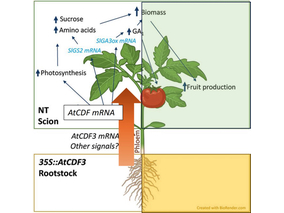
AtCDF3 gene induced greater production of sugars a...
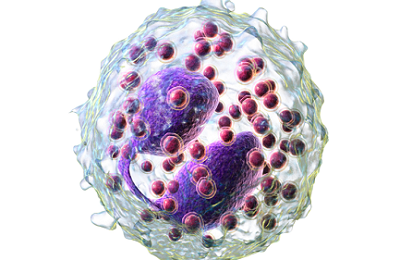
En nuestro post hablamos sobre este interesante tipo de célula del...

Telum Therapeutics, a biotechnology company leveraging proprietary met...