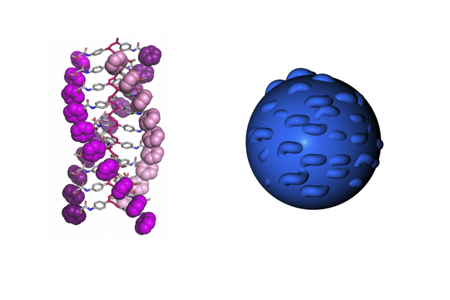
Scientists have taken a significant step towards the development of tailor-made chiral nanocarriers with controllable release properties. These nanocarriers, inspired by nature's helical molecules like DNA and proteins, hold immense potential for targeted drug delivery and other biomedical applications.
The study, led by Professors Emilio Quiñoá and Félix Freire at the Center for Research in Biological Chemistry and Molecular Materials (CiQUS), highlights the intricate relationship between the structure of helical polymers and their self-assembly into nanospheres. By carefully designing the secondary chain, the researchers were able to modulate the acidity of the polymers, influencing their aggregation patterns and leading to the formation of nanoespheres with varying densities. Intriguingly, the size of these nanoespheres could be precisely controlled by simply adjusting the water-to-solvent ratio during their preparation, eliminating the need for stabilizers. This eco-friendly approach paves the way for sustainable synthesis of these particles.
The researchers further demonstrated the remarkable ability to control the release of encapsulated substances within these nanoespheres using light. A photochemical reaction triggered the degradation of the polymers, releasing their cargo – in this case, tiny metallic and fluorescent particles. The chirality and folding of the helix played a crucial role in this process. Stretched helices exhibited slower photodegradation compared to their more compact counterparts. This opens up exciting possibilities for gradual release of encapsulated substances, a highly desirable feature for controlled drug delivery.
The findings, published in the renowned journal Angewandte Chemie, represent a significant advancement in understanding the governing parameters of helical polymer behavior. By manipulating these parameters, the researchers envision a broad spectrum of applications for these versatile compounds, spanning the fields of biology and materials science. This breakthrough paves the way for the development of next-generation nanocarriers with enhanced control over their properties and functions, offering promising avenues for targeted drug delivery, bioimaging, and nanomaterial design.
Reference: Size Control of Chiral Nanospheres Obtained via Nanoprecipitation of Helical Poly(phenylacetylene)s in the Absence of Surfactants. Manuel Núñez-Martínez, Manuel Fernández-Míguez, Emilio Quiñoá, Felix Freire, Angew. Chem. Int. Ed. 2024, e202403313.
https://doi.org/10.1002/anie.202403313

La mejor actitud que podemos adoptar es la de trat...

The research team observed changes in head circumf...
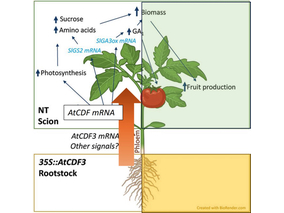
AtCDF3 gene induced greater production of sugars a...
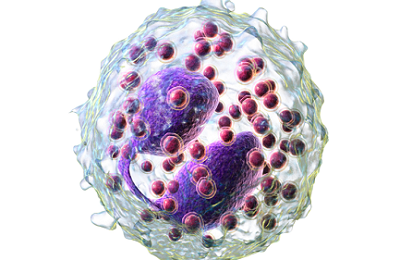
En nuestro post hablamos sobre este interesante tipo de célula del...

Telum Therapeutics, a biotechnology company leveraging proprietary met...