Este avance podría facilitar el seguimiento de los pacientes, especialmente en población pediátrica, y contribuir a una medicina más personalizada en alopecia areata.
Read more
Durante el primer año de la pandemia de COVID-19, la mortalidad afectó de forma especialmente intensa a los pacientes mayores de 70 años, en un contexto en el que todavía no se disponía de vacuna...
Read more
It has been developed a strategy that enables the forced elimination of proteins that help tumors survive chemotherapy. This finding opens a new avenue to tackle resistance to cancer treatments, one o...
Read more
Duchenne Parent Project Spain has invested €247,000 in the BEAT project, which will be carried out by IBEC. Cardiomyopathy is the leading cause of death in patients with Duchenne muscular dystrophy...
Read more
Research published this week in Nature Medicine confirms the global utility of the PREVENT and SCORE2 algorithms for improving cardiovascular prevention and is and suggests they should be incorporated...
Read more
A study coordinated by Clínic‑IDIBAPS and published in JAMA demonstrates that adding a pharmacological treatment to thrombectomy improves functional recovery in patients with severe ischemic stroke...
Read more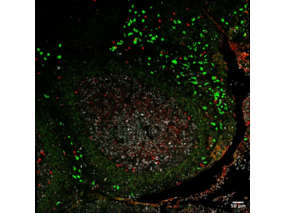
An international collaborative study, published in the Journal of Experimental Medicine, highlights the role of immunoglobulin D (IgD) in the processes involved in generating tolerance to antigens and...
Read more
The results show that while inhibition of miR122 accelerates regeneration in a healthy liver, its absence in a liver with fibrosis causes pathological regeneration leading to liver failure.
Read more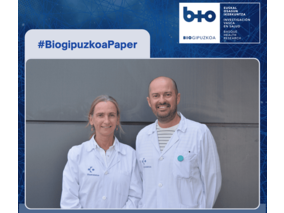
La conclusión principal es que el tipo de personalidad basal es el determinante más importante del impacto emocional tras un resultado alterado en el cribado de cérvix. Otros factores que también ...
Read more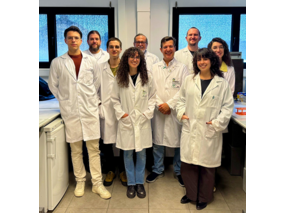
Un proyecto multicéntrico europeo que ha obtenido 1,3 millones de euros de financiación para avanzar frente al adenocarcinoma ductal pancreático (PDAC), uno de los cánceres de páncreas más agres...
Read more
Cancer cells do not act alone. Through complex communication networks and signalling pathways, tumour cells and their microenvironment coordinate adaptive responses that drive drug resistance. Underst...
Read more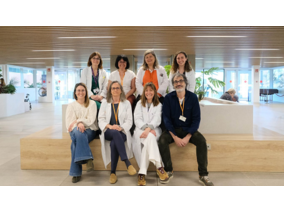
According to the results, cancer patients with lower muscle mass are 2.5 times more likely to develop peripheral nerve damage because of chemotherapy.
Read more
La mejor actitud que podemos adoptar es la de trat...

The research team observed changes in head circumf...
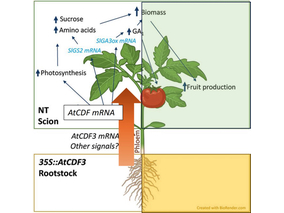
AtCDF3 gene induced greater production of sugars a...
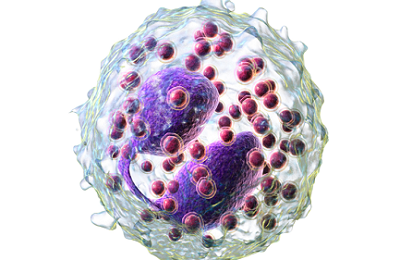
En nuestro post hablamos sobre este interesante tipo de célula del...

Acute myeloid leukemia (AML) does more than infiltrate the lungs: it a...