An international team of scientists, including researchers from the Institute for Advanced Chemistry of Catalonia (IQAC) of the Spanish National Research Council (CSIC), an institution under the Minis...
Read more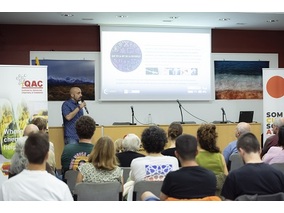
The Institute for Advanced Chemistry of Catalonia (IQAC-CSIC) organized a series of talks and a roundtable titled “Noves tecnologies i coneixement científic per a millorar l’Agricultura” (New t...
Read more
It has been developed a new family of cationic surfactants derived from arginine. These compounds stand out for their high antimicrobial efficacy, their ability to eradicate resistant biofilms, and th...
Read more
With 414 pages of updated content (ISBN: 978-3-11-142468-2), the book provides a comprehensive overview of nucleic acid modifications, backbone engineering, and therapeutic conjugates, as well as the ...
Read more
CancerScan aims to develop a smart pathology slide scanner capable of generating patient-specific tumour digital twins to simulate and evaluate treatment outcomes, empowering clinicians to make more a...
Read more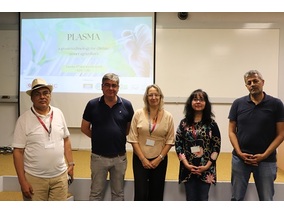
According to the researchers’ presentations, plasma application can increase water uptake by crops, reduce irrigation water consumption, and also act as an antibacterial and antifungal tool.
Read more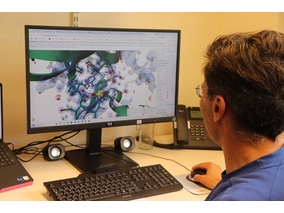
A study led by researcher Francesco Colizzi from the Institute for Advanced Chemistry of Catalonia (IQAC), belonging of the Spanish National Research Council (CSIC), is developing a new approach based...
Read more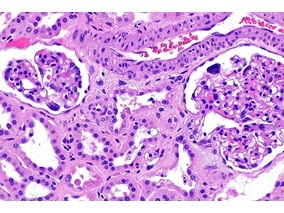
Given the rarity of these diseases, funding for their research is limited. However, the Institute for Advanced Chemistry of Catalonia is highly aware of the importance of this research, developing the...
Read more
In the frame of World Cancer Day, held on 4th February, various research projects at the Institute for Advanced Chemistry of Catalonia (IQAC-CSIC) stand out for their efforts to find new therapeutic s...
Read more
An international scientific team, led by the Institute for Advanced Chemistry of Catalonia (IQAC-CSIC), has designed a chemical compound called MACTIDE-V, capable of reprogramming the activity of thes...
Read more
The aim is to penetrate the desmoplastic stroma, the layer surrounding these cancers that acts as a barrier against chemotherapy. Successfully crossing this matrix to reach the tumour directly is vita...
Read more
It has been developed a new therapy based on nanotechnology called nanoGLA for the treatment of Fabry disease. The new therapeutic solution has shown remarkable efficacy in preclinical studies
Read more
La mejor actitud que podemos adoptar es la de trat...

The research team observed changes in head circumf...
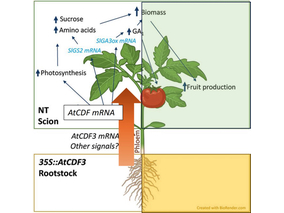
AtCDF3 gene induced greater production of sugars a...
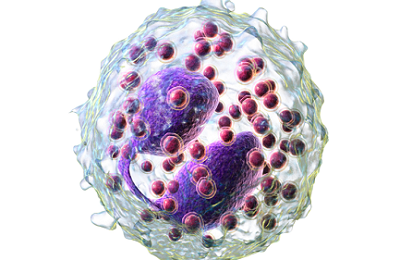
En nuestro post hablamos sobre este interesante tipo de célula del...
A paper published in Alzheimer’s & Dementia: The Journal of the Alzh...