The second phase of construction of the new research and innovation building at Parc Taulí is completed
Read more
Improvements in fibrosis observed using 3 pre-specified methods of histological analysis: conventional, AIM-MASH (PathAI) and qFibrosis (Histoindex)
Read more
Las cataratas son una de las patologías oculares más comunes, especialmente en personas mayores. Sin embargo, muchas personas se preguntan: ¿Por qué salen las cataratas? Existen diversos factores ...
Read more
Una investigación llevada a cabo por un equipo del Laboratorio de Climatología y Servicios Climáticos ha revelado que la aridez climática, es decir, el equilibrio a largo plazo entre la disponibil...
Read more
Los resultados, publicados en la revista Neoplasia, muestran que la combinación de inhibidores de la enzima FASN y fármacos BH3 miméticos podría superar la resistencia de este tumor a la apoptosis...
Read more
Se trata de un dispositivo similar a un marcapasos cardíaco, que utiliza un neuroestimulador implantado quirúrgicamente para transmitir señales eléctricas a partes específicas del cerebro afectad...
Read more
Los resultados obtenidos sugieren que un consumo elevado de fructosa durante el embarazo podría tener repercusiones a largo plazo en la salud cardiovascular de las generaciones futuras, con el consig...
Read more
Initial results of the COMPETE phase 3 clinical trial show that treatment with radiopharmaceutical agent [177Lu]Lu-edotreotide demonstrated statistically significant clinical benefit compared with ...
Read more
For the first time, it has been confirmed that, contrary to previous beliefs, individual neurons represent the concepts we learn, regardless of the context in which we encounter them.
Read more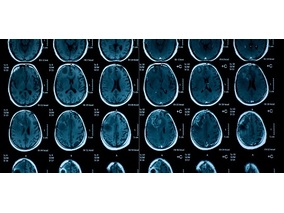
A study with more than 2,000 children has determined the short-term effects of ambient temperature on key brain networks
Read more
A study led by the Institute for Neurosciences CSIC-UMH demonstrates that the brain reorganizes its sensory maps in the absence of tactile stimuli. These findings, published in Nature Communications, ...
Read more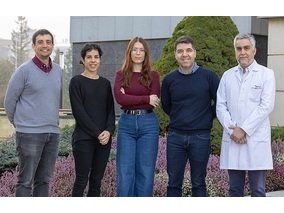
GENNIUS, developed by researchers from the University of Navarra and Stanford University, could revolutionize the process of finding new drugs.
Read more
La mejor actitud que podemos adoptar es la de trat...

The research team observed changes in head circumf...
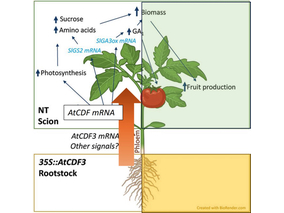
AtCDF3 gene induced greater production of sugars a...
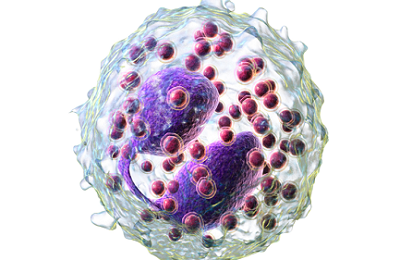
En nuestro post hablamos sobre este interesante tipo de célula del...
Many repetitive regions of the genome have been considered “junk DNA...