SpliceBio today announced that it has dosed the first patient in the Phase 1/2 ASTRA study of SB-007, a dual adeno-associated viral (AAV) vector, for the treatment of Stargardt disease. Stargardt dise...
Read more
Entre los resultados, se puede destacar que los pacientes con DM1 mostraron una hiperconectividad cerebral, es decir, su cerebro mostraba una actividad más intensa entre regiones en comparación con ...
Read more
Lynch syndrome is one of the most prevalent hereditary cancer syndromes in humans, predisposing to the development of various types of cancer, primarily colorectal and endometrial cancer, but also ski...
Read more
Este enfoque no invasivo consiste en gotas oftálmicas cargadas con el anticuerpo monoclonal adalimumab (ADA), dirigido contra la citoquina TNFα, involucrada en la inflamación de la retina.
Read more
La medicina personalizada o de precisión aprovecha los avances biotecnológicos en diversas disciplinas para mejorar el diagnóstico y adaptar las terapias a la singularidad de cada paciente.
Read more
El déficit de alfa-1 antitripsina es una enfermedad rara hereditaria que predispone al desarrollo de enfisema pulmonar y diversas patologías hepáticas como la cirrosis y el hepatocarcinoma
Read more
Now, this study conducted by IDIBAPS-Hospital Clínic has retrospectively analysed nearly 190 anaesthetic procedures performed in the last 18 years. The research team found that, although 68% of the p...
Read more
Entre un 10% y un 15% de los casos de cáncer tienen un componente hereditario; el resto se debe a factores ambientales. Especialistas en cáncer familiar buscan en árboles genealógicos a familiares...
Read more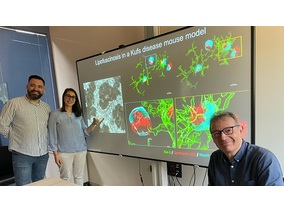
The study reveals molecular mechanisms in the rare disease known as adult-onset neuronal ceroid lipofuscinosis and opens new avenues for therapy development.
Read more
It has been demonstrated that women who are carriers of genetic mutations causing frontotemporal dementia (FTD) show a greater capacity to compensate for brain damage than men, at least in the early s...
Read more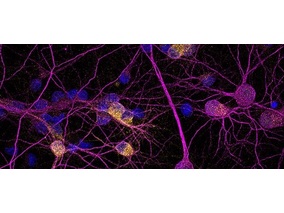
Revelan que la proteína quinasa D1 (PKD1) está significativamente reducida en las neuronas, tanto en muestras de cerebros de pacientes con Huntington como en modelos murinos de la enfermedad. “Lo ...
Read more
The day before yesterday, 2 June, the Germans Trias i Pujol Research Institute (IGTP) hosted the kick-off event for the DM1-Hub, a multicentre project led by the Badalona Neuromuscular Research Group ...
Read more
La mejor actitud que podemos adoptar es la de trat...

The research team observed changes in head circumf...
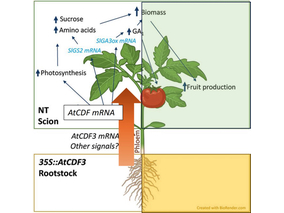
AtCDF3 gene induced greater production of sugars a...
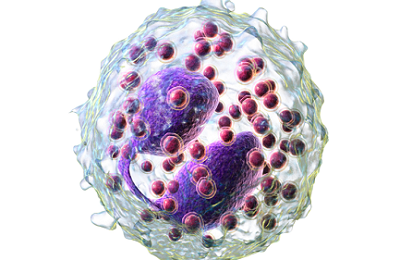
En nuestro post hablamos sobre este interesante tipo de célula del...

Acute myeloid leukemia (AML) does more than infiltrate the lungs: it a...