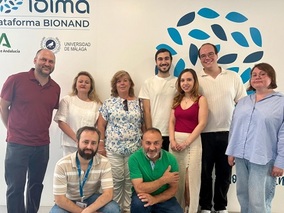
Una delegación de la Fundación AHUCE visita el instituto para conocer de cerca los avances del proyecto europeo MORBIUS, liderado por el Dr. Iván Durán y la Dra. Lidiia Zhytnik; en colaboración c...
Read more
Han identificado alteraciones específicas en moléculas presentes en la sangre que podrían servir como biomarcadores para detectar con mayor precisión a personas con trastorno por uso de sustancias...
Read more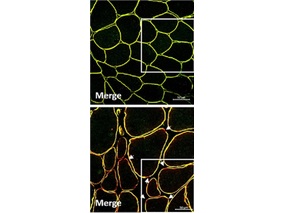
Analizando la estructura muscular en los músculos de personas afectadas de LGMDR1, los hallazgos más llamativos fueron la incorrecta localización de la proteína integrina β1D en la fibra muscular...
Read more
The funding will be used to advance the clinical development of SpliceBio’s lead gene therapy candidate, SB-007 for Stargardt disease, including the ongoing interventional Phase 1/2 ASTRA study and ...
Read more
The results, published in the journal Brain, reveal that volume and cortical thickness loss in these regions can begin 13 to 15 years before the onset of symptoms, marking a significant advance in ear...
Read more
Among the main results of this study, the analysis revealed that in children with a high genetic predisposition, greater adherence to the Mediterranean diet was associated with a lower BMI during earl...
Read more
El día 20 de junio se celebra el Día Mundial de la Distrofia Facioescapulohumeral. Para conocer esta enfermedad y la investigación que se realiza en el Instituto, acudieron a Pilar Camaño, respons...
Read more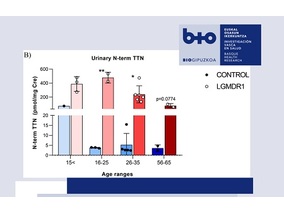
Estos hallazgos indican que el fragmento N-terminal de titina es una medida no invasiva del daño muscular en LGMDR1, que podría utilizarse en el seguimiento de la enfermedad y para ensayos clínicos...
Read more
A clinical trial involving the Germans Trias i Pujol Research Institute and Hospital demonstrates that administering selumetinib reduces the tumour and the associated pain.
Read more
An international team of researchers has published results of a phase 2/3 clinical trial evaluating the efficacy and safety of leriglitazone, a new oral drug for the treatment of pediatric cerebral ad...
Read more
CNIC researchers have uncovered the evolutionary logic of the OxPhos system—the cell’s “engine”—and developed a tool to detect mutations that cause mitochondrial disease
Read more
Scientists at the Centro Nacional de Investigaciones Cardiovasculares (CNIC) report that the new discovery makes it possible to identify high-risk patients early and refer them sooner to specialized h...
Read more
La mejor actitud que podemos adoptar es la de trat...

The research team observed changes in head circumf...

AtCDF3 gene induced greater production of sugars a...
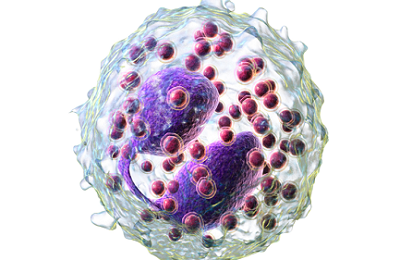
En nuestro post hablamos sobre este interesante tipo de célula del...

Acute myeloid leukemia (AML) does more than infiltrate the lungs: it a...